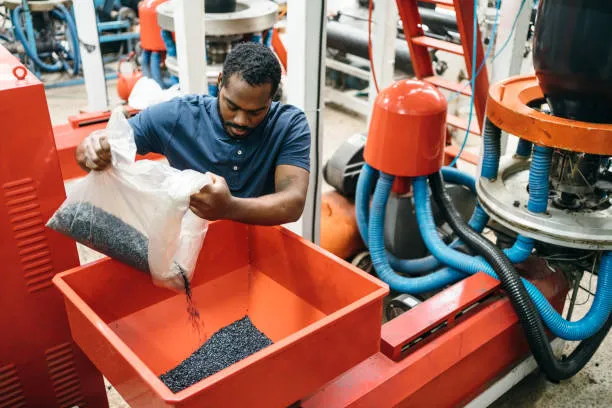
France’s manufacturing sector is undergoing continuous transformation as businesses increasingly prioritize materials that combine durability, lightweight properties, and production efficiency. From automotive manufacturing to electronics, healthcare, and industrial equipment, companies are adopting advanced polymer materials to improve product performance and meet evolving engineering requirements. This transition is encouraging manufacturers to explore innovative alternatives to conventional metals and other traditional materials.
The France Engineering Plastics Market is gaining importance as manufacturers seek high-performance materials capable of withstanding demanding operating conditions while offering greater design flexibility. According to industry insights from Markntel Advisor, the increasing adoption of advanced engineering polymers and high-performance plastic materials reflects changing manufacturing priorities, technological advancements, and the growing emphasis on sustainable industrial production. These developments are creating opportunities across automotive, electrical and electronics, healthcare, aerospace, and industrial manufacturing applications.
Engineering plastics offer a combination of mechanical strength, corrosion resistance, thermal stability, and lightweight characteristics. Their ability to replace conventional materials in selected applications allows manufacturers to reduce component weight, improve production efficiency, and enhance product durability. Additionally, advancements in polymer formulations and processing technologies are expanding their suitability across increasingly sophisticated manufacturing environments.
Lightweight Material Adoption Strengthens Demand for Markntel Advisor’s Industry Insights
Reducing product weight has become an important objective for French manufacturers seeking to improve operational efficiency and product performance. Engineering plastics offer favorable strength-to-weight ratios, making them suitable for applications where lightweight construction and mechanical reliability are equally important.
Transportation equipment manufacturers, industrial machinery producers, and consumer electronics companies are increasingly incorporating advanced polymers into their product designs. Lightweight components can improve energy efficiency, simplify assembly operations, and reduce transportation-related expenses throughout product lifecycles.
Furthermore, engineering plastics enable manufacturers to develop complex component geometries that may be difficult to achieve using conventional materials. This design flexibility supports product innovation while helping businesses optimize manufacturing processes and material utilization.
Automotive Innovation Accelerates Engineering Plastics Adoption
France’s automotive manufacturing sector represents an important application area for engineering plastics. Vehicle manufacturers are increasingly utilizing advanced polymers in interior components, exterior panels, electrical connectors, lighting systems, and under-the-hood applications.
The transition toward electric and hybrid vehicles is creating additional opportunities for specialized polymer materials. Electric vehicle components require materials that provide electrical insulation, thermal stability, flame resistance, and mechanical durability. Engineering plastics can support these requirements across battery-related components, charging systems, and electrical assemblies.
According to Plastics Europe, polymer materials contribute to innovation and resource efficiency across numerous European manufacturing applications. As automotive technologies continue evolving, demand for specialized engineering polymers is expected to remain an important consideration for vehicle manufacturers and material suppliers.
Electrical and Electronics Manufacturing Creates New Opportunities
The growing sophistication of electronic devices and electrical equipment is increasing demand for materials with reliable insulation, dimensional stability, and heat resistance. Engineering plastics are widely used in electrical connectors, electronic housings, switches, insulation components, and precision-engineered device parts.
Their compatibility with injection molding and other advanced processing techniques allows manufacturers to produce complex components with consistent dimensions and quality. This is particularly important as electronic products become smaller, more sophisticated, and increasingly integrated with automated technologies.
Additionally, expanding investments in industrial automation, telecommunications equipment, and smart manufacturing infrastructure are creating opportunities for specialized polymer applications across France’s electrical and electronics sector.
Sustainability Encourages Development of Advanced Polymer Materials
Environmental responsibility is becoming an important factor influencing material selection across French manufacturing industries. Businesses are increasingly exploring recyclable engineering plastics, bio-based polymers, and resource-efficient production processes to reduce environmental impact.
Advanced polymer materials can support sustainability objectives through lightweight product designs, extended component lifecycles, reduced maintenance requirements, and improved manufacturing efficiency. Manufacturers are also investing in recycling technologies that allow recovered plastics to be incorporated into new industrial products.
These developments align with broader European circular economy initiatives, which emphasize responsible material utilization, waste reduction, and improved resource efficiency. The European Environment Agency highlights the importance of sustainable material management and resource-efficient production in supporting Europe’s environmental objectives.
Advanced Manufacturing Technologies Support Material Innovation
The increasing adoption of automation, digital manufacturing, and precision engineering is creating demand for polymer materials with consistent performance and specialized technical characteristics.
Engineering plastics are compatible with advanced manufacturing processes, including injection molding, extrusion, and precision machining. These technologies allow manufacturers to develop complex components while maintaining production consistency and minimizing material waste.
Industries such as aerospace, healthcare, construction, industrial equipment, and consumer goods are also identifying new applications for high-performance polymers. Their versatility enables manufacturers to address specific requirements involving chemical exposure, temperature variations, mechanical stress, and dimensional accuracy.
Continuous research and development in polymer science is expected to further expand the performance capabilities and industrial applications of engineering plastics.
Future Outlook
Engineering plastics are expected to remain an important part of France’s manufacturing transformation as businesses increasingly prioritize lightweight engineering, material innovation, operational efficiency, and sustainable production practices.
Growing adoption across automotive electrification, electronics manufacturing, healthcare equipment, and industrial automation is creating additional opportunities for advanced polymer solutions. Meanwhile, developments in recyclable materials, bio-based formulations, and high-performance plastic compounds are expected to influence future manufacturing strategies.
As French manufacturers continue modernizing production processes and exploring alternatives to conventional materials, engineering plastics will play an increasingly important role in supporting product innovation, industrial competitiveness, and the transition toward more resource-efficient manufacturing.