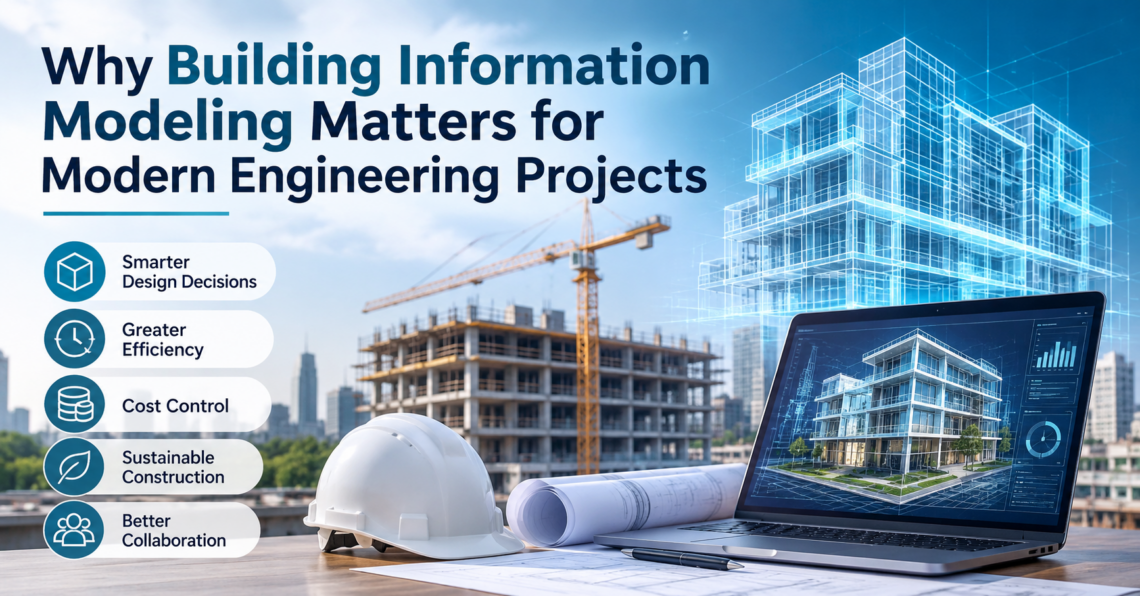
Modern engineering projects involve multiple teams, complex designs, strict deadlines, and detailed technical requirements. Managing all these elements efficiently requires more than traditional design methods. Building Information Modeling (BIM) has become an essential approach that helps engineers, architects, and construction professionals plan, design, and execute projects with greater accuracy. By creating a shared digital representation of a building or infrastructure project, BIM improves coordination, reduces errors, and supports better decision-making. Today, Mep consultants in Chennai and engineering professionals increasingly rely on BIM to manage complex project requirements and deliver efficient outcomes.
1. Improves Design Accuracy and Planning
Accuracy is one of the most important factors in engineering projects. Even minor design errors can lead to construction delays, additional expenses, and rework. BIM creates detailed 3D models that allow project teams to visualise building components before construction begins.
Engineers can examine structural elements, electrical systems, plumbing networks, and mechanical installations within a single digital environment. This makes it easier to identify design issues early and make necessary adjustments before they affect the construction process.
2. Enhances Coordination Between Different Teams
Large engineering projects involve several professionals working together, including architects, structural engineers, MEP specialists, and contractors. Without proper coordination, differences between design plans can create conflicts during execution.
BIM provides a shared platform where different teams can access and review project information. Each discipline can contribute its designs while understanding how its work connects with other building components.This collaborative approach improves communication, reduces misunderstandings, and ensures that everyone works with consistent project information.
3. Helps Identify Design Conflicts Early
One of the major advantages of BIM is clash detection. In traditional construction planning, conflicts between building systems may only become visible during installation.
For example, an HVAC duct may overlap with a structural beam, or electrical conduits may interfere with plumbing lines. Such issues can cause unnecessary modifications and increase project costs.BIM tools help identify these clashes during the design stage. Engineers can review the model, resolve conflicts, and update the drawings before construction starts. This reduces on-site problems and supports smoother project execution.
4. Reduces Project Costs and Delays
Cost management is a major challenge in modern engineering projects. Unexpected design changes, material wastage, and coordination issues can affect the overall budget.BIM supports better cost planning by connecting digital models with quantity and material information. Project teams can estimate material requirements, evaluate construction expenses, and identify areas where resources can be used more effectively.Additionally, identifying problems early reduces the possibility of expensive rework. With better planning and coordination, projects can progress according to their schedules and financial targets.
5. Supports Better Project Visualisation
Traditional 2D drawings may not always provide a complete understanding of complex engineering designs. BIM offers 3D visualisation, helping professionals understand the arrangement of different building components.Clients and project stakeholders can explore the proposed design before construction begins. They can understand layouts, building systems, and spatial relationships more clearly.This makes discussions easier and allows design improvements to be introduced based on project requirements.
6. Improves Construction and Project Management
BIM can be integrated with project scheduling and cost information to support 4D and 5D modelling.
- 4D BIM: Connects the 3D model with construction schedules to visualise project timelines and work sequences.
- 5D BIM: Integrates cost information to support budgeting, quantity estimation, and financial planning.
These capabilities help project managers monitor progress, allocate resources, and identify potential scheduling or budget-related challenges.
7. Supports Sustainable Engineering and Building Performance
Sustainability has become an important consideration in modern engineering. Buildings must be designed to use energy, water, and materials more efficiently while minimising their environmental impact.BIM helps professionals evaluate building performance during the design stage. Engineers can analyse energy consumption, lighting requirements, ventilation systems, and material quantities to identify opportunities for improvement.This allows project teams to make informed decisions that support energy efficiency, reduce waste, and improve the long-term performance of buildings.
8. Makes Facility Management More Efficient
The benefits of BIM continue even after construction is completed. A well-developed BIM model can store important information about equipment, building systems, materials, and maintenance requirements.Facility managers can use this information to plan inspections, schedule maintenance, identify equipment details, and manage building operations more effectively.Having organised digital information reduces the need to search through multiple documents and supports better long-term asset management.
Conclusion
Building Information Modeling is transforming modern engineering projects by improving design accuracy, team collaboration, cost control, and construction efficiency. It helps professionals identify potential issues early, make informed decisions, and manage project information throughout the building lifecycle.
As the construction industry increasingly focuses on digital transformation and sustainable development, BIM is becoming an important part of responsible engineering practices. Businesses working with Esg consulting firms in India can also connect BIM-driven project planning with broader sustainability objectives, helping organisations improve resource efficiency, reduce environmental impact, and create buildings that support long-term performance.