Purchasing your first home is more than just locating an appealing home. Buyers are responsible for making price comparisons, comprehending the contract, securing financing and paying crucial deadlines. This is because careful decisions must be made at each stage, particularly for first-time homebuyers.
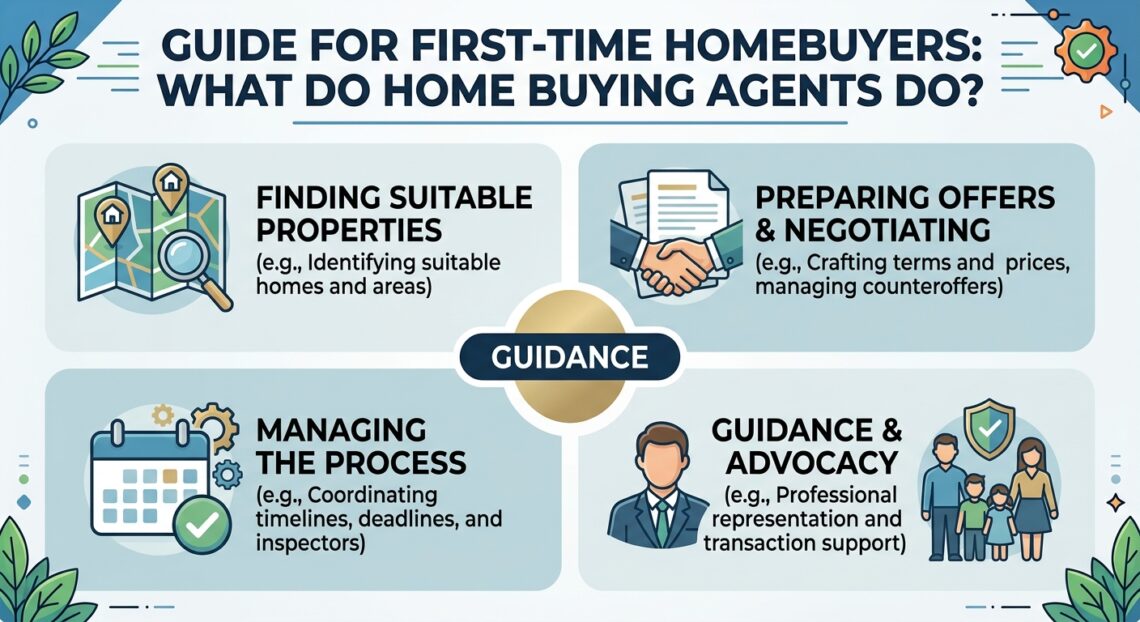
Home Buying Agents work for the buyer and provide information about the Home Buying process. They can be involved in finding good properties, conducting viewings, making offers, negotiating offers, and arranging with others. Services will vary based upon the representation agreement and state law.
It can be easier to navigate the buying process if you know what an agent does. First-time buyers should also be familiar with representation agreements, compensations and buyer/seller representation prior to selecting an agent.
What Do Home Buying Agents Do?
A home buying agent is a representative of the buyers in the process of the transaction of the home. They can assist clients in finding a house that they would like, evaluating price tags, making offers, and negotiating offers. They may also share utility inspections, track closing timelines, and contact the lenders or closing agents, as per their arrangements.
Their main duty is to advocate for the buyer, in the bounds of their agency relationship and the law. Agents are not, however, substitutes for property inspectors, mortgage lenders, lawyers or other qualified professionals.
Help Buyers Find Suitable Properties
Choosing a house isn’t just about checking out the online listings. There are a number of factors that buyers need to take into account, including budget, location, property size, commute requirements, and long-term plans. An agent can talk about these priorities and can find properties that meet the buyers’ needs.
An agent can also schedule property tours and give information regarding listing details, neighborhood attributes, and transaction concerns. They can describe differences between properties which will help purchasers to assess their choices more logically.
Some people who are buying their first home may want to go for a bigger house, but their maintenance budget is not that large. An agent can explain the pros and cons of property size, age, location, and asking price. Final decision is up to the buyer.
Explain Property Values and Market Conditions
Comparable sales serve as an important benchmark and offer important context because they illustrate the price of similar homes in the neighborhood. Agents are able to talk about these comparisons and the effect of location, condition, size, and the recent market activity.
But buyers should keep in mind that these comparisons have their constraints. Different homes in the same neighborhood can be quite different in terms of condition, amenities and conditions of sale.
Agents are also able to spot inquiries regarding disclosures, visible issues, and property history. However, it is important for a competent inspector to inspect the house physically. Attorneys ask legal questions as part of their scope and value is assessed for a purpose by an appraiser.
Prepare Offers and Negotiate Terms
When preparing an offer, there is more at stake than just the purchase price. The buyer should take into account contingencies, earnest money, financing requirements, proposed closing dates, and other contract conditions. These provisions can be explained to a buyer by an agent, and the terms that the buyer is proposing can be told to the seller or listing representative.
Other counteroffers, requests for repairs, closing costs, or alterations in the proposed timeline may be involved in negotiations. An agent can discuss the options and relay the buyer’s choices throughout these conversations.
Reflect on a home that’s for sale in a $280,000 price range, and multiple properties that are similar selling for less. The agent may go through those sales and see if they think that a lower offer seems fair. The seller can, however, accept, reject, or counter the offer. Comparable sales are used to make decisions but can never predict outcomes.
How Do Home Buying Agents Help First-Time Buyers?
New home buyers are often faced with unfamiliar terminology, extensive documentation and closing date requirements that impact their home purchase. A buyer’s real estate agent will be able to inform you about the transaction process and the effects of various choices.
Buyers can, for example, have problems with understanding an inspection contingency. This duty can create circumstances where buyers can have the option to negotiate repairs, alternative remedies, or rescind in compliance with the contract. The exact impact would be determined by the wording and the law in question.
Suppose you are a first-time home buyer and find roof damage in a home you are considering. The agent is able to clarify the contractual choices and relay the buyer’s needs to the seller. A roofing contractor will be able to determine the damage costs, and an attorney will be able to answer intricate legal questions.
The agent may also break up the transaction into smaller steps. These are property research, offer preparation, inspection, financing and closing arrangements. This helps buyers have a better understanding of their future duties and deadlines.
It is important, however, to consider homes based on what’s important to them, not just listing photos or asking prices. All of these monthly issues must be addressed: affordability, property condition, property location, and expected maintenance.
What Is the Home-Buying Process With an Agent?
When purchasing a house with an agent, there are usually a few phases. The order and conditions will vary depending on the property, financing and local practice.
- Initial consultation: Buyer speaks with the buyer’s representatives about budget, location, property preferences and the terms of representation. They go over the proposed working relationship together prior to signing an agreement.
- Mortgage preparation: Buyer reaches out to a lender to speak about funding and get preapproval as suitable. A lender reviews financial information and provides information about potential terms of borrowing.
- Agents initiate property searches and plan appointments for people to see properties. The buyer is able to compare houses based upon budget, location, condition, and needs.
- Offer and negotiation: All about the buyer’s decision as to whether to make an offer. The agent shares proposed prices, contingencies, time frames, and other terms via the proper channels.
- Inspection and appraisal: Both the buyer conducts relevant inspections and the lender might need an appraisal. Each process is used for a different purpose and will highlight issues that need to be explored further.
- Closing preparation: Buyer interacts with lender, title company, attorney, etc. These parties discuss the documentation, title issues, financing terms and closing requirements.
- Final walk through and closing: Buyer reviews agreed upon condition and reviews closing documents. Ownership transfers upon meeting applicable requirements of the transaction.
What are the best times for a first time home buyer to reach out to an agent? An early consultation will help to explain the process of buying, which representation is available and what the costs may be before serious discussions. Anyone considering a contract should carefully read the contract before signing it.
How Much Do Home Buying Agents Cost?
Buyer representation fees are based on the written agreement, transaction conditions, and rules. Compensation can be in the form of a negotiated commission, a flat fee, or any other type of compensation allowed.
Some or all of the agreed compensation can be paid by the seller, the buyer or another party permitted. But the buyer should never take it for granted that the seller is responsible for their agent’s fees. Relevant obligations are defined in the purchase agreement and representation agreement.
Commission and compensation is negotiable where allowed. Therefore, the buyers should carefully check the quantity, computation rule, due date for payment, and conditions under which payment is due. They should also verify if there are extra fees or cancellation terms in the agreement.
A buyer’s representation agreement could include details regarding the agent’s duties, the length of representation, and the reasons for terminating the representation. If there are clauses that buyers are not familiar with, they should ask questions before signing.
Written terms eliminate confusion about financial obligations. If a provision is unclear or has important legal consequences, then an attorney of the proper legal background can clarify what the provision means.
How Do You Choose the Right Home Buying Agent?
When selecting an agent, it’s not just about comparing online reviews or going through professional profiles. Experience, communication, local knowledge, and the terms of the representation contract should all be taken into consideration by buyers.
The selection will depend on the buyer as to which one to use. The advice for a buyer looking for a condo will be different than the advice for someone looking to purchase a detached home or an investment property. Establishing clear expectations can help set up a better working relationship.
What Should First-Time Buyers Look For?
Firstly, think about the agent’s experience of first time buyers and the property’s location. During the search, knowing the local property types, prices and transaction process can give you some context.
Communication also matters. The agent should make clear to the buyer how he or she communicates with them, how he or she sets up viewings, and how he or she answers their questions. An agent that is able to communicate complex concepts in a simple manner can make complicated decisions easier to comprehend.
Then, review the suggested services and compensation. Each Home Buying Agent will have a different service package, so it is important that buyers check which is included in the package. They should also check if the agent is currently licensed with the proper state licensing board.
Last but never least, think about professionalism and honesty. An agent should disclose any relationships that may exist, explain the possible conflicts, and not guarantee a specific purchase result. In addition to experience and availability, buyers should evaluate these qualities.
Questions to Ask Before Hiring an Agent
Prior to entering into a representation agreement, buyers should ask questions that help them understand their expectations and the financial responsibilities.
- What is your knowledge of the regions I’m interested in?
- How will you inform and arrange for property viewing?
- What services do we have in our pact?
- What forms is compensation given in, and who can pay compensation?
- If I terminate the agreement, what will be the consequences?
Answers should explain the Agent’s approach and contractual obligations. Additionally, it is important for buyers to read through the written contract, not just take the seller’s word.
Important information about an agent’s professional standing can be verified from state licensing records. While online reviews can offer context for performance, it does not meet the standards of competence required to establish future competence.
Home Buying Agent vs. Listing Agent: What’s the Difference?
A buyer’s agent and a listing agent generally represent different parties in a property transaction. The buyer’s agent represents the purchaser under the applicable agreement, while the listing agent represents the seller.
Their responsibilities reflect these different relationships. A buyer’s agent focuses on the purchaser’s requirements, proposed terms, and contractual interests. A listing agent generally focuses on the seller’s objectives, property marketing, and offers received.
| Area | Buyer’s agent | Listing agent |
| Main role | Represents the buyer under the applicable agreement | Represents the seller under the applicable agreement |
| Primary focus | Buyer’s needs, offers, and purchase terms | Seller’s interests, marketing, and sale terms |
| Typical activities | Property searches, viewings, and offer preparation | Listing preparation, marketing, and offer presentation |
| Compensation | Depends on written agreements and applicable arrangements | Depends on the listing agreement and applicable arrangements |
For example, a buyer might want a lower price or additional inspection time. The buyer’s representative can communicate those requests, while the listing agent presents them to the seller.
Conclusion
Buying a first home is accompanied by financial obligations, contractual commitments and considerations that can impact on the housing affordability of your household in the future. Knowing what an agent does enables buyers to determine if the relationship they are considering is the right one for them.
Read the representation agreement, compensation, a communication plan and cancellation procedures before moving forward. Another thing to look at is the property disclosures, financing terms, inspection results and deadlines.
An agent will be able to discuss the procedures of the transaction and share proposed terms, but other professionals may be needed for certain questions. When it comes to financing, mortgage lender services can be used. If you need to know about the condition of the property, inspectors can help. And if you need legal advice, an attorney can.
Finally, it’s about having adequate knowledge, realistic expectations, and proper professional advice. When consumers are aware of these differences, they can make more informed decisions about the purchase and their role in it.
FAQs
Do first-time homebuyers need an agent?
But not all first-time home buyers should use an agent to buy a home. But representation can also give assistance with searches, terms and deadlines for the transactions. Purchasers should think about the duties, expenses, and constraints of the options they have before making a decision.
When should I hire a buyer’s agent?
Talk to an agent early, before committing and doing major negotiations. An initial consultation can help clarify the agent’s services, the amount of compensation and representation. It is essential that buyers read through any agreement prior to signing, taking note of the length of the contract and any cancellation terms.
Can I negotiate a home’s price through my agent?
Yes. A buyer’s agent may tell an offerer how to respond to an offer and negotiate terms on the buyer’s behalf with an offerer, within the scope of the special representation. The seller can accept, reject or counter the offer. Comparable sales and property conditions can help guide negotiations but there is no certainty.
Is a buyer’s agent different from a real estate broker?
A buyer’s agent is a representation role and a real estate broker is a category of profession. An agent can have multiple licenses, depending on the state regulations. The needs for licensing, supervision and permitted activities differ, so buyers are advised to check the professional’s license status in their own country.
Can I buy a house without a buyer’s agent?
Yes. Buyers may buy directly from sellers or make other arrangements as allowed by local law. But for whatever part, they are still responsible for knowing about contracts, deadlines, disclosures and transaction requirements. They may also require the services of other professionals like attorneys, inspectors, lenders or title professionals to help them with this.