A good skincare routine does not need ten different products to make a difference. Sometimes, choosing a moisturiser with the right active ingredients can help address several common skin concerns in one step. This is one reason Vitamin C Cream has become a popular choice for people looking to improve dullness, uneven skin tone and the appearance of dark spots.
Vitamin C is known for its antioxidant properties and its role in supporting healthy-looking skin. However, not every skin brightening cream uses the same form of this ingredient, and the supporting formula matters just as much as the headline ingredient.
Whether you are comparing local skincare brands in Pakistan or looking for a daily moisturiser, understanding the formulation can help you make a better purchase.
What Does Vitamin C Cream Do for Your Skin?
Vitamin C is an antioxidant that helps protect skin against oxidative stress caused by environmental factors. Topical formulations are commonly used to support skin radiance, improve the appearance of uneven pigmentation and address visible signs of photoaging.
Here are some reasons people include Vitamin C in their skincare routines.
1. Helps Improve Dull-Looking Skin
Dullness can make the complexion look tired and uneven. Vitamin C supports a brighter-looking appearance through its antioxidant activity. With consistent use, a suitable formulation may help improve the overall appearance of skin radiance.
2. Supports a More Even Skin Tone
Dark spots can develop after acne, sun exposure and other forms of skin inflammation. Vitamin C is studied for its role in pigmentation pathways. Some formulations combine it with ingredients such as Niacinamide, Alpha Arbutin and Kojic Acid to provide additional support for uneven-looking skin tone.
3. Provides Antioxidant Support
Daily exposure to sunlight and environmental pollution can contribute to oxidative stress. Antioxidants help neutralise free radicals, making them useful ingredients in a daytime skincare routine.
4. Combines Brightening with Moisturisation
Unlike a lightweight serum, a face whitening cream can combine active ingredients with a moisturising base. This makes it a practical option for people who prefer fewer steps in their skincare routine.
Which Ingredients Should You Look for in a Vitamin C Cream?
The ingredient list is one of the most important things to check before purchasing a brightening moisturiser. Here are four ingredients worth understanding.
Sodium Ascorbyl Phosphate (Vitamin C)
Sodium Ascorbyl Phosphate is a stable Vitamin C derivative used in topical skincare formulations. It provides antioxidant support and is included in products designed to improve the appearance of dullness and uneven skin tone. Unlike pure L-Ascorbic Acid, it is a modified form of Vitamin C that is commonly used in cream-based formulations.
Niacinamide
Niacinamide, also known as Vitamin B3, supports the skin barrier and helps improve the appearance of uneven skin tone. It is a versatile ingredient found in moisturisers, serums and other skincare products.
Alpha Arbutin
Alpha Arbutin is a popular ingredient in products formulated for dark spots and uneven pigmentation. It works through a different pathway from Vitamin C, which makes it a useful complementary ingredient in brightening formulations.
Kojic Acid
Kojic Acid is another ingredient commonly used in pigmentation-focused skincare. It helps address the appearance of uneven skin tone by influencing melanin production.
Combining these ingredients in one cream can offer a convenient approach to brightening-focused skincare. However, ingredient compatibility, concentration, formulation stability and regular use all influence the overall experience.
How to Choose the Right Vitamin C Cream in Pakistan
With so many skincare products available in Pakistan, comparing labels and claims can become confusing. Before buying a Vitamin C cream, consider these points:
- Check the Vitamin C derivative: Look for the actual ingredient name rather than relying only on a percentage displayed on the packaging.
- Review supporting ingredients: Niacinamide, Alpha Arbutin and Kojic Acid can complement a brightening-focused formulation.
- Consider the texture: A smooth, non-greasy cream may be easier to incorporate into a daily routine, especially during warmer months.
- Check the moisturising properties: A cream should also provide comfortable hydration rather than focusing only on brightening.
- Choose transparent brands: Check the complete ingredient list, product directions, manufacturing information and customer feedback before ordering.
Price should not be the only deciding factor. A product with a suitable formulation and a texture you can comfortably use consistently may be a better choice than one selected simply because it contains a higher advertised percentage.
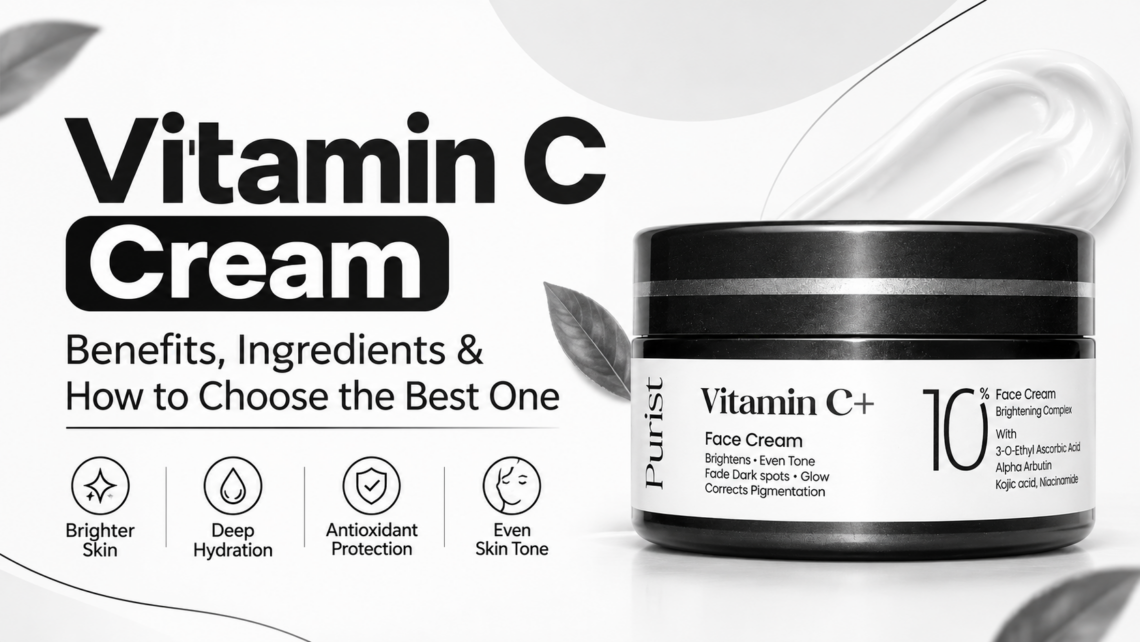
Purist Vitamin C+ 10% Brightening Cream
For anyone comparing Vitamin C creams available in Pakistan, Purist Vitamin C+ 10% Brightening Cream is one option worth examining.
The formula uses Sodium Ascorbyl Phosphate as its Vitamin C derivative and combines it with Niacinamide, Alpha Arbutin and Kojic Acid. It also includes advanced brightening complexes, antioxidant support and mineral-based protective ingredients.
Its cream texture spreads easily, absorbs well and leaves a non-greasy finish. The product is designed as a daily moisturiser for people who want to combine hydration with brightening-focused skincare.
The product page currently lists it at Rs. 1,266, reduced from Rs. 1,422. It also offers cash on delivery across Pakistan.
Customer feedback provides some additional context. Users have mentioned softer-feeling skin, hydration and a lightweight texture. One reviewer, for example, described the cream as non-sticky after two weeks of use. These comments reflect individual experiences rather than guaranteed outcomes.
You can check its full formulation, customer reviews and current availability here: Purist Vitamin C+ 10% Brightening Cream.
How to Include Vitamin C Cream in Your Skincare Routine
Consistency and a simple routine are important when introducing a new active skincare product.
Start with a gentle cleanser to remove dirt, excess oil and impurities. Apply your Vitamin C cream according to the product’s directions, allowing it to settle before layering other products.
During the morning, finish with a broad-spectrum sunscreen of at least SPF 30. Vitamin C cream is not a substitute for sunscreen, even when the formula contains antioxidant or mineral-based ingredients.
If you have sensitive skin, perform a patch test before applying a new product to your entire face. Avoid introducing multiple new active ingredients at the same time so you can identify any potential irritation.
People dealing with persistent pigmentation, melasma or recurring skin irritation should consider consulting a qualified dermatologist rather than relying on a cosmetic cream alone.
Frequently Asked Questions
Can I use Vitamin C cream every day?
Many Vitamin C creams are formulated for regular use. However, follow the individual product’s directions and consider your skin’s tolerance when introducing a new formula.
Is Vitamin C cream better than Vitamin C serum?
Neither is automatically better. Serums generally have lighter textures, while creams combine active ingredients with moisturising components. Your choice depends on your skin’s needs and preferred routine.
Does Vitamin C cream remove dark spots?
Vitamin C formulations may help improve the appearance of uneven pigmentation over time. Results depend on the cause of the dark spots, the formulation and consistent use. They should not be considered a guaranteed treatment for pigmentation.
Can I use Vitamin C cream with sunscreen?
Yes. Vitamin C skincare and sunscreen can complement each other in a daytime routine. Apply your moisturiser first and finish with broad-spectrum sunscreen.
Final Thoughts
Choosing the right Vitamin C cream involves more than looking at its advertised percentage. The type of Vitamin C, supporting ingredients, moisturising properties and overall formulation all deserve attention.
Look for a product that fits your skin’s needs, has a transparent ingredient list and feels comfortable enough for consistent use. Combine your routine with daily sun protection, and give your skin time to respond rather than expecting overnight changes.