When a pet owner needs a veterinarian, the search usually starts on a phone. They type a short phrase, glance at the first few results, and call a clinic that looks reliable and close by. Veterinary Google Ads marketing places your clinic at the top of those results at the moment a pet owner is ready to act. Unlike strategies that take months to build, paid search can bring calls within days of launching. It also gives you precise control over which services you promote and which neighborhoods you reach. This blog explains how Google Ads works for veterinary clinics, how to build campaigns that lead to booked appointments, and how paid search fits alongside the other parts of your online presence.
How Google Ads Works for Veterinary Clinics
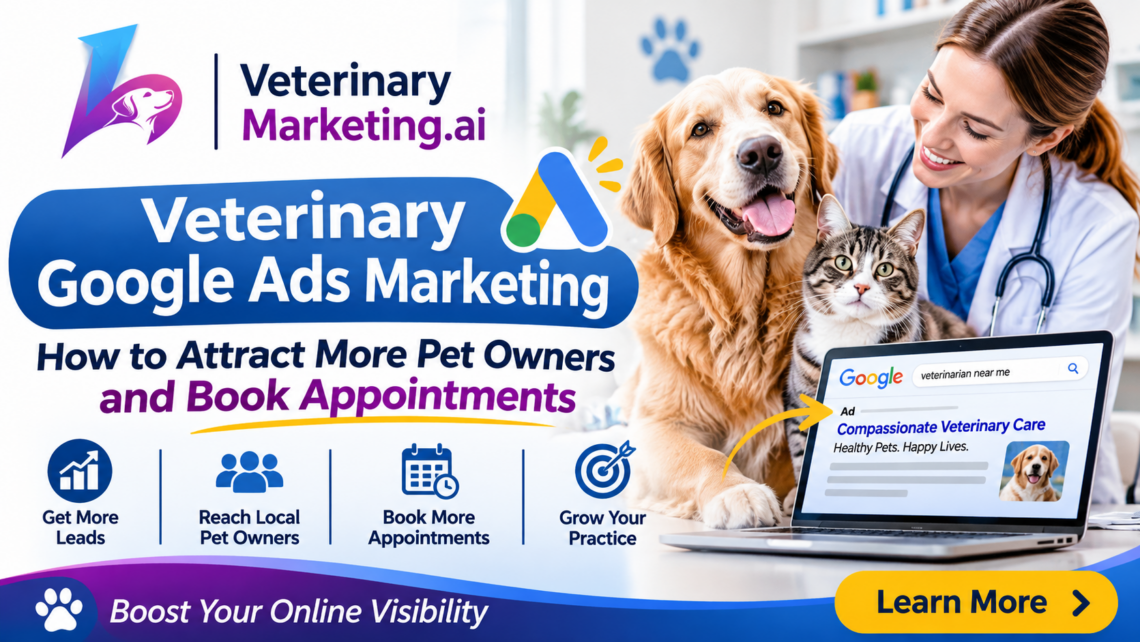
Google Ads is a paid platform that shows your clinic in search results when someone types a phrase you have chosen to target. Your ad appears above the map section and the organic listings, so it is often the first thing a pet owner sees on a phone screen.
The model is based on clicks. You set a budget and choose the search phrases you want to appear for. You pay when a person clicks your ad rather than every time it is displayed. This keeps spending tied to actual interest.
Google decides which ads appear and in what order using an auction. Your position depends on your bid and on a quality score that reflects how relevant your ad and landing page are to the search. A well built campaign with clear ad copy and a helpful landing page can earn a strong position at a reasonable cost. A poorly built campaign may spend more and still get fewer results. This is why structure matters as much as budget.
Why Paid Search Fits Veterinary Care So Well
The main strength of paid search is intent. A person who searches for “emergency vet near me” or “kitten vaccinations in my city” has a specific need and wants to act soon. Your ad appears at the exact moment that need is expressed.
Veterinary care also has strong local demand. Pet owners rarely travel far for routine visits and they want quick access in urgent situations. Google Ads lets you limit your ads to a set radius around your clinic or to chosen zip codes. This keeps your budget focused on people who could realistically visit.
Another benefit is flexibility. You can promote a specific service such as dental cleanings when you have open appointments. You can increase visibility during a busy season or pause a campaign when your schedule is full. This level of control is difficult to achieve with most other marketing channels.
Choose Search Terms That Show Booking Intent
Not every search is equally valuable. Some phrases show that a pet owner is ready to book. Others show general curiosity. Building a campaign around the right terms is one of the most important decisions you will make.
High intent searches often include words like “near me,” “open now,” “appointment,” or a specific service and location. Examples include:
- Emergency vet open now
- Dog dental cleaning near me
- Cat spay surgery in [city]
- New puppy exam near me
- Same day vet appointment
Informational searches such as “how often should I deworm my cat” are useful for content on your website but are usually less efficient for ads. Most clinics see better results by focusing their paid budget on terms that signal readiness to call.
Negative keywords are equally important. These are phrases you tell Google not to show your ads for. Terms such as “free,” “jobs,” “school,” “salary,” and “degree” can prevent clicks from people who will never become clients. Reviewing the actual search terms that trigger your ads each month and adding negatives regularly keeps your spending clean.
Write Ads That Match What Pet Owners Searched
An ad should look like a direct answer to the search. When someone types “dog dental cleaning near me” and sees a headline about dog dental cleanings in their area, the connection is clear. A generic headline such as “Full Service Animal Hospital” feels less relevant.
Good ad copy includes a few elements:
- The service the pet owner searched for
- Your city or neighborhood
- A reason to trust your clinic such as years of experience or availability
- A clear next step such as “Call to schedule”
Keep the tone calm and professional. Avoid exaggerated claims or pressure language. Pet owners respond better to clear and honest messaging. Use the extra features Google provides as well. A call button lets people phone you directly from the ad. Location information shows your address and a map link. Additional links can point to specific services such as emergency care or new client forms.
Testing is part of the process. Running two or three versions of an ad and comparing which one generates more calls helps you learn what resonates with your local audience.
Send Visitors to a Landing Page Built for Action
The page a visitor reaches after clicking your ad has a large effect on whether they call. Sending all traffic to a general homepage is a common reason campaigns underperform. A visitor who clicked an ad about spay surgery should land on a page about spay surgery, not a page that requires searching for it.
An effective landing page includes:
- A headline that matches the ad
- A short and clear explanation of the service
- A visible phone number and tap to call button on mobile
- A simple appointment request form
- A few genuine reviews or trust signals
- Hours, address, and directions
Speed is critical. Many paid clicks come from people on phones who will leave if a page loads slowly. Keep the design clean and remove anything that distracts from the main action. Make sure the form is short. A name, phone number, pet type, and brief reason for the visit are usually enough.
Your front desk is part of the experience too. A caller who reaches voicemail or waits on hold may move on to another clinic. Make sure calls from ads are answered promptly and that staff know which services are being promoted.
Use Google Local Services Ads Where Available
Besides standard search ads, some clinics can use Local Services Ads. These listings appear at the top of results with your clinic name, star rating, hours, and a call button. A verification process may add a badge that increases credibility.
This format often uses a pay per lead model, meaning you are charged when a person contacts you through the listing rather than when they click. That can make costs easier to predict. Availability depends on your location and category, so check what is offered for your area. Many clinics run standard search ads and Local Services Ads together to cover more of the results page.
Set a Practical Budget
The right budget depends on your market, your competition, and your goals. Costs per click can be higher in dense urban areas and for competitive services such as emergency care. Smaller markets often cost less.
A helpful way to think about budget is in terms of client value rather than click cost. A new client who returns for years of wellness visits, vaccinations, dental care, and other services represents significant long term revenue. If the cost to acquire a new patient through ads is modest compared with that value, the campaign is worth continuing.
Start with a focused plan. Choose your most valuable or most underbooked services and concentrate your budget there. Spreading a small budget across every service often produces weak results everywhere. As you collect data, increase spending on what works and reduce what does not.
Track Calls and Appointments, Not Just Clicks
Clicks and impressions describe how ads perform in the auction. They do not tell you whether your clinic is gaining clients. The measures that matter are phone calls, appointment requests, and new patient inquiries.
Call tracking is one of the most useful tools. It assigns a unique phone number to your ad campaign so every call is logged and attributed. Website analytics can record form submissions and taps on the phone number. Together these show which campaigns, ads, and search terms lead to real contacts.
From this data you can calculate cost per call and cost per new patient. These numbers show whether your spending is efficient. If one service generates calls at a much lower cost than another, you can shift budget accordingly. If a keyword produces many clicks but no calls, you can pause it.
Review results at least monthly. Look at calls by campaign, the search terms that triggered ads, and the pages visitors landed on. Regular adjustments keep a campaign improving over time.
How Paid Search Works With Organic Visibility
Paid and organic efforts serve different purposes and work best together. Paid search gives you immediate visibility. Organic visibility takes longer but continues to bring visitors without a charge for each click.
Effective veterinary seo marketing builds that long term base through website content, local listings, reviews, and technical improvements. As organic rankings grow, you may be able to rely less on ads for some searches and use them more selectively for competitive services or seasonal promotions.
The two channels also share information. Search terms that produce calls in your ads show what pet owners in your area truly want. These can guide new website pages and articles. In the other direction, strong reviews and a clear website improve the performance of your ads because visitors feel more confident when they arrive.
Consistent business details matter across both channels. Your clinic name, address, phone number, and hours should be identical on your website and your Google Business Profile. Well planned seo for veterinary clinics keeps these elements aligned so your ads and organic listings reinforce each other.
Plan Around Seasonal Demand
Veterinary demand shifts through the year, and campaigns can reflect it. Spring often brings interest in parasite prevention and new puppies. Summer may increase searches for travel health certificates and boarding requirements. Fall can bring dental health and allergy concerns. Winter often highlights senior pet care and cold weather safety.
Planning ahead lets you adjust budgets and messaging when interest rises. It also helps you promote services at times when your schedule has openings. A simple calendar of promotions tied to seasonal themes keeps campaigns fresh and relevant.
Avoid Common Mistakes
Several mistakes appear again and again in veterinary campaigns:
- Targeting broad terms that attract irrelevant clicks
- Skipping negative keywords
- Sending all traffic to the homepage
- Failing to track calls and form submissions
- Setting a very wide location radius
- Letting calls go unanswered
- Changing too many settings at once without measuring the effect
Avoiding these basics can make a large difference. Most disappointing campaigns are not caused by the platform itself. They come from setup choices that did not match how pet owners search and decide.
When to Work With a Specialist
Managing ads well takes time. Keyword research, ad testing, landing page improvements, and reporting can require many hours each month. For busy clinic owners this often competes with patient care.
A veterinary digital marketing agency can manage campaigns and bring experience from similar clinics. When evaluating one, ask how many veterinary practices it supports and how it tracks calls and appointments. Ask what the first ninety days will include and who will manage your account. Confirm that the advertising account is created in your clinic’s name so you keep access if the relationship ends. Clear answers and realistic expectations are signs of a reliable partner.
Final Thoughts
Paid search is one of the most direct ways to reach pet owners who are ready to book care. It works best when campaigns are focused on high intent searches, supported by clear ads and purpose built landing pages, and measured by real calls and appointments. Used alongside organic visibility, reviews, and a strong website, it helps your clinic stay visible at the moment pet owners need you. Start with a few priority services, track the results, and build from there. Steady and thoughtful management turns advertising spend into a dependable source of new clients.
Frequently Asked Questions
Q: How quickly can veterinary Google Ads marketing bring in calls?
A: Campaigns can generate calls within the first few days after launching. Performance usually improves over the following weeks as data builds and keywords, ads, and landing pages are refined. Results depend on your market, budget, and how well the campaign is structured.
Q: Should a clinic choose paid ads or veterinary seo marketing?
A: Most clinics benefit from both. Paid ads provide immediate visibility while veterinary seo marketing builds lasting organic presence over time. Using them together covers more of the search results page and reduces reliance on ad spend alone.
Q: How much should a clinic spend on Google Ads?
A: Budget depends on market size, competition, and goals. A helpful approach is comparing the cost of acquiring a new patient with the long term value of that client. Start focused on priority services and adjust as results come in.
Q: What does a veterinary digital marketing agency do for Google Ads?
A: It handles keyword research, ad writing, landing pages, call tracking, and monthly reporting. A specialized agency also adjusts campaigns based on results and seasonal demand. Make sure your clinic owns the account and receives clear reports on calls and appointments.
Q: How does seo for veterinary clinics support paid advertising?
A: Seo for veterinary clinics improves your website, reviews, and local listings, which helps ads convert because visitors trust what they see. Search terms that perform well in ads can also guide organic content, making both efforts more efficient.