Dark spots can be frustrating, especially when they remain long after a breakout or become more noticeable after spending time in the sun. While many skincare products are marketed as solutions for pigmentation, it is important to understand what a cleansing bar can realistically do.
Turmeric is a popular ingredient in traditional skincare and is commonly found in soaps, masks, and other personal care products. Its popularity comes partly from curcumin, a naturally occurring compound that has been studied for its antioxidant and anti-inflammatory properties.
But does turmeric soap actually remove dark spots? The answer is more nuanced than a simple yes or no. Turmeric may have properties that make it interesting for skincare, but a rinse-off soap has limitations when it comes to treating established pigmentation.
This guide explains the potential benefits of turmeric soap, its limitations, and practical skincare tips for managing the appearance of dark spots.
What Causes Dark Spots?
Dark spots, also called hyperpigmentation, can develop for several reasons. Understanding the cause is important because different types of pigmentation may require different approaches.
Sun Exposure
Ultraviolet exposure can stimulate increased production of melanin, the pigment responsible for skin colour. Repeated sun exposure can make existing dark spots more noticeable and contribute to new areas of uneven pigmentation.
This is one reason daily sunscreen is an important part of any routine focused on improving uneven-looking skin.
Acne and Breakouts
Dark marks can remain after pimples have healed. These marks are often referred to as post-inflammatory hyperpigmentation.
Picking or squeezing acne can increase inflammation and may increase the likelihood of lingering marks.
Skin Irritation
Repeated irritation from harsh products, aggressive scrubbing, or unsuitable skincare can contribute to pigmentation in some people.
For this reason, using a cleanser that feels comfortable on your skin is generally preferable to choosing the strongest product available.
Hormonal Changes
Some forms of pigmentation, such as melasma, can be influenced by hormonal changes and sun exposure. These concerns may require a more targeted approach than a cleansing bar.
If dark patches are persistent, spreading, or difficult to identify, a dermatologist can help determine the likely cause.
Why Is Turmeric Used in Skincare?
Turmeric contains curcumin, a compound that has attracted considerable scientific interest. Research has examined curcumin for its antioxidant and anti-inflammatory properties.
These properties help explain why turmeric has been used traditionally in personal care and why it continues to appear in modern skincare products.
However, there is an important distinction between studying an ingredient and proving that a specific turmeric soap will produce a particular result.
The concentration of turmeric, the form used, the rest of the formulation, and the short contact time of a rinse-off product all influence what you can realistically expect.
Potential Benefits of Turmeric Soap
Although turmeric soap should not be considered a treatment for pigmentation, it can still have a useful role in a daily cleansing routine.
1. Helps Remove Daily Buildup
A cleansing bar can remove sweat, excess oil, dirt, and other surface impurities. This can leave the skin looking cleaner and fresher.
For people living in hot or dusty environments, regular cleansing can be particularly useful. However, over-cleansing can have the opposite effect by causing dryness or irritation.
2. Provides a Turmeric-Based Cleansing Option
Using turmeric in soap allows people to incorporate a familiar traditional ingredient into their everyday routine without preparing homemade mixtures.
A well-formulated bar can combine turmeric with other cleansing and skin-conditioning ingredients.
3. May Complement a Routine for Dull-Looking Skin
Turmeric is often associated with brightening skincare because of its traditional use and the properties being investigated in curcumin research.
However, “brightening” should be understood as supporting a fresher, more even-looking complexion rather than bleaching or permanently lightening natural skin colour.
4. Antioxidant Potential
Curcumin has demonstrated antioxidant activity in research. Antioxidants are studied for their potential role in protecting cells from oxidative stress.
Still, the presence of turmeric in a rinse-off product does not mean that it will provide a clinically significant antioxidant effect on the skin. The formulation and exposure time matter.
Turmeric Soap for Dark Spots: What Are the Limitations?
This is where realistic expectations become important.
Searching for turmeric soap for dark spots may produce many products making strong claims about pigmentation. But turmeric soap should not be expected to erase established dark spots.
It Is a Rinse-Off Product
Soap is typically applied, lathered, and rinsed away. This gives the ingredients relatively limited contact with the skin.
Products specifically formulated as leave-on treatments can remain on the skin for much longer and may be better suited to targeted pigmentation concerns.
Turmeric Does Not Guarantee Pigmentation Removal
Although curcumin has interesting properties, this does not mean that turmeric soap has been proven to remove dark spots.
The causes of pigmentation also vary, so one ingredient cannot address every type of dark mark.
Results May Be Subtle
If a cleanser is helping your skin look fresher, the change may be related to removing surface buildup rather than directly fading pigmentation.
Be cautious of claims promising dramatic results within a few days.
Natural Does Not Mean Risk-Free
Turmeric is a plant-derived ingredient, but natural ingredients can still cause irritation or allergic reactions.
Other ingredients in a soap, including fragrances and essential oils, may also affect how your skin responds.
How to Use Turmeric Soap Properly
If you want to include a turmeric cleansing bar in your routine, use it as a cleanser rather than as a spot treatment.
Step 1: Wet Your Skin
Use lukewarm water to wet your face or body. Avoid very hot water if your skin tends to become dry or irritated.
Step 2: Create a Gentle Lather
Work the soap between wet hands to create a lather. For facial use, applying the lather with your hands is generally gentler than rubbing the bar directly against the skin.
Step 3: Cleanse Without Scrubbing
Gently massage the lather over the skin. Avoid aggressive rubbing, especially around areas with dark spots.
Step 4: Rinse Thoroughly
Remove the cleanser with lukewarm water and pat your skin dry rather than rubbing it vigorously.
Step 5: Moisturise
Apply a moisturiser suited to your skin type. This can help maintain skin comfort after cleansing.
Step 6: Use Sunscreen During the Day
If dark spots are your main concern, sunscreen is one of the most important steps. Use broad-spectrum SPF 30 or higher and reapply as directed, particularly when spending extended time outdoors.
Skincare Tips for Managing Dark Spots
A cleanser is only one part of a pigmentation-focused routine. Consider these additional habits.
Wear Sunscreen Every Day
UV exposure can worsen existing pigmentation. Consistent sun protection can help prevent dark spots from becoming more noticeable.
Avoid Picking at Breakouts
Picking pimples can increase inflammation and increase the likelihood of post-inflammatory marks.
Do Not Over-Exfoliate
Using multiple scrubs, acids, or harsh cleansers at the same time can irritate the skin. Irritation may make pigmentation more difficult to manage.
Keep Your Skin Moisturised
A healthy skin barrier is important for overall skin comfort. Choose a moisturiser appropriate for your skin type and apply it after cleansing.
Introduce New Products Slowly
Do not change your entire routine at once. Introduce one new product at a time so you can identify what works and what causes irritation.
Consider Targeted Treatments
If dark spots are your primary concern, ingredients specifically formulated for pigmentation may be more appropriate than relying on soap alone. A dermatologist can recommend suitable options based on the type and cause of your pigmentation.
Is Turmeric Soap Suitable for the Face?
Some turmeric soaps are formulated for both face and body, while others are intended primarily for body cleansing. Always check the individual product’s directions before using a bar on your face.
Facial skin can be more sensitive than skin on the body, so pay attention to how your skin feels after cleansing.
If your face becomes excessively dry, tight, red, itchy, or irritated, stop using the product. People with sensitive skin should be particularly careful with fragranced products and essential oils.
A patch test can also be useful when introducing a new skincare product.
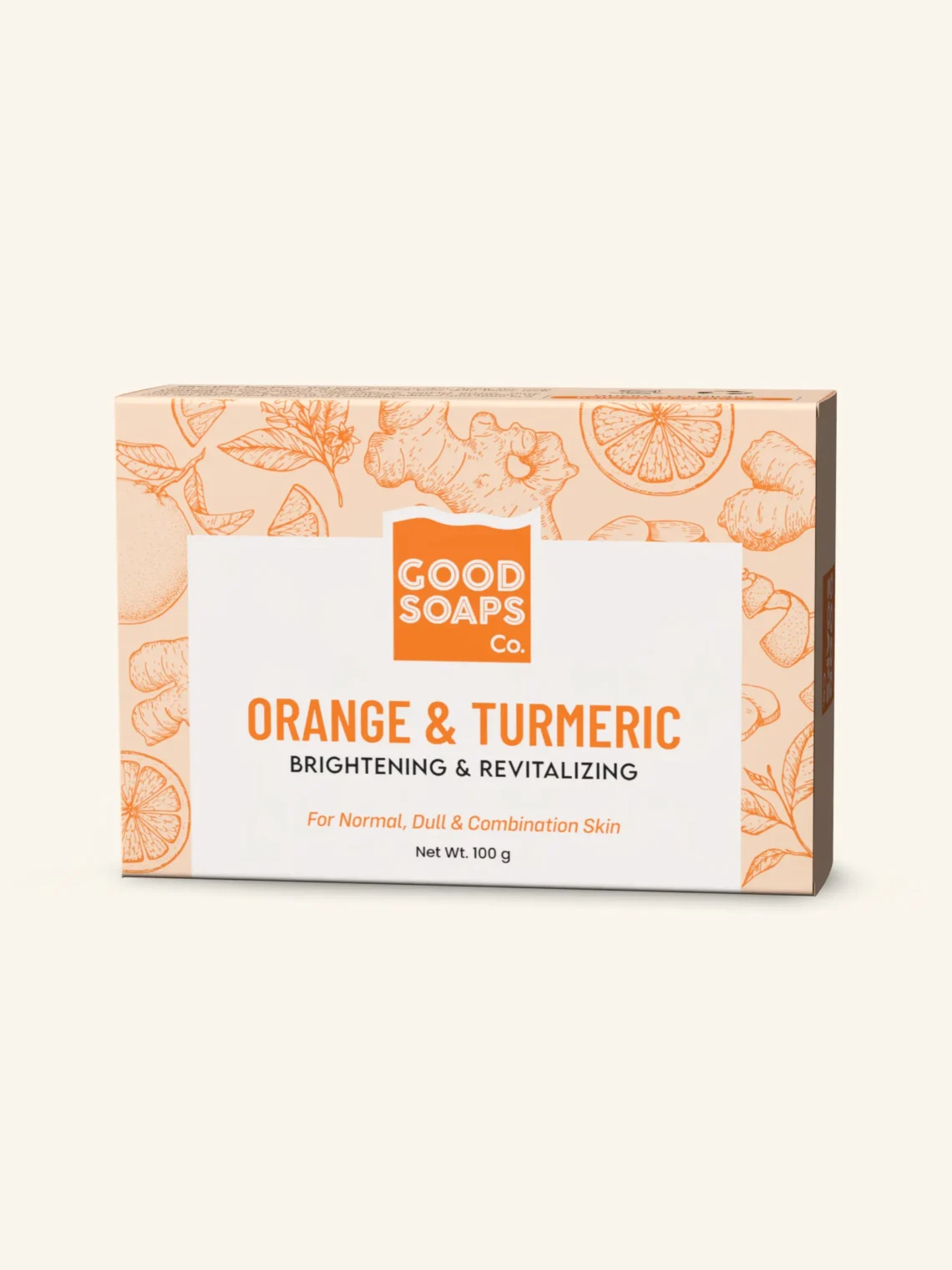
Orange & Turmeric Soap by Good Soap
Good Soap’s Orange & Turmeric Soap provides a convenient way to incorporate turmeric into an everyday cleansing routine. The combination of orange and turmeric makes it suitable for people who enjoy plant-inspired skincare products.
Its role should be viewed realistically: it is a cleansing product, not a medical treatment for hyperpigmentation.
You can use it as part of a broader routine that includes gentle cleansing, moisturising, and daily sun protection. If your goal is to improve the appearance of dark spots, these supporting habits are important.
Before using any new product, review the ingredient list and follow the product directions. If you have sensitive skin, consider performing a patch test and discontinue use if persistent irritation occurs.
When Should You See a Dermatologist?
Not every dark spot should be treated at home. Consider professional advice if:
- A spot changes in size, shape, colour, or appearance.
- Pigmentation appears suddenly without an obvious cause.
- Dark patches continue to spread.
- You have persistent acne or inflammation.
- Over-the-counter skincare products are causing irritation.
- Pigmentation is significantly affecting your confidence or quality of life.
A dermatologist can help identify the cause of pigmentation and recommend treatments that are appropriate for your skin.
Final Thoughts
Turmeric has a long history in traditional skincare and continues to attract interest because of the properties of curcumin. Its antioxidant and anti-inflammatory potential makes it an interesting ingredient for modern skincare formulations.
However, turmeric soap has clear limitations when it comes to dark spots. Because it is a rinse-off cleanser, it should not be expected to erase established pigmentation or dramatically change your natural skin colour.
Good Soap’s Orange & Turmeric Soap can be used as part of a simple cleansing routine for people who enjoy turmeric-based skincare. For managing dark spots, combine suitable cleansing with moisturising, consistent sun protection, and targeted skincare when appropriate.
The goal should be healthy, comfortable, and more even-looking skin—not unrealistic promises of instant whitening.