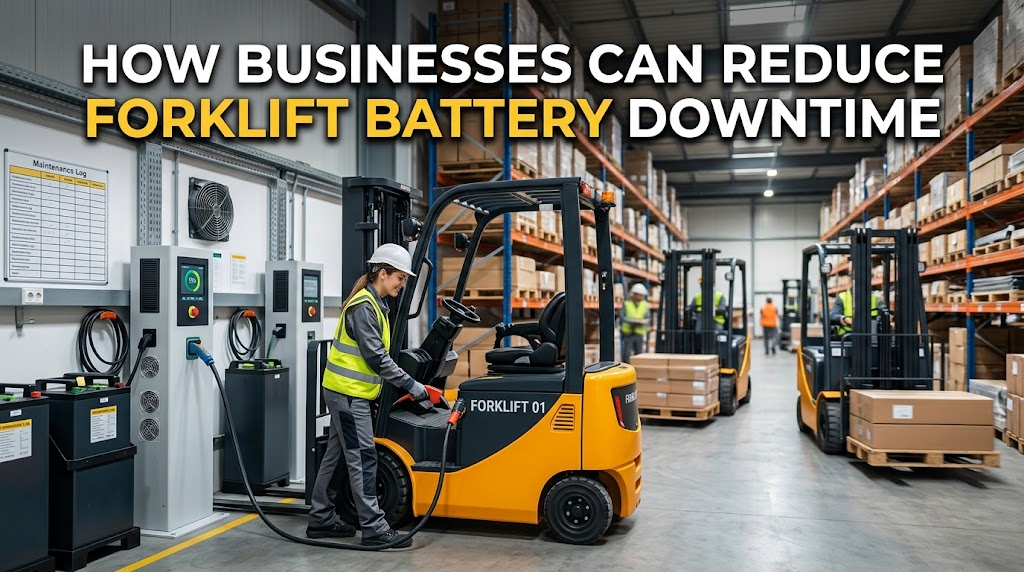
Forklifts play an important role in warehouses, distribution centers, manufacturing facilities, and many other industrial environments. When they are operating properly, they help move materials quickly and keep daily operations on schedule. But when a forklift battery loses power unexpectedly or takes too long to charge, the entire workflow can slow down. Even a short period of battery downtime can create delays, increase labor costs, and put additional pressure on other equipment.
For businesses that rely heavily on electric forklifts, investing in regular Industrial battery service can make a noticeable difference. Professional inspections and timely maintenance help identify battery problems before they become serious enough to interrupt operations. The good news is that businesses do not always need complicated solutions to reduce battery downtime. Consistent maintenance, proper charging habits, good storage practices, and employee training can all contribute to more dependable forklift performance.
Why Forklift Battery Downtime Matters
Battery downtime is more than an inconvenience. When a forklift is unavailable, employees may have to wait for another machine, rearrange work schedules, or move materials manually. These interruptions can quickly affect productivity.
For example, if several forklifts are being used during a busy warehouse shift and one battery suddenly fails, another forklift may have to handle the additional workload. This can increase operating hours on the remaining equipment and potentially accelerate wear.
Repeated battery-related interruptions can also lead to:
- Lower warehouse productivity
- Delays in loading and unloading
- Increased labor expenses
- Greater stress on backup forklifts
- More frequent emergency repairs
- Shorter battery service life
- Unplanned maintenance costs
Reducing downtime starts with treating forklift batteries as an important part of the overall equipment maintenance strategy rather than something that only needs attention when it stops working.
Establish a Regular Battery Maintenance Schedule
One of the simplest ways to prevent unexpected downtime is to inspect forklift batteries regularly. Waiting until a battery shows obvious signs of failure can make the eventual repair more expensive and disruptive.
A maintenance schedule should account for how frequently each forklift is used. A machine operating for several hours every day may require more frequent inspections than equipment used occasionally.
During routine inspections, employees or technicians can check for issues such as:
- Corrosion around terminals
- Loose or damaged connections
- Cracked battery cases
- Unusual odors
- Low electrolyte levels in applicable batteries
- Damaged cables
- Signs of overheating
- Physical swelling or deformation
- Unusual charging behavior
Keeping a written maintenance record can also be helpful. Businesses can track recurring problems, repair dates, battery age, and performance changes. This information makes it easier to identify batteries that are approaching the end of their useful life.
Train Employees on Proper Charging Practices
Charging habits have a major effect on forklift battery performance. Employees may assume that plugging in a battery is a simple task, but improper charging can gradually reduce battery capacity and increase the likelihood of downtime.
Employees should understand the charging procedures recommended for the specific battery and forklift. This includes knowing when the battery should be charged, how long charging should take, and what signs may indicate a charging problem.
Avoid making charging decisions based solely on convenience. Constantly interrupting charging cycles or using unsuitable charging equipment can affect battery performance.
Businesses should also keep charging areas organized and free from unnecessary clutter. Charging stations should have the appropriate ventilation, equipment, and safety procedures for the batteries being used.
Avoid Unnecessary Charging Mistakes
Common charging mistakes can include:
- Using an incompatible charger
- Ignoring warning indicators
- Repeatedly interrupting charging cycles
- Allowing batteries to become excessively discharged
- Failing to inspect charging cables
- Continuing to use equipment that shows charging abnormalities
A clear charging procedure posted near the charging station can help employees follow the same process consistently.
Monitor Battery Performance
A forklift battery may provide warning signs before it fails completely. Businesses can reduce downtime by paying attention to changes in performance instead of ignoring them.
If a forklift that normally operates through a full shift begins losing power much sooner, the battery may require inspection. Similarly, unusually long charging times or noticeable changes in operating performance should not be dismissed.
Managers can monitor:
- Runtime between charges
- Charging duration
- Frequency of charging
- Forklift performance
- Battery temperature during operation or charging
- Repair frequency
Tracking these details over time provides useful information about battery health.
A gradual decline in runtime may indicate normal aging, but it could also point to maintenance problems or a developing fault. Identifying the difference early can help businesses decide whether maintenance, repair, rebuilding, or replacement makes the most sense.
Keep Battery Connections Clean and Secure
Battery connections may seem like a small detail, but loose or corroded connections can affect electrical performance. Poor connections can create resistance, generate excess heat, and contribute to unreliable equipment operation.
During inspections, terminals and connectors should be checked for corrosion, damage, or looseness. Connections should be serviced according to the battery manufacturer’s recommendations.
It is important not to overlook cables and connectors when troubleshooting a forklift that is experiencing intermittent power problems. The battery itself may not be the only cause.
Maintain the Forklift Along With the Battery
A healthy battery cannot compensate for a forklift that is poorly maintained. Problems with the forklift’s electrical system, hydraulic components, drive system, or other parts can affect overall performance and make battery problems more difficult to diagnose.
Businesses should therefore coordinate battery maintenance with general forklift maintenance.
For example, if a forklift suddenly consumes more energy than usual, the problem may not necessarily be the battery. Mechanical resistance, excessive loads, tire issues, or other equipment problems may cause the forklift to work harder than normal.
Looking at the forklift and battery as one system makes troubleshooting more effective.
Create a Backup Battery Strategy
For businesses with demanding warehouse operations, having a backup plan can significantly reduce downtime.
Depending on the size of the operation, this could involve maintaining spare batteries, rotating batteries between equipment, or having access to professional repair and rebuilding services.
A backup strategy is particularly useful for facilities that operate multiple shifts. If a battery requires servicing, another properly maintained battery can help keep the forklift available while the issue is addressed.
However, spare batteries should also be stored and maintained correctly. Simply purchasing extra batteries without a maintenance plan does not eliminate the risk of downtime.
Pay Attention to Battery Age
Forklift batteries do not last forever. As they age, their capacity and ability to hold a charge can gradually decline.
Older batteries may require more frequent charging and may not provide the same runtime they once did. Businesses should keep track of battery age and performance rather than waiting for complete failure.
That does not necessarily mean every older battery should immediately be replaced. Depending on its condition, a battery may benefit from professional inspection, repair, or rebuilding.
The key is making decisions based on actual condition and operating requirements rather than age alone.
Improve Warehouse Charging Practices
The charging environment can have a significant effect on battery reliability. Businesses should designate an appropriate charging area and keep it organized.
Employees should have easy access to the correct chargers and understand which charger belongs with each battery or forklift. Clear labeling can prevent mistakes, especially in larger facilities where several battery types may be in use.
Temperature is another consideration. Extreme environmental conditions can affect battery performance and charging behavior. Businesses should follow the manufacturer’s recommendations for operating and storing their specific battery type.
Schedule Preventive Repairs
Waiting for a battery problem to become an emergency is one of the easiest ways to increase downtime. Preventive maintenance allows businesses to address smaller issues before they develop into larger failures.
For example, replacing a damaged cable or addressing corrosion during a scheduled inspection may take far less time than dealing with a forklift that suddenly becomes unusable during a busy shift.
Preventive maintenance also gives managers more control over scheduling. Instead of reacting to unexpected failures, repairs can be planned around production requirements.
Teach Employees to Report Problems Early
Employees who operate forklifts every day are often the first people to notice changes in performance. Businesses should encourage operators to report unusual behavior immediately.
Simple warning signs might include:
- Reduced operating time
- Slower forklift performance
- Unusual smells
- Excessive heat
- Charging problems
- Warning lights
- Visible battery damage
- Unexpected power loss
Employees should never be encouraged to ignore these symptoms simply because the forklift is still operational.
A small problem reported early may be much easier and less expensive to resolve than a complete battery failure.
Know When Repair or Replacement Makes Sense
Not every battery problem requires complete replacement. Depending on the condition of the battery, professional repair or rebuilding may be a practical option.
On the other hand, some batteries may be too damaged, inefficient, or worn to justify further repair. In those situations, replacement may provide better long-term value.
Businesses should consider factors such as:
- Battery age
- Current capacity
- Repair history
- Operating demands
- Replacement cost
- Expected remaining service life
- Frequency of downtime
Getting a professional assessment can help businesses make a more informed decision instead of automatically choosing the most expensive option.
Build a Battery Management Routine
The most effective way to reduce forklift battery downtime is to make battery care part of normal operations.
A practical routine might include:
Daily:
Operators check for visible damage, unusual performance, and charging concerns.
Weekly:
Supervisors review battery condition, charging practices, and reported issues.
Monthly:
Maintenance teams perform more detailed inspections and review performance records.
Periodically:
Qualified technicians evaluate battery health and determine whether repair, rebuilding, or replacement is appropriate.
This type of routine turns battery maintenance from an emergency response into a predictable part of equipment management.
Conclusion
Forklift battery downtime can disrupt warehouse productivity, increase operating costs, and create unnecessary stress for employees. Fortunately, many battery-related interruptions can be reduced through consistent maintenance, proper charging, employee training, performance monitoring, and timely repairs. Businesses that take a proactive approach are better positioned to keep forklifts available when they are needed most.
Instead of waiting for a battery to fail completely, companies should watch for early warning signs and address problems before they become major disruptions. Working with an experienced provider such as Battery Rescue LLC can also help businesses evaluate battery condition and determine whether servicing, rebuilding, repair, or replacement is the right solution. With a practical battery management strategy in place, businesses can improve reliability, control maintenance costs, and keep their material-handling operations moving.