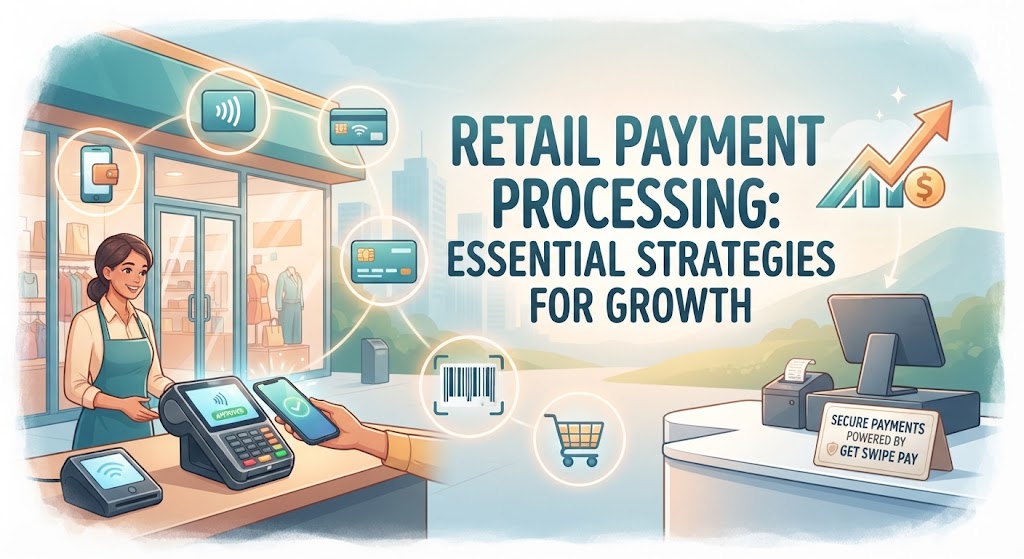
The modern retail landscape is defined by speed, convenience, and an unwavering expectation for seamless transactions. For any physical storefront, the point of sale is more than just a moment of exchange; it is the critical conclusion of the customer journey and a primary driver of operational efficiency. In an era where consumers can effortlessly switch between online and offline shopping, a clunky, slow, or restricted payment process can undo all the goodwill a retailer has built up.
Today’s merchants must navigate a complex ecosystem of digital wallets, contactless cards, EMV chip technology, and integrated inventory systems. Failing to modernize is not merely an inconvenience; it is a strategic risk that directly impacts customer satisfaction, data security, and profitability. Retail payment processing is no longer just about accepting cash and swiping a magnetic stripe it is the backbone of a modern, agile retail business.
This guide explores the essential components of contemporary retail payment processing, providing actionable insights for merchants who want to optimize their checkout experience, reduce costs, and secure their revenue streams.
The Evolving Expectations of the Modern Consumer
The definition of a “smooth transaction” has shifted dramatically in the last decade. Today’s retail environment demands speed, flexibility, and security, driven by changing consumer habits and technological advancements.
Speed and Convenience at the Point of Sale
Long checkout lines are a primary cause of cart abandonment in physical retail. Customers value their time, and a slow payment process can tarnish an otherwise positive shopping experience. Modern retail payment processing systems are designed to expedite the checkout flow through several key innovations:
- Contactless Payments (Tap-to-Pay): NFC technology allows customers to simply tap their smartphone or contactless card, significantly reducing transaction time compared to inserting a chip or swiping.
- Mobile Wallets: The integration of Apple Pay, Google Wallet, and Samsung Pay has become essential, particularly for younger demographics who prefer the convenience of carrying their payment methods on their devices.
- Integrated POS Systems: Modern systems link payment processing directly to inventory management, customer relationship management (CRM), and accounting software. This integration eliminates manual data entry, reduces human error, and provides a holistic view of business performance.
Meeting the Demand for Payment Choice
A modern retail business cannot afford to turn away a customer because it doesn’t accept their preferred payment method. Providing a wide array of options is a fundamental aspect of customer service.
- Diverse Card Acceptance: While Visa, Mastercard, and American Express are standard, supporting Discover and regional networks is important.
- Buy Now, Pay Later (BNPL): Services like Afterpay, Klarna, and Affirm are increasingly popular, allowing customers to finance larger purchases at the point of sale, which can increase average transaction value.
- Alternative Payment Methods (APMs): Depending on the customer base, accepting QR code payments, cryptocurrency (via third-party processors), or even regional payment apps can be a differentiator.
Securing Trust: The Importance of Payment Security
While speed is crucial, it must not come at the expense of security. Data breaches can be financially devastating and irreparably damage a brand’s reputation. Robust security measures are a non-negotiable component of modern retail payment processing.
EMV Chip Technology and Liability Shift
The adoption of EMV (Europay, Mastercard, and Visa) chip technology has been the most significant advancement in point-of-sale security. EMV chips create a unique transaction code for each purchase, making counterfeit cards extremely difficult to produce.
Crucially, the “liability shift” means that merchants who do not use EMV-compliant terminals are held responsible for fraudulent transactions made with counterfeit cards. Upgrading to EMV-capable hardware is a fundamental security and financial protection measure for any retailer.
PCI Compliance and Data Protection
The Payment Card Industry Data Security Council (PCI SSC) establishes rigorous standards for organizations that handle cardholder information. Adhering to PCI DSS (Data Security Standards) is mandatory for all merchants, regardless of their size.
PCI compliance involves:
- Installing and maintaining a secure network configuration.
- Protecting stored cardholder data.
- Implementing strong access control measures.
- Regularly monitoring and testing networks.
Failure to maintain PCI compliance can result in hefty fines from payment processors and increased liability in the event of a breach. Modern payment providers often assist merchants in simplifying the PCI compliance process.
Choosing the Right Retail Payment Processing Partner
The processor you choose will have a significant impact on your operational costs, your ability to scale, and the quality of service you can offer your customers. Selecting a partner like Get Swipe Pay involves evaluating several critical factors.
Understanding Fee Structures
Payment processing fees can be complex and opaque. Understanding how processors charge is essential for managing your bottom line. Common fee models include:
- Interchange-Plus: This is generally the most transparent model. The merchant pays the direct cost set by the card networks (interchange) plus a fixed markup for the processor.
- Flat-Rate: The merchant pays a single, predictable rate for all transactions (e.g., 2.6% + $0.10). While simple, this can sometimes be more expensive for high-volume businesses or those with a high percentage of debit transactions.
- Tiered Pricing: The processor categorizes transactions into “qualified,” “mid-qualified,” and “non-qualified” tiers, each with different rates. This model is often the least transparent and can lead to unexpected costs.
Hardware and Software Compatibility
Your payment processing solution must align with your existing or planned technology infrastructure.
- Hardware Options: Does the processor offer reliable countertop terminals, mobile card readers, or fully integrated POS systems with barcode scanners and receipt printers?
- Software Integrations: Does the system integrate seamlessly with your e-commerce platform, accounting software (like QuickBooks or Xero), and inventory management tools? A true omnichannel solution unifies online and offline sales data.
Optimizing the Customer Experience Through Payments
The payment experience extends beyond the moment of transaction. Modern processing solutions offer features that enhance the overall customer relationship and streamline operations.
Omnichannel Integration
For modern retailers, the distinction between online and offline shopping is blurring. Customers may browse online and buy in-store, or vice-versa. An omnichannel payment processing strategy is essential for a cohesive customer experience. This integration allows for:
- Buy Online, Pick Up In-Store (BOPIS): Transactions are initiated online and finalized at the point of sale.
- Unified Customer Profiles: Sales data from both channels is linked, enabling personalized marketing and loyalty programs based on total customer spend.
- Centralized Reporting: Merchants can track inventory levels and sales performance across all channels in real-time.
Loyalty Programs and Data Utilization
A modern POS system with integrated payment processing captures valuable customer data. This data can be leveraged to create targeted loyalty programs that encourage repeat business.
- Customer Data Capture: The system can collect customer email addresses or phone numbers at the point of sale (with consent).
- Purchase History Tracking: Loyalty rewards can be automatically calculated based on customer spending, or personalized offers can be generated based on past purchases.
- Streamlined Enrollment: Signing up for a loyalty program can be integrated directly into the checkout flow, making it frictionless for the customer.
Conclusion
Retail payment processing is the unsung hero of a successful retail operation. It is the interface between the customer and the merchant, and its efficiency directly impacts sales, security, and customer loyalty. By understanding the critical role of payment technology, prioritizing robust security, and choosing the right processing partner, retailers can transform their point-of-sale from a simple transaction point into a strategic asset for growth.
In an evolving market, the ability to adapt and offer a seamless, secure, and flexible payment experience is a key differentiator that separates thriving businesses from those that struggle to keep pace.
Frequently Asked Questions
Q1: What is an EMV chip, and why is it important for retail payment processing?
A1: EMV (Europay, Mastercard, and Visa) is a global standard for chip-based debit and credit cards. Unlike magnetic stripe cards, which store unchanging data that can be easily copied, chip cards create a unique transaction code for each purchase. This makes it incredibly difficult for fraudsters to create counterfeit cards. For merchants, using EMV-compliant terminals is critical because of the “liability shift,” which protects them from financial responsibility for fraudulent transactions made with counterfeit cards if they have the correct technology in place.
Q2: What is PCI Compliance, and do I need it for my retail business?
A2: PCI DSS (Payment Card Industry Data Security Standards) is a set of security standards designed to ensure that all companies that accept, process, store, or transmit credit card information maintain a secure environment. Yes, PCI compliance is mandatory for all merchants who handle credit or debit card data, regardless of the size of their business. Failure to be compliant can result in fines, penalties, and increased liability in the event of a data breach. Many payment processors offer tools and support to help merchants achieve and maintain compliance.
Q3: What is the difference between interchange-plus and flat-rate pricing models?
A3: Interchange-plus pricing is generally considered the most transparent model. It passes the direct “interchange” fees set by the card networks (like Visa and Mastercard) directly to the merchant, plus a small, fixed markup for the processor on each transaction. Flat-rate pricing charges a single, predictable rate for all transactions, regardless of the card type (e.g., 2.7% per swipe). While flat-rate is simpler to understand, interchange-plus often results in lower overall processing costs for businesses with high transaction volumes or a mix of credit and debit card sales.
Q4: How can integrated payment processing improve my retail operations?
A4: An integrated payment system connects your point-of-sale (POS) hardware directly with your payment processor and your back-end business software, such as inventory management, accounting, and customer relationship management (CRM) tools. This eliminates the need for manual data entry, reducing human error and saving significant time. It also provides real-time insights into sales performance and inventory levels across all your sales channels, enabling better decision-making and a more unified omnichannel customer experience.
Q5: How can modern retail payment processing help me build customer loyalty?
A5: Modern POS systems with integrated payment processing collect valuable data about customer purchasing habits and preferences. This data can be used to create and manage sophisticated, automated loyalty programs. For example, the system can track customer spending to automatically issue rewards, or capture email addresses at the point of sale to send personalized offers and promotions based on past purchases. By making the enrollment and reward process seamless, merchants can effectively encourage repeat business and strengthen customer relationships.