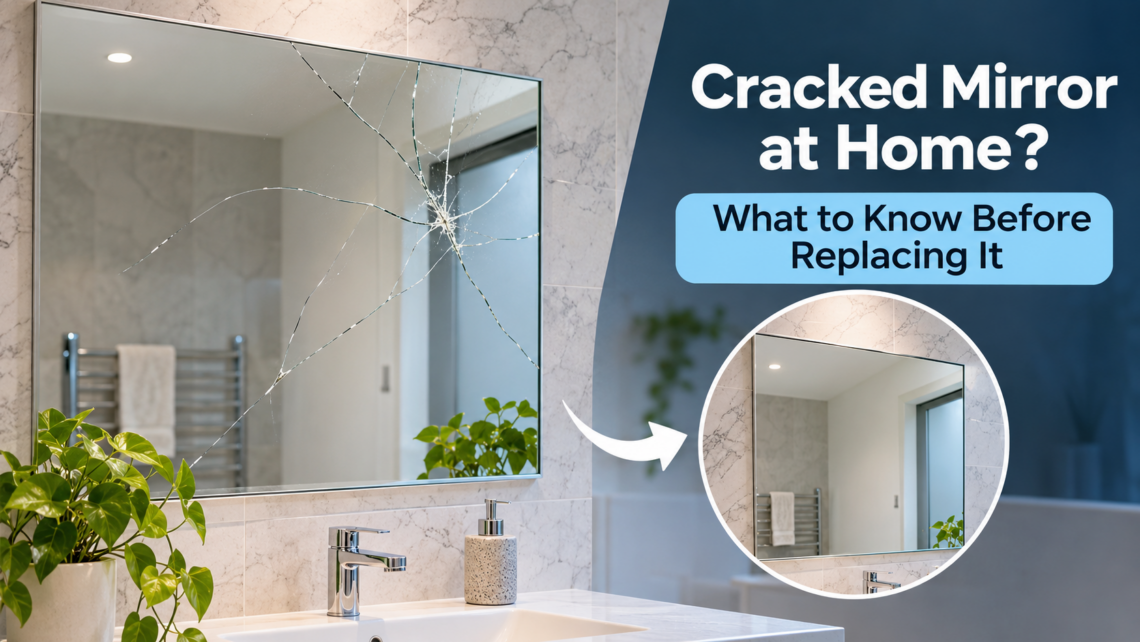
A cracked mirror might seem like a small problem, especially when the damage is limited to one corner or a thin line across the glass. However, even a minor crack can become a safety concern, particularly in bathrooms, bedrooms and busy areas of the home.
Mirrors are more than decorative features. They help brighten rooms, make smaller spaces feel more open and serve a practical purpose in everyday routines. When a mirror becomes cracked, chipped or badly worn, replacing it can improve both the appearance and safety of your home.
If you’re considering mirror replacement, it’s worth understanding what causes mirror damage, when replacement is necessary, which options are available and why professional installation can make a difference.
Why Do Mirrors Crack or Break?
Mirrors can develop cracks for several reasons. Sometimes the cause is obvious, such as an accidental impact. In other cases, damage develops gradually because of installation issues, moisture or movement around the glass.
Accidental Impact
One of the most common reasons for broken mirror replacement is accidental damage. A dropped bathroom accessory, moving furniture or a door swinging into a wall mirror can cause chips or cracks.
Even if the mirror remains attached to the wall, the damaged glass may become unstable. A crack near an edge or mounting point deserves particular attention.
Incorrect Mirror Installation
Mirrors need suitable support, especially when they’re large or heavy. Poorly positioned brackets, unsuitable adhesives or uneven surfaces can place unnecessary stress on the glass.
Over time, this pressure may contribute to cracking or movement. Professional mirror installation helps ensure the replacement is properly supported and securely fitted.
Moisture and Humidity
Bathroom mirrors are regularly exposed to steam and moisture. If water reaches the edges or backing, it can damage the reflective coating.
You may notice dark spots, black edges or cloudy patches that don’t disappear after cleaning. This is often called desilvering, and it can make an otherwise intact mirror look old and unattractive.
In many cases, bathroom mirror replacement is a more practical solution than attempting to restore a badly deteriorated reflective surface.
Temperature Changes and Building Movement
Changes in temperature and slight movement in walls or cabinetry can sometimes place stress on mirrors, particularly those installed with inadequate clearance or unsuitable fixing methods.
A properly measured replacement allows for the installation conditions and helps reduce the risk of similar problems occurring again.
Can a Cracked Mirror Be Repaired?
This is one of the first questions homeowners ask after discovering damage.
The answer depends on the type and extent of the problem.
Minor surface marks may sometimes be improved with suitable glass-cleaning or polishing methods. However, a genuine crack running through the glass cannot normally be restored to its original strength and appearance.
Applying adhesive or a household repair product might temporarily hold a small damaged area together, but it does not make cracked glass safe or restore its structural integrity.
Mirror replacement is generally the safer long-term choice when the glass itself is cracked or broken.
Replacement is particularly worth considering when:
- The crack extends across the mirror or reaches an edge.
- Pieces of glass are loose or missing.
- The mirror has sharp or chipped corners.
- Damage is close to mounting brackets or fixing points.
- The reflective backing is badly deteriorated.
- The mirror is installed in a bathroom or another frequently used space.
If a mirror is damaged but remains firmly attached, avoid touching the cracked area or trying to remove it without the appropriate equipment.
Signs Your Mirror Needs Replacing
Not every damaged mirror shatters immediately. Some develop problems slowly, making it easy to postpone replacement.
Here are several signs that a new mirror may be necessary.
1. Visible Cracks or Chips
A cracked mirror can be difficult to clean safely, and exposed edges may cause cuts. Even a small chip can become more problematic if the mirror is knocked or placed under additional stress.
2. Black Spots Around the Edges
Dark marks along the perimeter often indicate damage to the reflective backing. These marks generally cannot be removed with ordinary cleaning products.
Replacing the mirror restores a clear reflection and improves the overall appearance of the room.
3. Cloudy or Discoloured Glass
A mirror that looks permanently cloudy, stained or discoloured may have deterioration behind the glass rather than dirt on the surface.
If normal cleaning doesn’t help, a replacement mirror may be the most effective option.
4. Loose or Unstable Mounting
A mirror that moves when touched, tilts away from the wall or appears to be separating from its adhesive should be inspected promptly.
The problem may involve the mounting system rather than the glass itself, but an assessment is important before deciding whether refitting or replacement is appropriate.
5. An Outdated or Poorly Fitted Mirror
Sometimes homeowners choose mirror replacement even when the existing glass isn’t broken.
An old mirror may be too small for a renovated bathroom, poorly positioned above a vanity or unsuitable for a newly decorated room.
Replacing it with a properly sized design can make the space feel more balanced without requiring major renovation work.
Bathroom Mirror Replacement: What Should You Consider?
Bathrooms are among the most common areas where homeowners need mirror glass replacement.
Before choosing a new bathroom mirror, consider the following factors.
Mirror Size and Position
The replacement should suit the vanity, available wall space and surrounding fixtures.
A mirror that’s too narrow may look out of proportion, while one that’s too large could interfere with lighting, cabinets or nearby fittings.
Accurate measurements are particularly important for mirrors installed between tiled walls or inside recessed spaces.
Moisture Resistance
Bathroom conditions can be demanding. Choosing a mirror designed for humid environments, with suitable backing and properly protected edges, may help extend its service life.
Good ventilation also helps reduce prolonged moisture exposure.
Edge Finish
Different edge treatments can change the appearance of a mirror.
Polished edges create a clean, simple finish, while bevelled edges add a decorative detail. Framed mirrors offer another option for homeowners who prefer a more traditional or defined look.
Safety and Installation
The mirror’s size, location and intended use can affect the appropriate glass specification and fixing method.
For larger mirrors or installations in areas where impact is possible, a professional glazier can advise on suitable safety measures and applicable Australian glazing requirements.
Different Types of Mirror Replacement for Homes
Mirror replacement services aren’t limited to standard bathroom mirrors. Different rooms and applications may require different glass sizes, shapes and installation methods.
Wall Mirror Replacement
Large wall mirrors are often installed in living rooms, hallways and bedrooms to reflect natural light and create a sense of space.
Replacing a damaged wall mirror may involve removing the existing panel, preparing the surface and installing a new mirror using suitable mechanical fixings or compatible adhesives.
Vanity Mirror Replacement
Vanity mirrors are usually positioned above bathroom sinks or dressing tables.
A replacement can be made to suit the existing space, including custom dimensions where standard mirror sizes aren’t appropriate.
Wardrobe Mirror Replacement
Mirrored wardrobe doors are practical in bedrooms, but they can become chipped, cracked or damaged through everyday use.
Wardrobe mirror replacement may involve replacing the glass within an existing door system rather than replacing the entire wardrobe.
The condition of the frame, door and sliding mechanism should also be checked before new glass is installed.
Custom Mirror Replacement
Some homes have mirrors with unusual shapes, curved edges, cut-outs or specific dimensions.
Custom-cut mirror glass can provide a replacement that fits the existing location while maintaining the style of the room.
A glazier can measure the opening and advise on suitable glass thickness, edge finishing and mounting options.
What Happens During Professional Mirror Replacement?
Many homeowners are unsure what to expect when booking a mirror replacement service.
Although the process varies depending on the mirror’s size and location, it generally involves several stages.
Step 1: Inspecting the Existing Mirror
A glazier first assesses the damage, mounting method and surrounding surfaces.
This helps determine whether the mirror can be safely removed and whether the wall, tiles or supporting frame need attention.
Step 2: Taking Accurate Measurements
The replacement mirror is measured to suit the available space.
For custom mirrors, the glazier may also need to consider nearby fittings, edge clearances, cut-outs and the required finish.
Step 3: Removing the Damaged Glass
Broken mirror removal requires care, particularly when the glass is bonded directly to a wall.
Professionals use appropriate tools and handling techniques to reduce the risk of injury and limit damage to surrounding surfaces.
However, adhesive-mounted mirrors can sometimes damage paint, plasterboard or tiles during removal, so the condition of the underlying surface matters.
Step 4: Preparing the Installation Area
Once the old mirror is removed, the mounting surface is inspected and prepared.
Any unsuitable adhesive residue, loose material or damaged support may need to be addressed before the new mirror is installed.
Step 5: Installing the Replacement Mirror
The new mirror is positioned and secured using a fixing method appropriate for its weight, size and location.
The installer checks alignment, support and finishing details before completing the job.
Professional mirror glass replacement aims to deliver a secure installation and a clean, finished appearance.
How Much Does Mirror Replacement Cost in Sydney?
The cost of mirror replacement in Sydney can vary considerably depending on the work involved.
A small, straightforward bathroom mirror will usually require a different level of labour and material than a large custom wall mirror.
Several factors influence the final quote.
Mirror dimensions: Larger mirrors generally require more glass and may need additional handling or installation support.
Glass thickness and specification: Different mirror types, safety requirements and backing options can affect material costs.
Custom shapes and edge finishes: Bevelled edges, polished cut-outs and unusual dimensions may involve additional fabrication.
Removal of the existing mirror: Removing cracked glass, particularly from tiled or adhesive-mounted surfaces, can increase the work required.
Accessibility: Mirrors installed at height, in narrow spaces or behind fixed fittings may be more complicated to replace.
Installation requirements: The condition of the wall and the type of mounting system can also influence the overall price.
For an accurate estimate, it’s best to provide the mirror’s approximate dimensions, photographs of the damage and details about its location.
A local glazier can then explain the likely work involved and whether an on-site inspection is necessary.
Should You Replace a Broken Mirror Yourself?
Replacing a small, easily removable framed mirror may seem straightforward. However, removing large, cracked or permanently bonded mirror glass presents additional risks.
Broken glass can cause serious cuts, and large mirror panels can be difficult to control without suitable handling equipment.
There is also a risk of damaging tiles, walls, cabinetry or plumbing fixtures during removal.
Professional assistance is particularly advisable for:
- Large bathroom and wall mirrors.
- Mirrors bonded directly to tiles or plasterboard.
- Cracked or partially detached glass.
- Heavy frameless mirrors.
- Mirrored wardrobe doors.
- Custom-cut mirrors requiring precise installation.
An experienced glazier can also help identify the correct replacement specification rather than simply fitting glass that looks similar to the original.
How to Choose a Mirror Replacement Service in Sydney
If you’re looking for a reliable mirror replacement service, it’s worth checking more than the initial quoted price.
Look for a provider who can explain the proposed replacement, measure accurately and recommend suitable glass and fixing methods.
Ask whether the service includes removal and disposal of the damaged mirror, preparation of the mounting surface and installation of the new glass.
It’s also helpful to confirm whether the glazier handles custom mirror cutting, bathroom mirrors, wall mirrors and wardrobe mirror panels.
For homeowners seeking mirror replacement in Sydney, Amrah Glass & Aluminium provides a local point of contact for discussing damaged mirrors and replacement requirements.
Sharing clear photographs and measurements when making an enquiry can help the team understand the job before arranging the next steps.
How to Prevent Damage to Your New Mirror
Once a new mirror is installed, a few simple habits can help keep it in good condition.
Use appropriate cleaning products. Clean the glass with a soft microfibre cloth and a cleaner suitable for mirrors. Avoid abrasive materials that can scratch the surface.
Keep moisture away from the edges. Rather than spraying excessive liquid directly onto the mirror, apply a small amount to the cloth. This helps prevent cleaning fluid from collecting along the edges.
Improve bathroom ventilation. Using an exhaust fan or opening a window can help reduce prolonged condensation.
Avoid placing pressure on the glass. Don’t lean heavy objects against mirrors or use them as support when cleaning nearby surfaces.
Check mounting points occasionally. If a mirror begins to move, tilt or separate from the wall, arrange an inspection rather than waiting for it to become unsafe.
These precautions can help protect the reflective backing and maintain the mirror’s appearance over time.
Final Thoughts
A cracked or damaged mirror isn’t always something that can be safely repaired. Whether the problem is broken glass, chipped edges, black spots or deteriorating backing, replacing the mirror is often the most practical way to restore its appearance and function.
The right replacement depends on the mirror’s location, size, mounting method and the condition of the surrounding surface.
For Sydney homeowners, professional mirror replacement offers the benefit of accurate measurements, appropriate glass selection and secure installation.
If your bathroom, bedroom or living room mirror is showing signs of damage, addressing the problem early can help prevent further deterioration and keep your home looking its best.