
A mint figure in a sealed box can lose a significant chunk of its value in one rough week with the post. The damage is usually small: a dented corner, a crushed flap, or a scuffed window. Almost all of it comes from movement and pressure, and almost all of it can be prevented with a snug carton, sensible padding and a stiff layer where it counts. Most of what you need is stocked by decent packaging distributors, so you don’t need any specialist kit.
Here’s how to match each material to what you’re actually sending, from boxed figures to trading cards.
What Makes Collectables Harder to Post Than Ordinary Parcels?
Collectables carry two values: the item and its packaging. A small dent in a box can matter as much as a crack in the figure inside. They also tend to have fine details, sharp corners and fixed shapes that don’t forgive movement, so padding, fit and corner protection all matter more than usual.
A collectible is any item people keep, trade or display for its appeal rather than its everyday use. Think figures, model kits, trading cards, comics, die-cast cars and boxed sets. Buyers inspect collectibles closely, so the condition of the item significantly affects its price.
The box is considered an integral part of the item.
Plenty of collectors won’t touch a figure with a crushed box, even if the figure is perfect. A £90 boxed set with a dented corner can sell for noticeably less than a clean one. So the outer carton has to protect the original box as well as the contents.
Corners, edges and fine details
Corners crush first, and thin plastic parts snap next. Picture a model spaceship with delicate aerodynamics or a carded toy with a hangtag that bends at the slightest knock. If something sticks out, provide it with its cushion.
Weight and awkward fit
Heavy items, like die-cast models, sink through loose padding and hit the base of the carton. Light ones rattle about. Either way, size the carton to the item, not the other way around.
Good packaging distributors list dozens of carton sizes, so you can usually find one within a couple of centimetres of what you need. Aim for about 5cm of room around the wrapped item.
How Should You Wrap Different Kinds of Collectibles?
Wrap by shape and surface. Boxed items need a protective outer layer and corner cushioning, flat items need a stiff sandwich, and loose or fiddly pieces need individual wrapping in bubble or foam. Keep the wrapping snug and tape it shut before the item goes anywhere near the carton.
Most mistakes here come from over-wrapping or under-wrapping. Too much bulk wastes space, and too little leaves corners exposed.
Boxed figures and model kits
If the box has a clear window, slip the whole thing into a resealable bag first to keep dust and fingerprints out. Then wrap it in one or two layers of bubble wrap and tape the wrap to itself, never to the box. Tape can lift printed cards, and that’s a very annoying way to lose a sale.
Cards, comics and flat items
Flat collectables fail by bending. Sandwich the item between two sheets of stiff card, or cut polystyrene sheets of about 10 mm to size for a rigid front and back. Tape the sandwich shut and keep it flat in the carton.
Polystyrene can crumble at the edges, so wrap the sheets in paper first if you’re sending something pristine.
Bigger pieces: cabinets, cases and shelving
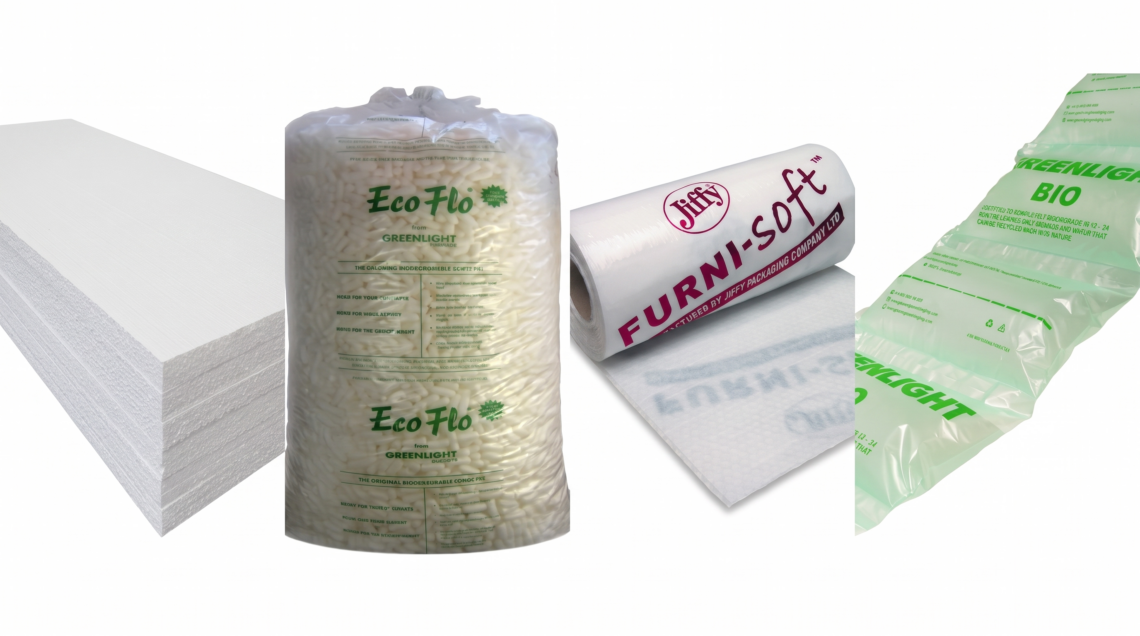
Some collectors sell the furniture along with the collection: a glass-fronted cabinet, a wall shelf, and a wooden display case. That’s a different job. Furnisoft, a laminated foam roll made for wrapping furniture, protects the finish from scuffs, and you cut it to length. Empty the cabinet first, take out any glass shelves and pack them flat on their own.
Where Do Air Pillows Fit, and Where Don’t They?
Pre-inflated pillows are best for filling the spare room around boxed collectables in a carton that’s a little too big. They’re light and quick to use. They aren’t the right choice on their own for heavy, sharp or tiny items, or for anything fragile that hasn’t been wrapped first.
Think of them as the top-up, not the main event. The wrap protects the item, the stiff layer protects the shape, and the pillows stop everything from wandering.
What the pillows do well
They weigh next to nothing, so postage doesn’t creep up. They arrive ready and inflated, which saves bench time if you’re packing twenty parcels on a Sunday evening. And they don’t shed dust or crumbs onto a pristine box, which matters more than people expect.
Use them above, below and beside a wrapped item, then check the carton for movement. A sealed boxed set sent from Sheffield to Aberdeen will see plenty of it.
When loose fill or sheets do better
Ecoflo loose fill is a starch-based packing chip that flows around awkward shapes, so it suits a jumble of small loose pieces better than pillows do. It softens when it gets wet, though, so it’s a poor match for a parcel left on a rainy step. Polystyrene sheets suit flat, heavy or stackable items because they add stiffness, while pillows only add cushioning.
Sharp-cornered items need wrapping first, whichever filler you choose. Most packaging distributors sell all three in small and bulk packs, so it’s easy to try them before you commit.
Quick comparison
Here’s how the main options stack up for collectables.
| Material | Best for | Watch out for |
| Air pillows | Filling spare room around wrapped, boxed items | Sharp edges can burst them; they add no stiffness |
| Ecoflo loose fill | Jumbles of small or oddly shaped pieces | Starch softens when wet; chips can slip under box flaps |
| Polystyrene sheets | Flat, heavy or stackable items that need stiffness | Edges crumble; bulky for small items |
| Bubble wrap | Wrapping individual pieces with fine detail | Adds bulk; tape can life printed items |
How Do You Pack the Box, Step by Step?
Pick a carton with about 5 cm of spare space on every side, wrap the item, cushion the base, centre the item, fill every gap, and then shake the box. If anything moves, add more padding. Seal every seam with tape and label the box clearly.
Gather everything before you start. Hunting for the tape halfway through is how corners get squashed.
Seven steps that work for most items
- Choose a carton with roughly 5 cm spare on every side of the wrapped item.
- Wrap the item, tape the wrap to itself, and add corner protection if it’s boxed.
- Lay a 4 cm cushion across the base of the carton.
- Centre the wrapped item, clear of all four walls.
- Fill every gap at the sides and top, pressing lightly so there are no pockets.
- Close the flaps, shake the box and listen. Anything shifting? Open it and add more.
- Tape every seam in an H shape and label the box clearly.
Buying only what you need
If you only post a few parcels a year, buy small packs and one decent roll of tape. Regular senders save more by buying from packaging distributors in bulk, because the cost per parcel drops once you’re ordering cartons by the box and filler by the bag.
Start with two or three carton sizes that fit most of your stock. If you also sell display cabinets, a roll of furniture is the only unusual item on your list. Everything else is standard.
Frequently Asked Questions
- How Much Padding Is Enough When Packing the Cardboard Boxes?
There should be enough padding so that nothing moves when you shake the box and no item touches the walls. A sensible starting point is to use about 5 cm of padding all around. Heavier items need more at the base, while lighter ones need a snugger fit. If you hear or feel any movement, add more padding and shake the box again.
- Are Pre Inflated Pillows Safe for Boxed Collectables?
Yes, pre-inflated pillows are safe to use as gap fillers around wrapped items in a roomy carton. They cushion light knocks and weigh almost nothing. They aren’t enough alone for heavy or pointy items, and a burst pillow leaves a gap, so use several and check the box for movement before you seal it.
- Is Ecoflo Loose Fill Suitable for Collectables?
For sturdy items or small loose pieces, yes. It flows around awkward shapes and weighs very little. Keep it dry, since starch softens in water, and wrap boxed items first so no chips work their way under the flaps. For flat cards or heavy models, a stiff sheet is usually the better choice.
- Do I Need Furnisoft to Post Collectables?
No. It’s a laminated foam roll made for furniture, so it only makes sense if you’re sending a cabinet, shelf or display case. Anything that fits inside a carton is better served by bubble wrap, foam or stiff sheets. Save the roll for the bigger pieces.
- Where Should I Buy Packing Materials?
For one parcel, a high-street shop is fine. For regular posting, packaging distributors usually offer better value, because you can buy cartons, tape and filler in bulk and match sizes to your stock. Order a few sample sizes first, then settle on the two or three that fit most of what you sell.
Summing up
Collectables travel best when the box, the wrap and the filler work as a team. Wrap each item for its shape, add a stiff layer for anything flat, and use pillows or loose fill to stop movement. Know the limits as well: pillows won’t save a heavy, unwrapped item, starch chips hate damp, and sheets can crumble at the edges.
Buying sensibly from packaging distributors, a couple of carton sizes at a time, keeps costs down without filling the spare room with unused packing. Pack it, shake it, and send it, knowing the buyer will be happy.