Jeans are a regular part of many wardrobes, but washing them incorrectly can cause noticeable fading, unwanted shrinkage, dye transfer, or changes in fit. Dark denim may lose some of its color, stretch denim can lose its original shape, and certain untreated fabrics need more careful handling than everyday cotton clothing. Understanding how denim responds to washing and drying can help you maintain your jeans for longer.
The best way to wash jeans depends on their fabric composition, color, construction, and care label. Many everyday denim garments can be machine washed with cold water and a suitable detergent. Others, including some raw denim and specialty finishes, may require a more specific approach. Drying also matters because excessive heat can affect both fit and fabric condition.
This guide explains how to prepare jeans for washing, choose the appropriate cycle, reduce color loss, treat common stains, dry denim safely, and care for different types of jeans.
Why Proper Denim Care Matters
Denim is a durable woven fabric, but repeated friction, detergent exposure, water, and heat can gradually change its appearance. Indigo-dyed denim may develop lighter areas with wear and washing, while the fit of some garments can change when exposed to unsuitable temperatures or drying methods.
Several factors affect how jeans respond to laundry:
- Dye and color: Dark blue and black denim may release some excess dye, particularly during early washes.
- Water temperature: Hot water can increase the risk of shrinkage or color loss in certain garments.
- Washing friction: Repeated rubbing against other garments and the washer drum can contribute to surface wear.
- Detergent choice: An unsuitable or excessive amount of detergent may affect the appearance of some denim finishes.
- Drying method: High heat may affect garment dimensions, elastic fibers, and overall fit.
- Fabric composition: Pure cotton denim and denim containing elastane or other stretch fibers may have different care requirements.
Proper care does not mean avoiding washing altogether. Jeans should be cleaned when they are visibly dirty, stained, or need refreshing. The goal is to use a method that removes soil while respecting the garment’s construction.
Step 1: Check the Care Label Before Washing
Before placing jeans in the washing machine, read the care label. It provides instructions for water temperature, washing cycles, bleaching, and drying. These directions are especially important for jeans with decorative finishes, coated surfaces, unusual dyes, or stretch materials.
Check for the following details:
- Whether machine washing is permitted.
- The recommended water temperature.
- Whether a gentle or normal cycle is appropriate.
- Whether bleach or other stain treatments are prohibited.
- Whether tumble drying is allowed and, if so, at what temperature.
- Whether the garment requires special care or professional cleaning.
Do not assume that all jeans can be washed in the same way. A sturdy cotton pair may tolerate a standard wash cycle, while a garment with delicate embellishments or a specialty coating may require gentler treatment.
Step 2: Prepare Jeans for the Washing Machine
Simple preparation helps reduce unnecessary wear and limits the risk of dye transfer.
- Empty the pockets: Remove tissues, receipts, coins, and other objects that could damage the fabric or washer.
- Close zippers: Fasten zippers to help prevent them from catching on other items.
- Fasten buttons where appropriate: Secure closures according to the garment’s care instructions.
- Turn jeans inside out: This reduces direct friction on the visible outer surface.
- Separate by color: Keep dark denim away from white and light-colored clothing, especially during early washes.
- Inspect stains: Identify marks that may benefit from pretreatment before washing.
Avoid packing too many garments into the washer. Jeans need enough space for water and detergent to circulate. Overloading can interfere with cleaning and increase friction between items.
Step 3: Choose the Right Water Temperature
For many everyday denim garments, cold water is a practical choice because it can help reduce the risk of fading and shrinkage. It is particularly useful for dark jeans and garments whose manufacturers recommend cold washing.
However, cold water is not a universal rule for every denim product. Always follow the care label, especially when dealing with heavily soiled garments or specialty finishes.
Why Hot Water Can Be a Problem
Heat can affect some denim fibers, dyes, and stretch components. Depending on the garment, washing at a high temperature may contribute to shrinkage or color changes. Repeated exposure to high heat during drying can also alter fit.
When a garment’s care label permits it, cold-water washing offers a reasonable balance between routine cleaning and preserving its appearance. It can also reduce the energy used to heat wash water.
Step 4: Use a Suitable Detergent and Wash Cycle
A mild detergent that is compatible with the garment is generally a sensible option for routine denim care. For black or dark-blue jeans, a detergent formulated for dark fabrics may help support color care. Use the quantity recommended for the load size and soil level rather than adding extra detergent unnecessarily.
Follow these steps when machine washing jeans:
- Place prepared jeans in the washer with compatible garments of similar colors and care requirements.
- Add an appropriate amount of detergent according to the product instructions.
- Select the temperature permitted by the care label.
- Choose a gentle or normal cycle according to the garment’s construction and instructions.
- Avoid adding incompatible items that could snag, shed lint, or transfer dye.
- Remove the jeans when the cycle ends and proceed with the recommended drying method.
A gentle cycle can reduce mechanical stress on some garments, but the correct setting depends on the denim and the washer. Avoid using bleach or other strong treatments unless the garment’s instructions explicitly allow them.
Step 5: How to Prevent Dark Jeans From Fading
Dark denim can gradually become lighter with repeated wear and washing. Some change is part of the natural aging of denim, but careful handling can reduce unnecessary color loss.
To help maintain the color of dark jeans:
- Turn the jeans inside out before washing.
- Use cold water when permitted by the care label.
- Choose a suitable detergent, particularly for black or dark-blue garments.
- Avoid excessive washing when the jeans are still clean and can be refreshed appropriately.
- Separate new dark denim from light-colored clothing.
- Air dry in a shaded, well-ventilated location when the care label permits it.
Be cautious with advice that recommends adding coffee, salt, or other household substances to preserve denim color. Such methods are not reliable substitutes for following the garment’s care instructions and using appropriate laundry practices.
Step 6: Prevent Dye Transfer From New Jeans
New, dark, and raw denim may release excess dye during early washes. This is a characteristic of some dyed fabrics and does not necessarily indicate a defect. When loose dye transfers to another garment, it can leave unwanted marks that may be difficult to remove.
To reduce the risk of dye transfer:
- Wash new dark jeans separately for the first wash or washes, as appropriate for the garment.
- Turn the jeans inside out.
- Use cold water and a suitable detergent when permitted.
- Avoid mixing dark denim with white towels, pale shirts, or light-colored bedding.
- Be cautious when wearing damp dark denim against light-colored upholstery, shoes, or bags.
If dye transfers onto another item, follow the affected item’s care instructions and treat it promptly. Do not apply bleach or strong stain removers without confirming that they are compatible with the material and color.
Step 7: How to Wash Black, White, and Colored Jeans
Different denim colors have different practical care considerations. Sorting by color and following the care label can help prevent avoidable laundry problems.
Black Jeans
Black denim can show fading as its dye gradually changes with use and washing. Turn black jeans inside out, use the recommended temperature, and choose a detergent suitable for dark fabrics. Avoid washing them alongside white or pale garments if dye transfer is possible.
White Jeans
White denim should generally be washed with compatible white or light-colored garments. Check pockets and seams for marks before washing, and treat stains using a product suitable for the fabric. Do not assume that chlorine bleach is safe: some denim contains stretch fibers, colored stitching, coatings, or other components that can be damaged by unsuitable bleach.
Colored Jeans
Red, green, pastel, and other colored denim may need to be separated from contrasting colors, particularly when new. Follow the label’s temperature and detergent instructions, and avoid strong stain treatments that could alter the color.
Step 8: How to Wash Stretch Denim
Stretch denim contains elastic fibers, such as elastane, blended with cotton or other materials. These fibers provide flexibility and help the garment fit closely, but excessive heat and harsh handling may affect their performance over time.
For stretch jeans:
- Read the care label to confirm the permitted washing and drying methods.
- Use the recommended water temperature, often cold when allowed.
- Avoid excessive heat during drying.
- Do not wring or twist the garment aggressively.
- Store the jeans in a way that does not unnecessarily stretch the waistband or legs.
If stretch jeans feel looser after wearing, washing them in hot water is not a dependable way to restore their original fit. Heat may cause unpredictable changes and can damage elastic fibers. Follow the care instructions instead of trying to shrink the garment deliberately.
Step 9: How to Care for Raw Denim
Raw denim is denim that has not undergone the same washing and finishing processes as many ready-to-wear jeans. Depending on its construction, it may develop distinctive fading patterns as it is worn. Some raw denim is also not preshrunk, which means its dimensions can change more noticeably during the first wash.
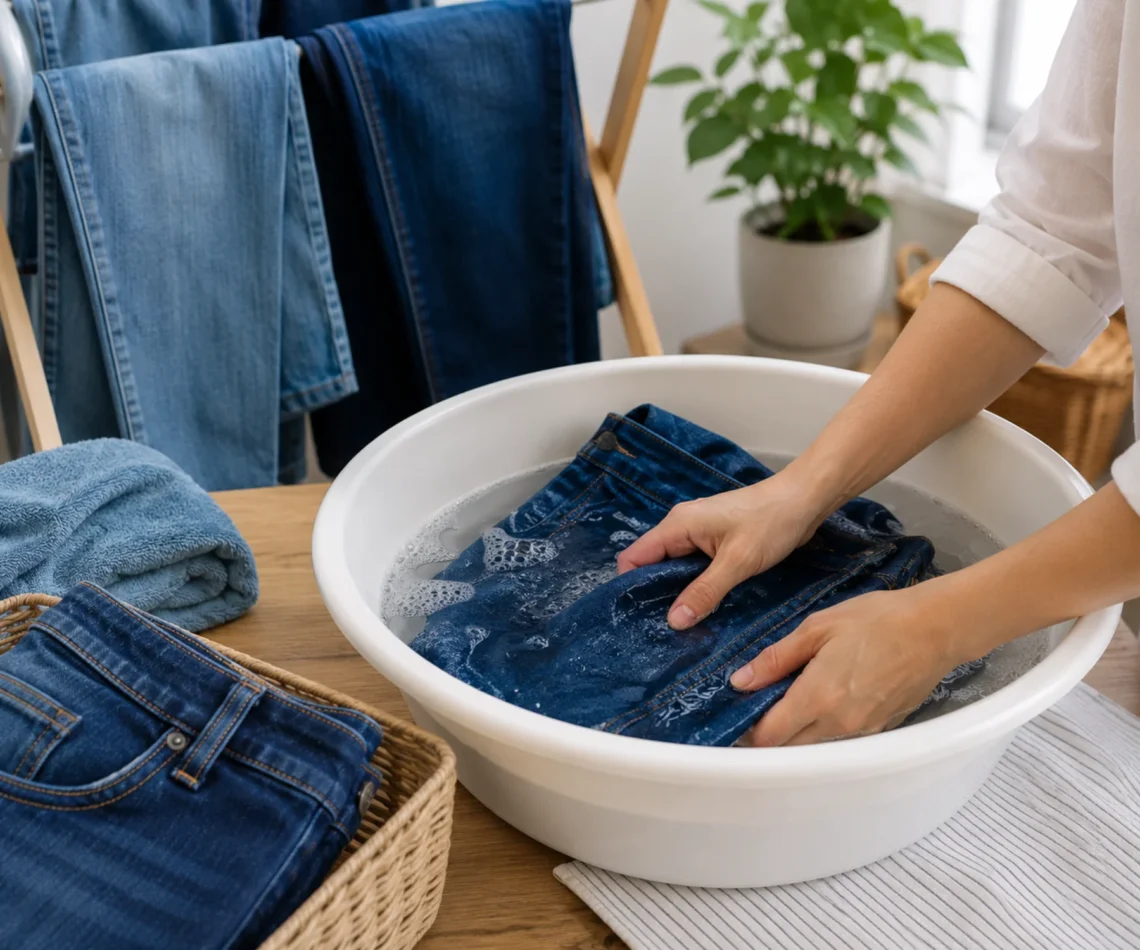
Before cleaning raw denim, check the manufacturer’s instructions. If hand washing is recommended, use cool water and a compatible mild cleanser. Gently move the garment through the water without aggressive scrubbing, then rinse as directed.
Avoid twisting or wringing raw denim to remove excess water. Instead, gently press out moisture in a way that does not distort the fabric. Allow the jeans to air dry according to the care instructions.
Because raw denim products vary, there is no single washing schedule or method that suits every pair. Follow the manufacturer’s guidance, particularly if maintaining a specific fit or finish is important.
Step 10: Remove Stains Without Washing the Entire Pair
Small stains do not always require a full wash. Spot cleaning may be appropriate when the rest of the jeans are clean and the stain can be treated safely.
- Check the care label and identify the type of stain if possible.
- Blot excess liquid with a clean cloth rather than rubbing it deeper into the fabric.
- Use a small amount of a compatible stain treatment or mild detergent.
- Test the product on an inconspicuous area if the instructions permit.
- Gently work on the affected area without scrubbing aggressively.
- Remove any remaining cleaning product according to its instructions.
- Allow the treated area to dry and inspect it before deciding whether a full wash is needed.
Different stains require different treatments. Oil, mud, ink, and food stains do not all respond to the same product. Avoid applying hot water immediately to a stain unless the recommended treatment calls for it, because heat can make some stains more difficult to remove.
Step 11: Dry Jeans Without Shrinking Them
Drying can influence the fit, texture, and appearance of denim. Air drying is often a useful option when the care label permits it, especially for dark jeans and stretch denim.
Air Drying
- Remove the jeans from the washer promptly.
- Gently reshape the waistband, legs, and seams if needed.
- Hang the jeans or lay them flat according to the garment’s construction and care instructions.
- Choose a well-ventilated area away from direct sunlight if preserving color is a concern.
- Allow the fabric to dry completely before storing it.
Using a Tumble Dryer
Some jeans can be tumble dried, but the care label should determine whether this is appropriate. If machine drying is allowed, use the recommended setting and avoid excessive heat. High temperatures can contribute to shrinkage or affect stretch components in some garments.
Do not rely on a hot dryer to remove wrinkles or restore the fit of jeans. If the garment has shrunk or become misshapen, additional heat may worsen the problem rather than correct it.
How Often Should You Wash Jeans?
There is no universal washing frequency for every pair of jeans. The right interval depends on how often they are worn, the level of physical activity, weather conditions, visible dirt, and personal preference.
Consider washing jeans when:
- They have visible dirt or noticeable stains.
- They have developed an unpleasant odor.
- They have been worn during activities that cause significant sweat or soil.
- The care label or manufacturer’s guidance indicates that cleaning is needed.
When jeans are still clean, spot cleaning and airing them out may be sufficient between washes. However, avoiding washing indefinitely is not a substitute for cleaning when it is needed. Personal hygiene, the garment’s condition, and the activity for which it was worn should guide the decision.
Common Denim Washing Mistakes
Many problems with denim result from using a routine that is not suited to the garment. Avoid these common mistakes:
- Ignoring the care label: Denim blends and finishes can have different requirements.
- Washing dark jeans with whites: Loose dye may transfer to lighter fabrics.
- Using excessive heat: High temperatures may contribute to fading, shrinkage, or damage to stretch fibers.
- Overloading the washer: Crowded loads can restrict movement and rinsing.
- Using too much detergent: Excess detergent may leave residue on fabric.
- Scrubbing stains too aggressively: Friction may affect the surface color and texture.
- Leaving jeans wet in the washer: Prolonged dampness may cause an unpleasant odor.
- Drying in strong sunlight unnecessarily: Extended direct exposure may contribute to color fading.
- Trying to shrink jeans with high heat: The result may be uneven and can damage the garment.
Making Denim Care Part of Your Laundry Routine
A simple laundry routine can help keep denim organized and reduce avoidable wear. Sort jeans by color, check care labels, treat stains before washing, and choose a drying method suitable for the fabric. Keep new dark denim separate when dye transfer is a concern, and avoid mixing garments with incompatible washing requirements.
San Francisco residents researching local laundry options can review information about laundry service in San Francisco. For any garment with special denim-care instructions, confirm the available handling options before arranging cleaning.
For general information about how wash-and-fold laundry works, Tumble also provides a guide to wash-and-fold services in San Francisco. Readers should still check their garment labels and communicate any specific care requirements when arranging laundry.
When comparing household laundry arrangements, the information on wash-and-fold pricing in San Francisco can help readers understand the service’s pricing structure. Current service details and garment-handling policies should be checked directly before placing an order.
Frequently Asked Questions
Should jeans be washed inside out?
Turning jeans inside out can reduce direct friction on the outer surface and help protect the visible color during washing. It is a useful step for many denim garments, particularly dark jeans, but the care label should still guide the overall washing method.
Should jeans be washed in cold or hot water?
Cold water is often a suitable choice for denim when permitted by the care label because it can help reduce the risk of fading and shrinkage. Follow the manufacturer’s temperature instructions, especially for specialty fabrics and finishes.
Can jeans go in the dryer?
Some jeans can be tumble dried, but others are better air dried. Check the care label and use only the permitted temperature and cycle. Excessive heat can affect the fit and may damage stretch fibers in some garments.
How can I prevent black jeans from fading?
Turn black jeans inside out, wash them at the recommended temperature, use a suitable detergent, and avoid unnecessary washing. Air drying in a shaded, ventilated area can also help limit exposure to heat and direct sunlight.
Why do new jeans leave blue marks on other clothes?
Some new dark or raw denim releases excess dye during early washes. Wash such jeans separately when appropriate, particularly during the first wash, and avoid combining them with white or pale garments if dye transfer is possible.
Can I wash jeans less often?
Yes, when jeans are still clean and do not need a full wash, spot cleaning or airing them out may be sufficient. Wash them when they are visibly dirty, stained, or have developed an odor. The appropriate frequency depends on use and the garment’s care instructions.
How should I wash stretch jeans?
Check the care label, use the recommended washing temperature, and avoid unapproved high heat during drying. Stretch denim contains elastic fibers that may be affected by excessive heat or harsh handling.
Can I use bleach on white jeans?
Only use bleach if the garment’s care label permits it and the product is suitable for the fabric. Some white denim contains stretch fibers, decorative elements, or other components that may be damaged by certain bleach products.
Conclusion
Washing jeans properly involves more than choosing a cycle on the washing machine. The fabric composition, dye, construction, and care label all affect the best cleaning method. Turning jeans inside out, separating dark colors, using an appropriate detergent, and selecting the recommended temperature can help reduce avoidable fading and wear.
Air drying is a practical option for many denim garments when permitted, while tumble drying should follow the manufacturer’s instructions. Treat stains carefully, wash jeans when they need cleaning, and avoid using excessive heat to change their fit. With a consistent, material-appropriate routine, you can maintain the appearance and comfort of your jeans while getting more useful wear from each pair.