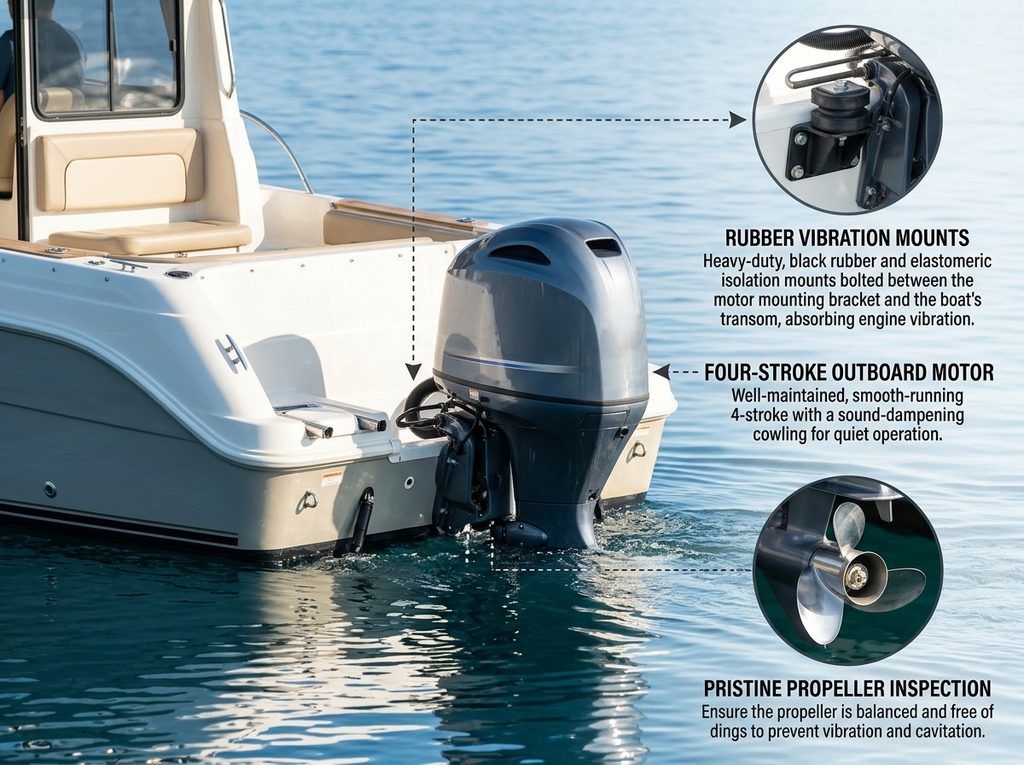
A pleasant boating experience depends on more than speed and engine power. Noise and vibration can significantly affect comfort, especially during long fishing trips, family outings, and recreational cruises. While every outboard motor produces some sound and vibration during operation, excessive levels may indicate an underlying mechanical problem or an unsuitable engine setup.
Understanding what causes these issues can help boat owners improve comfort, protect engine components, and maintain reliable performance. From regular maintenance to correct installation, several practical measures can make a noticeable difference.
Understanding Normal Outboard Motor Noise
Outboard motors produce sound through several operating processes, including combustion, exhaust movement, cooling-system operation, and mechanical rotation. The amount of noise varies depending on engine design, horsepower, operating speed, and construction quality.
Traditional two-stroke petrol engines may produce a different sound profile from modern four-stroke models. Larger engines can also generate more noise simply because of their increased power output.
However, sudden changes in engine sound should not be ignored. Knocking, grinding, rattling, or unusually loud operation may indicate a mechanical issue that requires inspection.
Learning to recognize your engine’s normal operating sound makes it easier to identify unusual changes before they develop into serious problems.
Common Causes of Excessive Engine Vibration
Vibration can result from several factors, ranging from minor installation issues to damaged internal components.
Damaged or Unbalanced Propeller
The propeller plays an important role in maintaining smooth engine operation. If one or more blades become bent, cracked, or damaged, the propeller may rotate unevenly.
This can create noticeable vibration, particularly at higher speeds. Fishing line or debris wrapped around the propeller shaft can also interfere with normal operation.
Inspect the propeller regularly and remove debris safely. Replace damaged components with compatible parts rather than attempting unsuitable repairs.
Worn Engine Mounts
Engine mounts help secure the outboard motor to the boat while reducing the transfer of vibration to the transom.
Over time, mounting components may deteriorate due to constant exposure to moisture, movement, and operating stress.
Loose or worn mounts can cause increased vibration and sometimes produce knocking sounds. Have the mounting system inspected if the engine appears to move excessively during operation.
Incorrect Engine Installation
An improperly installed outboard motor can create handling and vibration problems.
Incorrect mounting height, unsuitable hardware, loose fasteners, or poor alignment may affect how the engine operates.
Professional installation helps ensure that the motor is correctly positioned and secured according to the manufacturer’s specifications.
The Importance of Proper Propeller Selection
A suitable propeller contributes to smoother operation and better overall performance.
Propeller pitch, diameter, blade shape, and material all influence how efficiently the engine transfers power into the water. An unsuitable propeller may cause excessive engine loading, unusual RPM behaviour, or reduced performance.
For example, a propeller with excessive pitch may make it difficult for the engine to reach its recommended operating RPM range. A damaged or poorly matched propeller may also contribute to vibration.
When comparing outboard motors for sale, consider propeller compatibility alongside horsepower and other engine specifications.
Always follow the manufacturer’s recommendations when selecting a replacement propeller.
How Regular Maintenance Helps Reduce Noise
Routine maintenance is one of the most effective ways to keep an outboard motor operating smoothly.
Several components should receive attention during scheduled servicing.
Spark plugs: Worn or fouled spark plugs can contribute to misfiring and uneven engine operation. Inspect and replace them according to the maintenance schedule.
Engine oil: Four-stroke engines require suitable engine oil to lubricate moving components. Maintaining the correct oil level and following replacement intervals helps reduce unnecessary wear.
Fuel filters: Restricted filters can affect fuel delivery and contribute to rough running. Replace them when required.
Cooling system: Blocked water intakes or damaged water pump components may cause overheating and abnormal engine behaviour.
Fasteners and connections: Loose components can create rattling sounds and unnecessary movement during operation.
Following the owner’s manual is important because maintenance requirements differ between engine models.
Why Engine Alignment and Mounting Height Matter
The position of an outboard motor can influence both performance and operating comfort.
If the engine is mounted too high or too low, it may affect propeller performance, water flow, steering response, and overall handling.
Incorrect mounting can also contribute to ventilation, where the propeller draws air or exhaust gases instead of maintaining proper engagement with the water.
Although ventilation is not always accompanied by unusual noise, it can create inconsistent engine behaviour and reduced thrust.
A qualified marine technician can check the mounting height, transom compatibility, and engine alignment to ensure the installation follows manufacturer guidelines.
Choosing a Quieter Outboard Motor
Engine technology has developed considerably, giving boat owners more choices when selecting propulsion systems.
Modern four-stroke outboards are often preferred for their relatively quiet operation and smooth performance. Many manufacturers also incorporate improved exhaust systems, vibration-control features, and advanced engine management technology.
Electric outboards provide another option for applications where minimal operating noise is important. They are particularly attractive for small boats, fishing activities, and peaceful recreational trips.
However, electric models have different power and operating-range limitations, so they may not suit every vessel.
When researching new outboard engines, compare noise characteristics, operating specifications, and intended applications rather than focusing exclusively on horsepower.
Can a Used Outboard Motor Operate Smoothly?
A second-hand engine can provide dependable performance if it has been properly maintained. However, its previous operating conditions and maintenance history can influence noise and vibration levels.
Before purchasing a used outboard, inspect the following:
- Engine mounts and mounting hardware.
- Propeller blades and propeller shaft.
- Lower unit and visible seals.
- Fuel hoses and electrical connections.
- Signs of corrosion or physical damage.
- Service records and previous repairs.
If possible, arrange a professional inspection and operational test before completing the purchase.
Pay attention to unusual sounds during starting, idling, acceleration, and normal operation. A sudden increase in vibration should be investigated rather than dismissed as normal ageing.
Practical Ways to Improve Boating Comfort
Besides engine maintenance, several boating practices can help create a more comfortable environment.
Maintain balanced weight distribution throughout the boat. Uneven loading can affect handling and may increase vibration or instability.
Avoid operating continuously at speeds that place unnecessary strain on the engine. Follow the recommended RPM range and adjust speed according to water conditions.
Check that onboard equipment, storage compartments, and removable accessories are properly secured. Loose objects can create additional rattling sounds that may be mistaken for engine problems.
For boats with suitable designs, properly installed seating and vibration-resistant mounting components may also improve passenger comfort.
When Should You Seek Professional Assistance?
Minor issues such as visible propeller damage or loose external accessories may be easy to identify. However, internal knocking, persistent vibration, overheating, and unusual mechanical sounds require more careful attention.
Stop operating the engine if you notice severe vibration, sudden loss of power, or signs of mechanical failure. Continuing to use a damaged motor can increase repair costs and create safety risks.
A qualified marine technician can inspect the propeller system, engine mounts, drivetrain, and internal components to identify the actual cause.
Conclusion
Excessive outboard motor noise and vibration can reduce boating comfort and sometimes indicate problems that should not be ignored. Proper propeller selection, correct installation, routine servicing, and regular inspections all contribute to smoother engine operation.
Whether you are maintaining an existing motor or researching a replacement, paying attention to noise and vibration characteristics can help you make better decisions. A properly maintained and correctly installed outboard motor supports more comfortable journeys, dependable performance, and a better overall experience on the water.