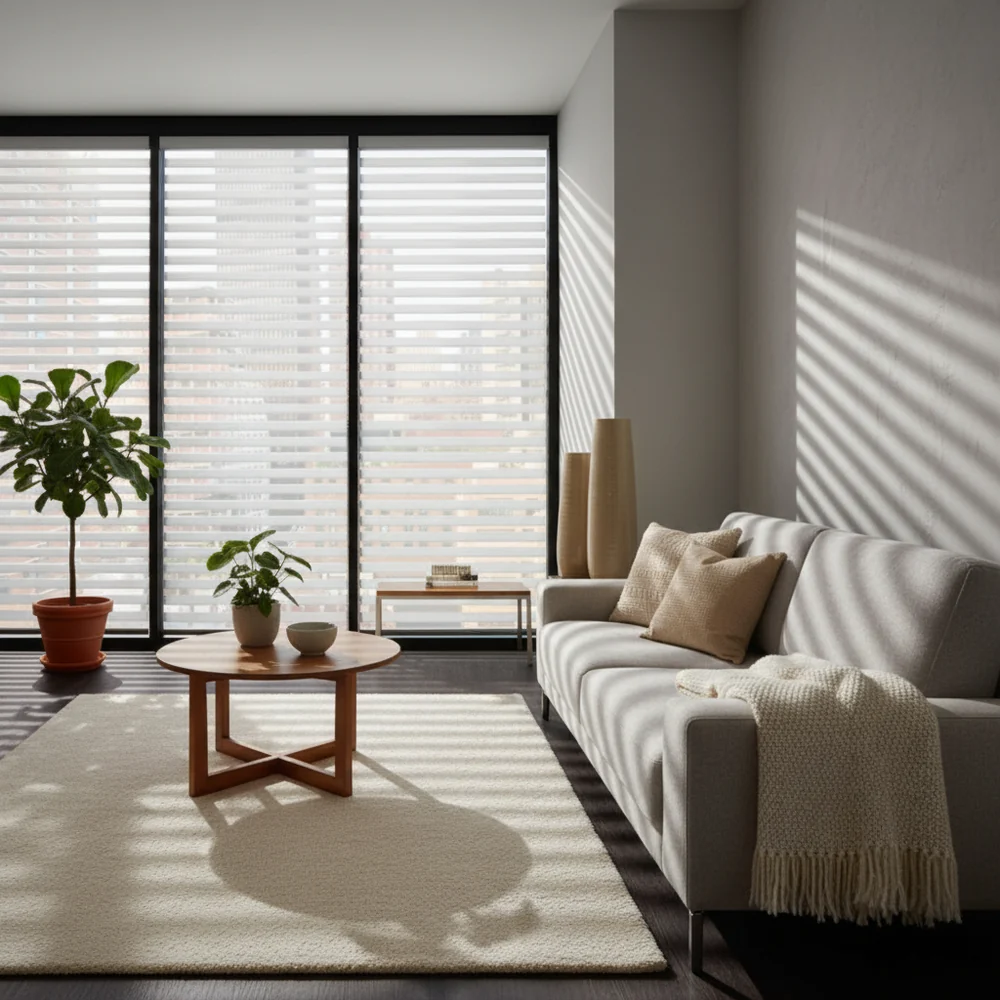
Window coverings influence more than a room’s appearance. They can help manage sunlight, privacy, glare, and the overall visual balance of an interior. For homeowners comparing window shades in Mississauga, the right choice depends on the room, window size, desired light control, and preferred operating method. Different shade styles are designed for different purposes, making it useful to understand their characteristics before selecting a treatment.
Start With Light and Privacy Needs
The amount of sunlight entering a room should guide the shade’s opacity and fabric selection. Bedrooms may benefit from room-darkening or blackout materials, while living areas can use light-filtering fabrics that soften sunlight without eliminating natural illumination.
Solar or screen-style shades can reduce glare while maintaining an outward view during the daytime. However, daytime and nighttime privacy can differ because a brighter interior after dark may make it easier to see inside from outside.
Privacy requirements should therefore be considered alongside the direction of the windows, surrounding buildings, and how the room is used throughout the day.
Compare the Main Shade Styles
Roller shades provide a streamlined appearance because the fabric rolls around a tube when raised. They are available in different openness and opacity levels, making them suitable for spaces ranging from bright living rooms to bedrooms requiring stronger light control.
Cellular or honeycomb shades use a pleated construction with air pockets that can help provide insulation at the window. They can be useful in rooms where temperature comfort is an important consideration.
Roman shades take a more decorative approach, folding into horizontal sections as they are raised. Their fabric construction can contribute a softer, more furnished appearance and works particularly well where the window treatment is intended to complement the room’s interior design.
Zebra or dual shades use alternating sheer and opaque bands. Adjusting the alignment of these bands allows homeowners to vary light and privacy levels without completely raising the shade.
Consider the Window’s Size and Shape
Window dimensions can affect which shade construction is practical. Large windows and expansive glass may require careful consideration of shade width, mounting method, operating mechanism, and motor capacity.
Deep trim, handles, cranks, sills, and other architectural features can also influence whether an inside or outside mount is more appropriate. Measuring each opening accurately before ordering helps avoid problems with clearance and alignment.
For unusually wide or tall windows, homeowners should review the manufacturer’s specifications rather than assuming that any shade style will work for every opening.
Choose Manual or Motorized Operation
Manual shades remain a straightforward choice for windows that are easy to reach. Motorization can be more practical for high, oversized, or frequently used windows where operating each covering manually is inconvenient.
Motorized systems can also allow shades to be controlled individually or as part of a broader smart-home setup. Some systems support scheduled operation, remote controls, and integration with other connected-home functions.
When considering motorization, check power requirements, control compatibility, mounting conditions, and whether the shade’s size and weight are suitable for the selected motor.
Match Materials to the Room
Material and texture affect both appearance and maintenance. Smooth fabrics can create a contemporary appearance, while woven materials introduce additional texture. Wood and faux-wood options can provide a more structured appearance and may suit traditional or transitional interiors.
Roman shades provide a more decorative approach, folding into horizontal sections when raised. Their fabric construction can create a softer appearance and complement interiors where the window treatment is an important design element. Zebra or dual shades use alternating sheer and opaque bands. Adjusting these bands can provide different levels of light and privacy without completely raising the shade. These characteristics make different styles worth comparing before deciding on window shades in Mississauga for individual rooms.
Conclusion
By comparing these requirements before selecting window shades in Mississauga, homeowners can create a more consistent and functional approach to their window coverings. The process also becomes easier when factors such as window dimensions, mounting conditions, material, opacity, and operation are considered together. For homeowners exploring luxury window shades in Mississauga, the most suitable option should ultimately balance appearance with practical requirements rather than relying on style alone. A carefully selected shade can complement the interior while providing the light, privacy, and operating control each room needs.