Two details worth paying attention to are fragrance and pH. Choosing products without added fragrance and using a cleanser that works closer to the skin’s natural acidic environment can make everyday cleansing feel much more comfortable. This is particularly worth considering if you have sensitive or easily reactive skin.
For people exploring Canadian skincare, these considerations can also make it easier to understand what separates one formula from another. Rather than focusing only on trends or long ingredient lists, it helps to look at how a product is formulated and how your skin responds to it.
Why does fragrance matter in a skincare routine?
Fragrance can make a product smell pleasant, but a pleasant scent does not necessarily mean a formula is better for your skin. Added fragrance can be a concern for people whose skin is sensitive or prone to irritation.
This is why many people are now looking more closely at fragrance free skincare products when building a simpler routine. Going fragrance-free does not mean giving up on a pleasant skincare experience. It simply means avoiding added scent as an unnecessary part of the formula.
It is also important to read the ingredient list rather than relying only on terms such as “unscented”. A product can be unscented while still containing ingredients intended to mask or modify its smell.
For sensitive skin, keeping the routine simple can make it easier to identify which products work well and which ones may be causing discomfort.
What does a low-pH cleanser actually do?
The skin has a naturally acidic surface environment, often referred to as the acid mantle. This environment plays a role in maintaining the skin barrier and supporting overall skin comfort.
A low ph facial cleanser is formulated to have a more acidic pH, generally making it closer to the skin’s natural environment than many traditional high-alkaline cleansing products.
This does not automatically make every low-pH cleanser suitable for everyone. The rest of the formulation matters too. Cleansing agents, fragrance, alcohol, moisturising ingredients, and the way the product is used can all influence how your skin feels afterwards.
A good cleanser should remove everyday buildup, excess oil, sunscreen and impurities without leaving your face feeling excessively tight or stripped.
How can you tell if your cleanser is too harsh?
Your skin can often give you useful clues.
If your face feels extremely tight immediately after rinsing, looks unusually dry, or feels uncomfortable when you apply your next skincare product, your cleanser may be doing more than simply removing dirt and excess oil.
Another common sign is the feeling that your skin is “squeaky clean”. While this can sound positive, that sensation is not necessarily a sign of healthier skin. Effective cleansing should leave the skin feeling clean and comfortable rather than stripped.
Using lukewarm water, avoiding aggressive scrubbing and limiting cleansing to what your skin actually needs can also help.
What should you look for in a gentle cleanser?
Instead of focusing on one ingredient or marketing claim, consider the formula as a whole.
A gentle everyday cleanser may include:
- Mild cleansing agents that effectively remove impurities
- Humectants such as glycerin or hyaluronic acid
- A skin-friendly pH
- No added fragrance
- No unnecessary colourants
- Ingredients suited to your skin type
- A texture that can be rinsed away easily without excessive rubbing
It is also useful to consider how your skin feels several minutes after washing, rather than judging a cleanser only by how it feels while you are using it.
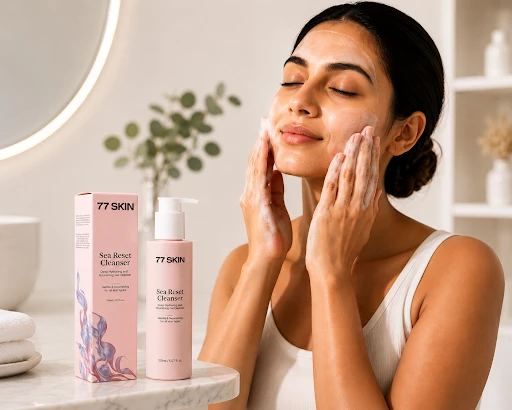
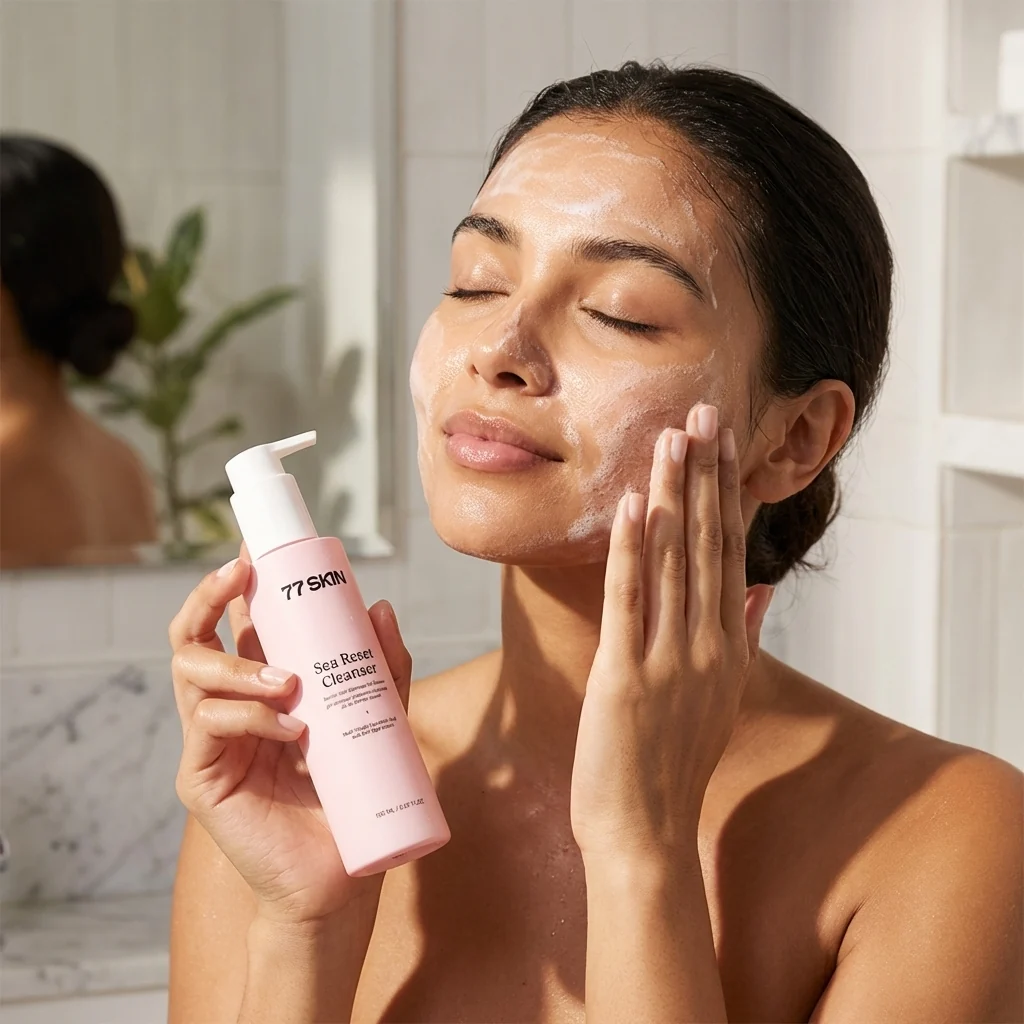
For example, The 77 Skin’s Sea Reset Cleanser is a low-pH hydrating gel cleanser formulated at approximately pH 5. It is fragrance-free, colour-free and sulfate-free, with ingredients including glycerin, sodium hyaluronate and plant-derived cleansing agents. The formula is designed to remove daily buildup while maintaining a comfortable after-feel.
Are Canadian skincare brands worth considering?
The Canadian skincare market has become increasingly interesting for people who prefer straightforward, ingredient-focused routines. However, choosing a product simply because it comes from a particular country is not enough.
When comparing canadian skin care brands, look beyond the label and consider the actual formulation, testing, ingredients and suitability for your skin.
Ask yourself:
- Is the formula appropriate for my skin type?
- Does it contain added fragrance?
- What is the cleanser’s pH?
- Are the cleansing agents mild enough for regular use?
- Does the product leave my skin comfortable after washing?
- Are the product claims supported by clear information?
These questions can help you make a more informed decision rather than choosing based solely on packaging or popularity.
How can you build a simpler cleansing routine?
A simple routine can be surprisingly effective.
Start with a gentle cleanser suited to your skin. Use lukewarm water and massage the product over damp skin without scrubbing aggressively. Rinse thoroughly and gently pat your face dry.
After cleansing, continue with the products your skin actually needs. Depending on your routine, this could include a hydrating product, moisturising step and daytime SPF.
You do not necessarily need multiple cleansers, frequent exfoliation or several active ingredients at once. Introducing fewer products can make it easier to understand what your skin responds to.
For people with sensitive-feeling skin, consistency is often more useful than constantly changing products.
FAQs
Is fragrance-free skincare better for sensitive skin?
Fragrance-free products can be a useful choice for people who are prone to sensitivity because they avoid added fragrance, which may be irritating for some individuals. However, fragrance-free does not automatically mean that a product will suit every person.
What pH should a facial cleanser have?
There is no single perfect pH for every cleanser, but a mildly acidic formula can be closer to the skin’s natural acidic environment. The overall formulation and how your skin responds are equally important.
Can I use a low-pH cleanser every day?
Many low-pH cleansers are designed for daily use. However, frequency should depend on your skin type, routine and how comfortable your skin feels after cleansing.
Does fragrance-free mean the product has no smell?
Not necessarily. A fragrance-free formula does not contain added fragrance, but individual ingredients can have their own natural odour.
What should I consider when choosing skincare from Canada?
Look at the ingredients, formulation, testing, product claims and suitability for your skin rather than choosing a product based only on where it was made.
Final Thoughts
Good skincare starts with understanding what your skin needs rather than following every new trend. A gentle cleanser, a sensible routine and careful ingredient choices can provide a strong foundation for healthier-looking, comfortable skin.
If your current cleanser leaves your face feeling tight or irritated, it may be worth reassessing the formula, fragrance and pH. Small changes to your cleansing routine can make a noticeable difference to how your skin feels every day.