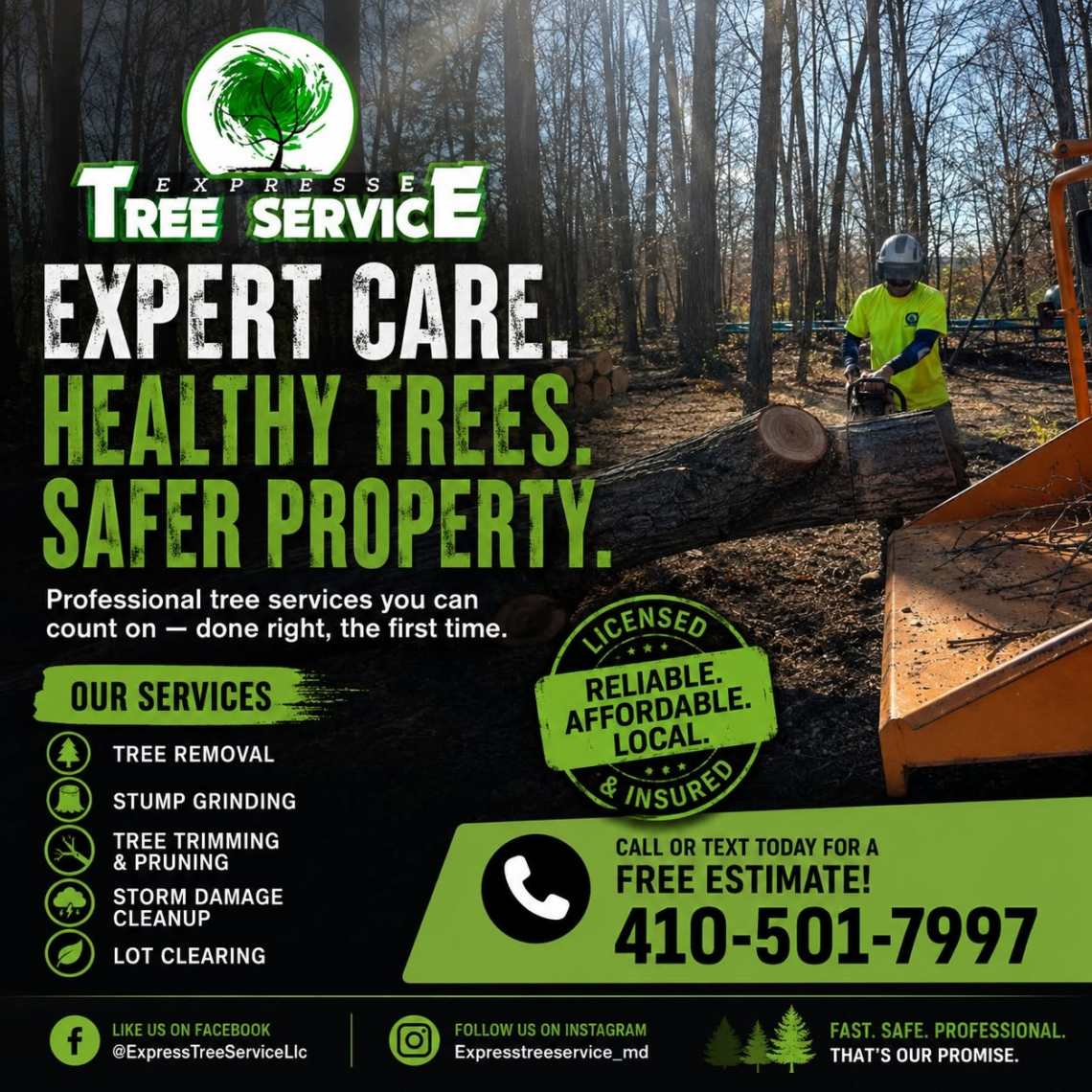
Cutting down a tree can look pretty simple from the ground. You grab a saw, make a few cuts, and eventually the tree comes down. That’s the idea, anyway. In reality, tree work can get dangerous fast, which is why a professional tree removal service md is often a much safer choice than trying to handle a large or damaged tree yourself. Trees are heavy, unpredictable, and they don’t always fall where you expect them to.
There’s also more involved than just cutting through the trunk. You have branches, power lines, buildings, fences, vehicles, nearby trees and sometimes people or pets to think about. One wrong cut can turn a weekend project into a serious repair bill. That’s where professional tree removal makes a real difference.
Professional Tree Removal Starts With Proper Assessment
Before a professional cuts anything, they usually look at the whole situation. They check the tree’s size, condition, lean, surrounding structures and how the branches are positioned. A tree that looks healthy from the outside might have decay inside. Another one may have roots that are already compromised.
DIY cutting often skips this part. You see the problem and want it gone. Fair enough. But knowing where to cut is only one part of the job. Knowing how the tree is likely to react is another.
Professionals also consider the safest direction for removal and whether the tree can actually be dropped in one piece. Sometimes it can’t. In tight residential areas, sections may need to be lowered carefully instead of simply letting the entire tree fall. That takes experience, planning and the right equipment.
The Equipment Makes a Bigger Difference Than You Think
A homeowner might have a chainsaw and a ladder. That doesn’t necessarily mean they have what’s needed for serious tree work.
Professional tree crews can use equipment such as ropes, harnesses, rigging systems, wood chippers, stump-cutting equipment and, when necessary, lifts or other specialized machinery. The point isn’t to use expensive equipment just because it’s available. It’s to control the job better.
Trying to cut a large branch while standing on a ladder is a good example of where things can go wrong. The branch may shift suddenly. The ladder can move. The saw can kick back. And once a heavy limb starts falling, you don’t get much time to change your mind.
That’s not meant to scare people. It’s just reality. Tree cutting has some unforgiving moments.
Experience Helps Professionals Predict What the Tree Will Do
Trees don’t always behave the way people expect. A branch may be under tension and spring sideways when it’s cut. A trunk can split unexpectedly. A tree leaning in one direction may have uneven weight because of the way its branches have grown.
An experienced tree removal crew knows to look for these things.
They understand basic tree structure, cutting techniques and how weight is distributed throughout the tree. They also know that weather, soil conditions and previous damage can change the situation.
This is one of the biggest differences between professional tree removal and DIY cutting. A professional isn’t simply asking, “Where should I make the cut?” They’re thinking about what happens immediately after that cut.
That second part matters a lot.
Safety Around Homes, Cars and Power Lines
A tree doesn’t have to be enormous to cause major damage. Even a medium-sized limb can smash a roof, damage a vehicle or knock down part of a fence. If the tree is close to electrical lines, things become even more serious.
This is where DIY tree cutting can become a bad gamble.
Professionals plan around obstacles before starting work. They may remove branches in sections and use ropes to control where those pieces go. If a tree is positioned near a structure, simply hoping it falls the right way isn’t really a plan.
And if electrical lines are involved, homeowners should not try to handle the situation themselves. Power lines and tree limbs are a dangerous combination. It’s one of those jobs where calling someone who understands the risks makes sense.
DIY Tree Cutting Can Cost More Than You Expect
One reason people choose DIY is money. That’s understandable. If you only look at the price of hiring a tree company, cutting the tree yourself can seem cheaper.
But the calculation changes if something goes wrong.
A damaged roof, broken fence, cracked driveway or destroyed vehicle can quickly cost more than professional tree service would have cost in the first place. There’s also the question of what you’re going to do with all that wood and brush after the tree is down.
Then there’s the stump.
Getting the tree down doesn’t always mean the job is finished. The remaining stump can take up space, attract insects and make mowing or landscaping more difficult. Depending on its size and location, removing it can be another project entirely.
What Professionals Do After the Tree Comes Down
Tree removal isn’t just about making the tree disappear. A good crew also thinks about cleanup and what happens to the leftover branches, logs and debris.
Large branches may need to be cut into manageable pieces. Smaller material can go through a chipper. Logs may be hauled away or left behind if the property owner wants to keep the wood.
The work area should also be cleaned up properly. That part sounds minor, but anyone who has dealt with a pile of branches after a DIY project knows it can become a headache pretty quickly.
Depending on the situation, the homeowner may also want the stump dealt with so the area can be used again.
Stump Grinding Is Often the Next Step
Once the main tree has been removed, stump grinding can be a practical way to clear what’s left behind. Instead of digging out the entire root system, a stump grinder breaks the remaining stump down below ground level.
This can make the area easier to landscape and helps remove an obvious obstacle from the yard. It’s especially useful when the stump is sitting somewhere you plan to plant grass, add a garden bed, or simply want to keep clear.
It’s another example of why professional tree work is more than just picking up a chainsaw and getting started. There are several stages to the job, and each one has its own risks and equipment requirements.
When Professional Tree Removal Is the Smarter Choice
DIY tree cutting might make sense for a very small branch that’s safely within reach and doesn’t create any obvious hazards. But once you’re dealing with a mature tree, a dead tree, storm damage, awkward positioning or anything near a structure, it’s worth stepping back.
Ask yourself what happens if the tree falls six feet in the wrong direction.
Or if the chainsaw gets stuck.
Or if a branch swings unexpectedly.
Those are not hypothetical problems. They happen.
Professional tree removal is mainly about control. The right people can assess the tree, plan the cuts, use appropriate equipment and deal with the cleanup afterward. You’re paying for more than someone to cut wood. You’re paying for experience and a safer process.
Conclusion: Know When to Put the Saw Down
There’s nothing wrong with doing certain yard jobs yourself. It can save money, and sometimes it’s satisfying to handle a project with your own two hands. Tree removal, though, is one area where confidence can get ahead of experience.
A large or damaged tree has too many variables to ignore. Its weight, condition, position and surroundings all matter. Professional tree removal gives you someone who can look at those details before making the first cut.
Sometimes the smartest DIY decision is knowing when not to DIY. If the tree is big, unstable, close to property or simply beyond your comfort level, bring in a qualified professional. It may cost more upfront, but compared with repairing a roof, replacing a fence, or dealing with an injury, it can be money well spent.