A good night’s sleep is essential for maintaining physical health, mental well-being, and daily productivity. One of the most important factors influencing sleep quality is the mattress used every night. Among the many mattress options available today, foam mattresses have become increasingly popular because of their comfort, flexibility, and ability to support different sleeping positions. But what exactly is a foam mattress, and how does it work?
Understanding its materials, construction, and benefits can help consumers make better decisions when selecting a mattress for their homes, hotels, or other sleeping environments.
Understanding What a Foam Mattress Is
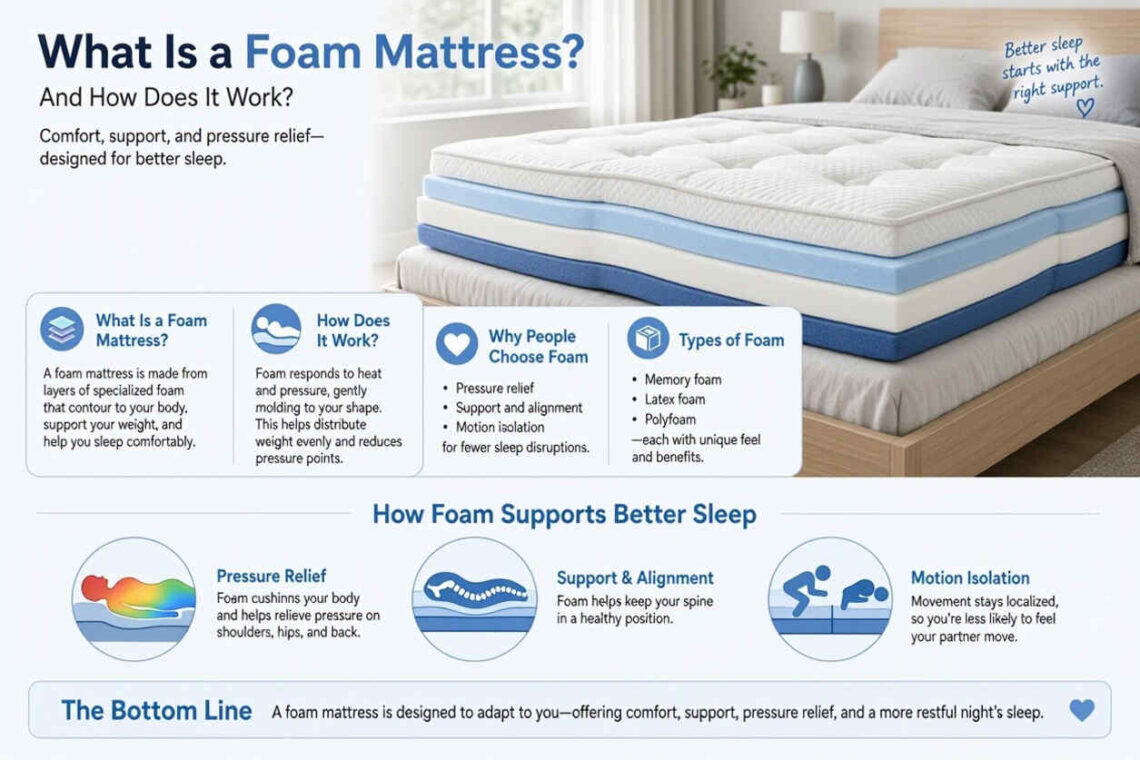
A foam mattress is a type of sleeping surface primarily made from foam materials designed to provide cushioning, pressure relief, and body support. Unlike traditional innerspring mattresses that rely on metal coils, foam mattresses use different types of foam to distribute body weight and create a comfortable sleeping experience.
Most foam mattresses are manufactured using polyurethane foam, memory foam, latex foam, or a combination of these materials. Each material has different characteristics that influence firmness, flexibility, durability, and temperature regulation.
Foam mattresses are available in various thicknesses, densities, and firmness levels. This variety allows manufacturers to produce mattresses suitable for different body weights, sleeping preferences, and comfort requirements.
How Does a Foam Mattress Work?
The primary function of a foam mattress is to respond to the pressure created by the human body. When someone lies down, the foam compresses in areas where body weight is concentrated, such as the shoulders, hips, and lower back.
This compression helps distribute weight more evenly across the mattress surface. Instead of concentrating pressure on a few specific points, the foam adapts to the body’s shape and provides support where it is needed.
When the sleeper changes position or gets out of bed, the foam gradually returns to its original form. The speed of recovery depends on the type and density of foam used.
Different foam technologies work in different ways:
1. Polyurethane Foam
Polyurethane foam is one of the most common materials used in mattress manufacturing. It offers lightweight construction, flexibility, and cushioning. Manufacturers can adjust its density and firmness to create different comfort levels.
Standard polyurethane foam is frequently used as a support or comfort layer in affordable mattresses.
2. Memory Foam
Memory foam is designed to respond to body heat and pressure. As the material warms up, it becomes more flexible and gradually contours around the sleeper’s body.
This characteristic helps reduce pressure on sensitive areas and creates a customized sleeping surface. Memory foam is often used in mattresses designed for people who prefer a closer, more body-contouring feel.
3. Latex Foam
Latex foam is known for its elasticity and responsive support. It quickly adjusts to changes in body position and generally provides a more buoyant sensation than traditional memory foam.
Depending on its manufacturing process, latex foam can be produced from natural latex, synthetic latex, or a combination of both.
The Main Layers of a Foam Mattress
Many modern foam mattresses contain multiple layers, with each layer serving a specific purpose. The combination of these layers determines the overall comfort and performance of the mattress.
Comfort Layer
The upper layer is responsible for providing immediate cushioning. It may consist of memory foam, soft polyurethane foam, or latex foam. Its purpose is to improve comfort and reduce pressure against the body.
Transition Layer
Some mattresses include a middle layer that connects the soft comfort surface with the firmer support base. This layer helps distribute weight and creates a smoother transition between cushioning and structural support.
Support Core
The bottom layer usually contains denser foam that provides structural stability. It helps maintain the mattress shape, supports body weight, and prevents excessive sinking.
The quality and combination of these layers influence how a mattress feels during everyday use.
Benefits of Using a Foam Mattress
Foam mattresses offer several advantages that make them suitable for different consumers and sleeping environments.
Pressure Relief
One of the main advantages of foam is its ability to distribute body weight. By adapting to the body’s shape, certain foam materials can reduce pressure concentration around the shoulders, hips, and other sensitive areas.
Motion Isolation
Foam mattresses generally absorb movement rather than transferring it across the entire sleeping surface. This feature can be particularly beneficial for couples because one person’s movements are less likely to disturb the other.
Comfort and Flexibility
Foam materials are available in different firmness levels, allowing manufacturers to create mattresses for people who prefer soft, medium, or firm sleeping surfaces.
Lightweight Construction
Many foam mattresses are easier to handle and move than traditional mattresses containing heavy metal spring systems. This can simplify transportation, installation, and bedroom arrangements.
Versatile Applications
Foam mattresses are suitable for residential bedrooms, guest rooms, hotels, dormitories, and other accommodation facilities. Their different specifications make them adaptable to various market requirements.
Factors to Consider When Choosing a Foam Mattress
Although foam mattresses offer many benefits, selecting the right product requires careful consideration.
First, pay attention to foam density. Higher-density foam often provides better structural durability, although density alone does not determine overall mattress quality. Material formulation, construction, and manufacturing standards also matter.
Second, consider firmness. A mattress that feels comfortable for one person may not be suitable for another. Sleeping position, body weight, and personal preferences should influence the selection.
Third, examine temperature regulation. Some traditional memory foam products retain more heat than conventional foam materials. Consumers who tend to sleep hot may prefer mattresses with breathable foam formulations, ventilation channels, or cooling-oriented designs.
Finally, check the manufacturer’s product specifications, warranty, certifications, and care instructions before purchasing.
How to Maintain a Foam Mattress
Proper maintenance can help extend the useful life of a foam mattress. Regularly rotating the mattress, when recommended by the manufacturer, can help distribute wear more evenly.
Using a breathable mattress protector can reduce exposure to moisture, dust, and accidental spills. It is also important to keep the mattress in a well-ventilated bedroom.
If cleaning is necessary, follow the manufacturer’s instructions. Avoid soaking foam materials with excessive water because trapped moisture may damage the foam or encourage unpleasant odors.
Conclusion
cheaperthanchinamattress.com: A foam mattress is a practical sleeping solution that combines cushioning, flexibility, and body support through specially designed foam materials. Its ability to respond to pressure, absorb movement, and accommodate different comfort preferences makes it a popular alternative to conventional spring mattresses.
From polyurethane foam to memory foam and latex foam, each material offers unique characteristics that influence mattress performance. By understanding how foam mattresses work and considering factors such as density, firmness, construction, and breathability, consumers can select a product that better matches their sleeping needs.
Whether used in a family bedroom, hotel, or guest accommodation, a well-designed foam mattress can contribute to a more comfortable and supportive sleeping environment.