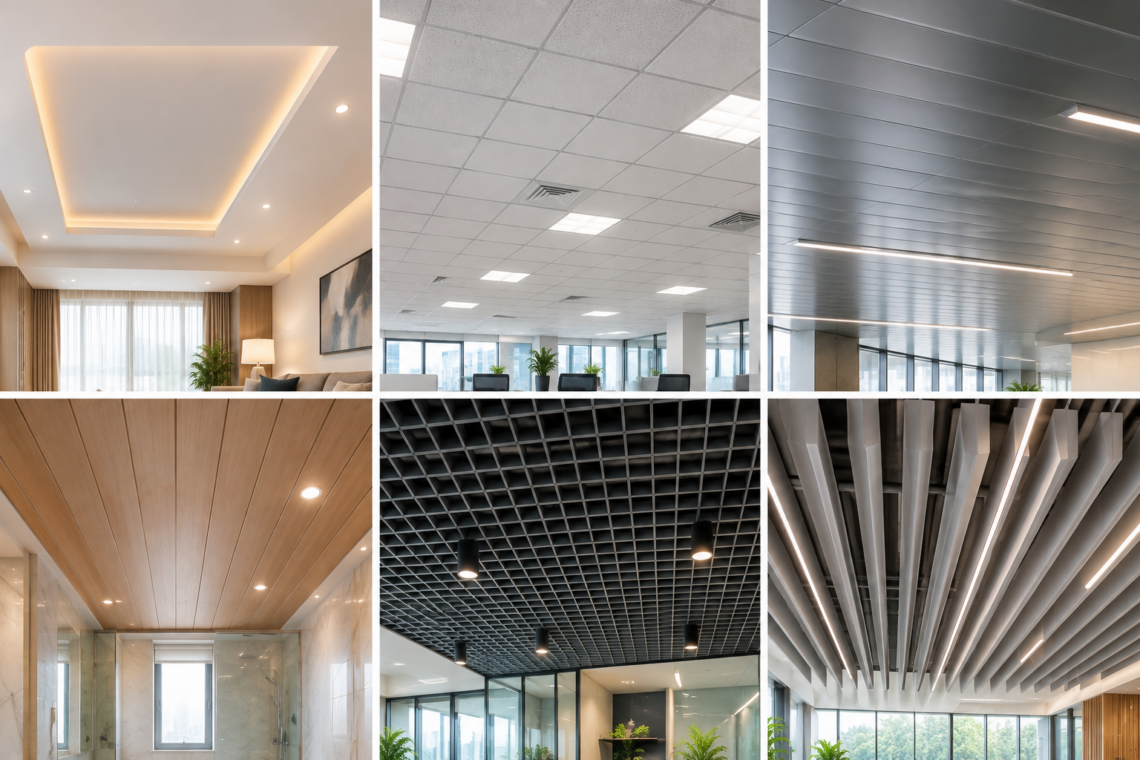
False ceilings have become an important part of modern interior design, combining visual appeal with practical functions such as lighting integration, service concealment, acoustics, and thermal comfort. However, not every ceiling system is suitable for every space. The ideal choice depends on factors such as room usage, moisture levels, maintenance requirements, design preferences, and budget.
Understanding the different types of false ceiling can help homeowners, architects, and commercial property owners select a system that fits their specific requirements.
Different Types of False Ceilings
Gypsum False Ceiling
Gypsum board is one of the most commonly used materials for false ceilings. It is lightweight, relatively easy to install, and can be shaped into different designs.
Gypsum ceilings are suitable for living rooms, bedrooms, offices, retail spaces, and other interiors where a smooth and seamless appearance is preferred. They can also accommodate recessed lights, LED strips, and layered designs.
Mineral Fibre Ceiling
Mineral fibre ceiling tiles are generally installed within a suspended grid system. They are particularly popular in offices, schools, commercial buildings, and other spaces where acoustic performance and easy access to services are important.
Individual tiles can typically be removed when maintenance is required, making the system practical for buildings with electrical and HVAC services above the ceiling.
Metal False Ceiling
Metal ceilings are commonly manufactured using materials such as aluminium or steel. They offer a clean, contemporary appearance and can provide good durability when the appropriate system is selected.
They are often considered for offices, airports, retail spaces, commercial buildings, and other high-use environments. Metal ceilings are available in different forms, including panels, planks, baffles, and open-cell designs.
PVC False Ceiling
PVC ceiling panels are lightweight and relatively easy to maintain. Their resistance to moisture makes certain PVC systems suitable for areas where humidity is a concern.
They may be used in kitchens, utility areas, bathrooms, and other applications depending on the product specification and environmental conditions.
Open Cell Ceiling
Open cell ceilings use a grid-like structure to create a distinctive architectural appearance. Unlike completely closed ceiling systems, they allow parts of the ceiling void and building services to remain visible.
They can be used in modern offices, retail environments, hospitality spaces, and other commercial interiors where design and service integration are important.
Baffle Ceiling
Baffle ceilings consist of vertically suspended panels or linear elements arranged in a structured pattern. They can add depth and visual rhythm to large interior spaces while also offering opportunities for lighting and acoustic design.
They are often used in offices, airports, restaurants, showrooms, and other contemporary commercial environments.
Conclusion
When selecting a false ceiling, consider more than appearance. Evaluate the room’s acoustic requirements, moisture exposure, fire performance, ceiling height, lighting plan, maintenance needs, durability, and access to building services.
The right ceiling system should complement the architectural design while supporting the practical requirements of the space. By comparing materials and performance characteristics before installation, property owners and designers can create ceilings that remain functional, attractive, and suitable for long-term use.