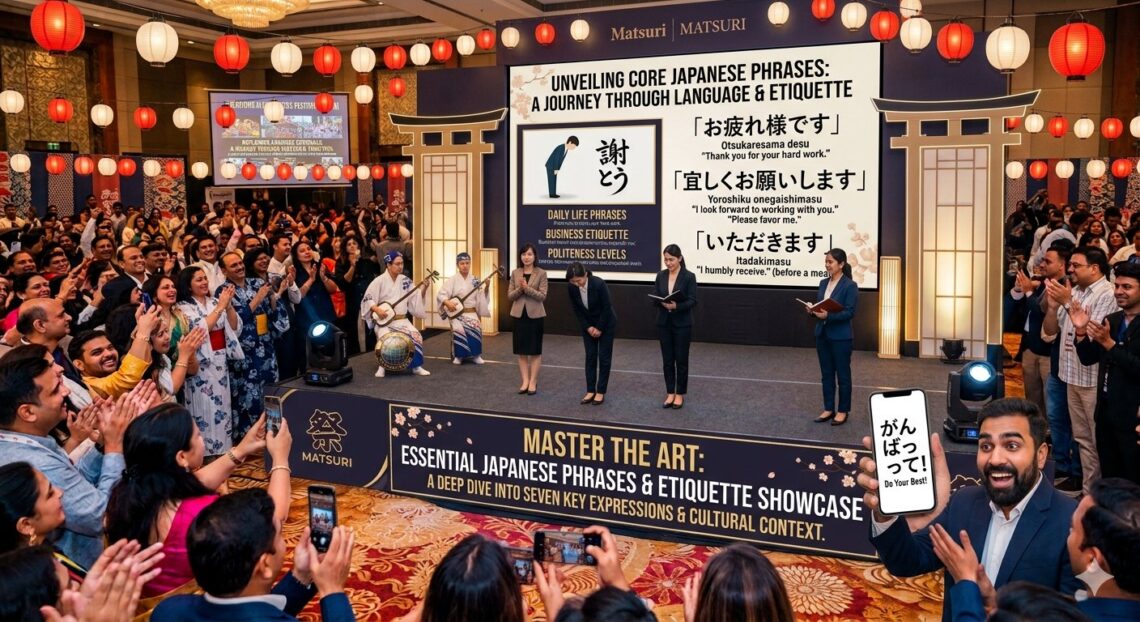
Learn 20 easy Japanese phrases for your Japan trip, with pronunciation and real-life tips. Plus, see how Japanese vs Korean compares for first-time travelers.
The easiest Japanese phrases for travelers are konnichiwa (hello), arigatō gozaimasu (thank you), sumimasen (excuse me), kore o kudasai (this, please), ikura desu ka (how much?), and toire wa doko desu ka (where is the restroom?). Learn these and about 14 more below, and you can handle most trip situations politely.
Why Learn Easy Japanese Phrases Before You Go?
You can travel Japan without speaking Easy Japanese Phrases. Major stations, hotels, and tourist areas often have English signage, and many staff know some English. But a few phrases change the experience. Staff tend to respond warmly when a visitor makes an effort, and phrases help most in smaller restaurants, local shops, and rural areas where English is less common.
You don’t need fluency. Aim for a small set of phrases you can say confidently.
How to Pronounce Japanese (The 60-Second Version)
Japanese pronunciation is friendlier than many learners expect:
- Five vowels only: a (ah), i (ee), u (oo), e (eh), o (oh). They stay consistent.
- Syllables are even. Avoid stressing one syllable heavily as in English.
- Long vowels matter. A macron (ō, ū) means hold the sound longer, so arigatō is a-ri-ga-toh.
- Desu sounds like dess. The final u is often nearly silent.
20 Basic Japanese Phrases for Travelers
Greetings and Manners
| # | Phrase (Romaji) | Japanese | Meaning | When to Use |
|---|---|---|---|---|
| 1 | Konnichiwa | こんにちは | Hello / Good afternoon | Daytime greeting |
| 2 | Ohayō gozaimasu | おはようございます | Good morning | Hotels, cafés, mornings |
| 3 | Konbanwa | こんばんは | Good evening | After sunset |
| 4 | Arigatō gozaimasu | ありがとうございます | Thank you | Almost anywhere |
| 5 | Sumimasen | すみません | Excuse me / Sorry | Getting attention, squeezing past |
Sumimasen is probably the most useful word on this list. You can use it to call a server, apologize for bumping into someone, or politely start a question.
Basic Replies
| # | Phrase | Japanese | Meaning |
|---|---|---|---|
| 6 | Hai | はい | Yes / I understand |
| 7 | Iie | いいえ | No |
| 8 | Onegaishimasu | お願いします | Please / I’d like this |
| 9 | Gomennasai | ごめんなさい | I’m sorry |
| 10 | Daijōbu desu | 大丈夫です | I’m okay / No, thank you |
Practical note: Iie can sound blunt, and Japanese speakers often soften refusals. Daijōbu desu is a gentle way to decline a bag, a sample, or extra help. Because it can also mean that’s fine, pair it with a small head shake or hand gesture when declining.
Shopping and Getting Around
| # | Phrase | Japanese | Meaning |
|---|---|---|---|
| 11 | Kore o kudasai | これをください | This one, please |
| 12 | Ikura desu ka? | いくらですか | How much is it? |
| 13 | ___ wa doko desu ka? | ___はどこですか | Where is ___? |
| 14 | Toire wa doko desu ka? | トイレはどこですか | Where is the restroom? |
| 15 | Eigo o hanashimasu ka? | 英語を話しますか | Do you speak English? |
Example: At a market stall, point and say, Kore o kudasai. Then ask, Ikura desu ka? Pointing plus a short phrase works well when your vocabulary is limited.
For directions, swap in a landmark: Tōkyō-eki wa doko desu ka? (Where is Tokyo Station?). Having your destination written in Japanese on your phone helps with the answer.
Dining and Emergencies
| # | Phrase | Japanese | Meaning |
|---|---|---|---|
| 16 | Itadakimasu | いただきます | Said before eating |
| 17 | Gochisōsama deshita | ごちそうさまでした | Said after eating, to thank the host or staff |
| 18 | Oishii | おいしい | Delicious |
| 19 | Wakarimasen | わかりません | I don’t understand |
| 20 | Tasukete kudasai | 助けてください | Please help me |
Itadakimasu and gochisōsama deshita are expressions of gratitude for the meal rather than literal translations. Saying them when you leave a small restaurant is a nice touch.
Safety basics: In Japan, the emergency number for police is 110, and for fire and ambulance it is 119. Save both before you travel and check Japan’s official tourism sources for current guidance.
Simple Etiquette Tips That Pair With Your Phrases
Language is only part of politeness. A few habits go a long way:
- Bow slightly when thanking or greeting. A small nod is enough for visitors.
- Use both hands when giving or receiving cards, cash trays, or gifts when you can.
- Keep your voice low on trains and buses.
- Don’t tip. Tipping is not customary in Japan, and a sincere arigatō gozaimasu is the usual thank-you.
- Be patient with pauses. A quiet moment while someone thinks about English is normal.
Easy Ways to Practice Before Your Trip
- Focus on 10 phrases first. Start with numbers 1, 4, 5, 8, 11, 12, 14, 15, 19, and 20.
- Say them out loud. Pronunciation sticks better when you speak, not just read.
- Use audio. Listen to native speakers through a language app or free broadcaster resources.
- Write a mini phrasebook on your phone’s notes app with the Japanese text, so you can show it if you’re not understood.
- Learn numbers 1 to 10 to help with prices and ordering.
Japanese vs. Korean for Travelers: Which Is Easier?
Many travelers plan trips to both countries, and the question of Japanese vs. Korean comes up often, especially with so much interest in both cultures. Neither is trending Japanese vs Korean for English speakers, but they are hard in different ways.
| Feature | Japanese | Korean |
|---|---|---|
| Writing system | Three: hiragana, katakana, kanji | One alphabet: Hangul |
| Learning the script | Takes longer, because of kanji | Hangul is a systematic alphabet that many learners pick up quickly |
| Pronunciation | Five vowels, fairly regular sounds | More distinct consonant sounds (plain, tense, aspirated) |
| Sentence order | Subject-object-verb | Subject-object-verb |
| Politeness levels | Formal and casual speech | Formal and casual speech |
| Best for a short trip | Memorize spoken phrases (romaji) | Memorize phrases, plus reading Hangul signs is an achievable goal |
The honest takeaway: For a short vacation, Japanese phrases are simple to say because the sounds are regular and the vowel system is small. If your goal is reading signs and menus, Korean’s alphabet gives it an early advantage, while Japanese needs more time because of its multiple scripts. Either way, a dozen well-practiced phrases will serve you better than trying to learn everything.
Frequently Asked Questions
1. What are the most important Japanese phrases for tourists?
Arigatō gozaimasu (thank you), sumimasen (excuse me), onegaishimasu (please), kore o kudasai (this, please), and toire wa doko desu ka (where is the restroom?).
2. Can I travel in Japan without speaking Japanese?
Yes. Major cities and tourist areas offer English signage and assistance, and translation apps help. Phrases make everyday interactions smoother, especially outside big cities.
3. How long does it take to learn basic Japanese phrases?
Most people can learn 10 to 20 travel phrases in a few days of short daily practice. Fluency takes far longer.
4. Should I use romaji or Japanese characters?
Use romaji (Latin letters) to learn pronunciation. Keep Japanese characters handy on your phone to show people.
5. Is Japanese harder than Korean?
It depends on the goal. Japanese speech sounds are fairly simple, but its writing system takes longer to learn. Korean’s alphabet is quick to start with, but its pronunciation has more distinctions.
6. Is it rude to speak English to people in Japan?
No. Start with sumimasen and then ask Eigo o hanashimasu ka? Being polite matters more than which language you use.
7. What does sumimasen really mean?
It covers excuse me, sorry, and sometimes thank you for someone’s trouble. Its flexibility makes it the best phrase to learn first.
8. Do I need to tip in Japan?
Tipping is not customary. Say thank you instead.
9. What should I say if I don’t understand?
Say Wakarimasen (I don’t understand) or Eigo o hanashimasu ka? and show your translation app.
10. What number do I call in a Japanese emergency?
110 for police and 119 for fire or ambulance.
Conclusion
You don’t need to master Japanese to enjoy Japan. A short, well-practiced list of easy Japanese phrases helps you greet people, ask for things, find your way, and show appreciation. Start with the ten essentials, practice them aloud, and add more as you feel comfortable. If you’re also weighing Japanese vs. Korean for a future trip, remember that either one rewards a little effort and a lot of politeness.