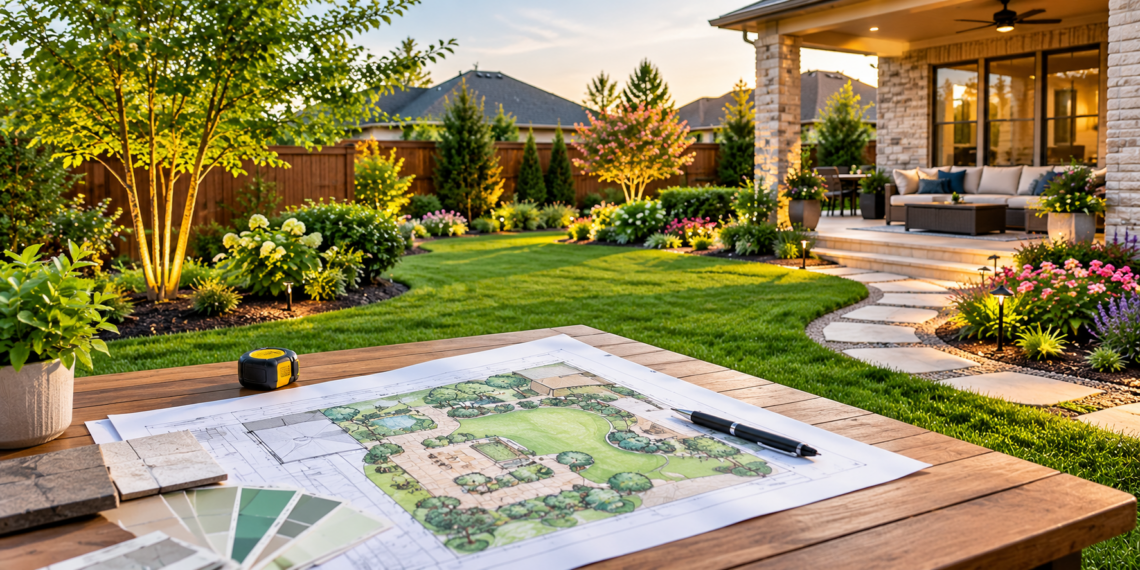
A landscape project can look straightforward on paper: choose some plants, add a few features, improve the lawn, and create a more attractive yard. In reality, the planning stage often determines whether those improvements work well together or create problems later.
For homeowners considering landscaping Frisco, the biggest challenges are not always related to the materials themselves. Poor placement, unrealistic maintenance expectations, unsuitable plants, drainage oversights, and rushed decisions can all affect how a finished yard performs. Understanding these mistakes before work begins can make the project more practical, easier to maintain, and better suited to the property.
Starting Without a Clear Purpose
One of the most common landscaping mistakes is beginning with a list of features rather than a clear idea of how the yard should be used.
A homeowner may see a blank section and immediately think about adding a patio. Another may decide that more flower beds will improve the appearance. Someone else may want decorative stone, trees, or a larger lawn. None of these choices are necessarily wrong, but they can become disconnected when there is no overall plan.
Before selecting materials or plants, consider what the property actually needs. Ask how people move through the yard, which areas are used frequently, and which spaces are consistently ignored.
A useful planning checklist might include:
- Where do you spend the most time outdoors?
- Which parts of the yard feel difficult to access?
- Do you need more shade, privacy, seating, or open space?
- Which areas create maintenance problems?
- Are there spaces that could serve a better purpose?
These questions provide a foundation for decisions that make sense together instead of producing a collection of unrelated features.
Treating the Entire Yard the Same Way
A yard rarely has identical conditions from one end to the other. One section may receive strong afternoon sun while another remains shaded for much of the day. Soil, moisture, wind exposure, drainage, and foot traffic can also vary across a property.
Using the same approach everywhere may therefore create unnecessary problems.
For example, a plant that performs well in one location may struggle when placed against a hot wall or in an area with poor drainage. Similarly, a lawn variety that works well in an open section may not be the best choice beneath established trees.
Good landscaping Frisco planning starts with observing the property rather than assuming every area requires the same treatment.
Map the Conditions First
Before making major changes, homeowners can divide the property into smaller areas and evaluate what makes each one different.
Look at:
- Sun and shade patterns throughout the day
- Existing trees and their root zones
- Areas where water collects after rain
- Soil condition and compaction
- Places with heavy foot traffic
- Views that need screening or improvement
This simple assessment can prevent many design decisions from being made based on appearance alone.
Choosing Plants Based Only on Appearance
A plant may look perfect at the nursery and still be a poor choice for a particular landscape.
Size, growth rate, sunlight requirements, water needs, soil preferences, and maintenance requirements all matter. A shrub that seems compact when purchased can eventually become too large for a narrow planting bed. A tree selected for its appearance may create shade or root-related concerns as it matures.
Plant selection should therefore consider the entire life of the landscape, not just installation day.
Think About Mature Size
One of the easiest mistakes to make is planting without leaving enough room for future growth.
A young tree may appear far away from a roof, walkway, fence, or utility area, but its mature canopy and root system can occupy considerably more space. Shrubs can also spread beyond their original planting areas.
Before choosing a plant, consider:
- Mature height and width
- Expected growth rate
- Seasonal changes
- Water requirements
- Pruning needs
- Distance from structures and pathways
This approach reduces the need for aggressive pruning or costly relocation later.
Ignoring Drainage Until the Project Is Finished
Drainage is one of the least visible parts of landscaping, which is precisely why it can be overlooked. Yet water movement can influence almost every major outdoor improvement.
A new patio, retaining feature, planting bed, or change in grade can alter how rainfall moves across a property. If those changes are made without understanding existing drainage, water may collect in unwanted areas or move toward places where it can cause damage.
A landscape does not have to be perfectly flat to function well. In fact, appropriate grading can help guide water away from structures and toward suitable drainage areas.
Before installing major hardscape or changing elevations, homeowners should determine:
- Where water currently travels
- Where standing water appears
- Whether soil absorbs water effectively
- How new surfaces could change runoff
- Whether existing drainage features need improvement
Addressing these issues early is usually easier than trying to correct them after construction.
Designing for the Property Instead of Copying Another Yard
Inspiration is useful, but copying a landscape seen online or in another neighborhood can lead to unrealistic expectations.
A design that looks excellent on a large property may overwhelm a smaller yard. A heavily planted garden may be inappropriate for someone who prefers minimal maintenance. A wide entertainment area may not make sense if the household rarely hosts outdoor gatherings.
The goal is not to reproduce someone else’s landscape. It is to identify ideas that can be adapted to the property’s dimensions, architecture, budget, and everyday use.
This is especially important with landscaping Frisco, where homeowners may have very different lot layouts and outdoor priorities despite living in the same general area.
Adding Too Many Features at Once
Another planning mistake is trying to transform everything in a single project.
A homeowner may want a new patio, outdoor kitchen, fire feature, walkways, multiple planting beds, trees, decorative lighting, and a redesigned lawn. While each feature may have value individually, putting everything into one plan can create a crowded result and make the project harder to maintain.
A phased approach can be more practical.
For example, the first phase might focus on grading and drainage. The second could establish major pathways and hardscape. Planting and decorative elements can then be added once the main structure is complete.
This approach offers several advantages:
- The budget can be spread over time.
- Each phase can be evaluated before the next begins.
- Major infrastructure can be completed first.
- Planting decisions can be made with the finished layout in mind.
Not every yard needs a complete transformation at once.
Forgetting How People Move Through the Yard
A beautiful landscape can still be frustrating if it does not support natural movement.
People tend to create their own routes across a property. If the official walkway takes a long route while the direct path crosses the lawn, homeowners and guests may simply ignore the intended design.
Pathways should connect places people actually use. A route from the driveway to the front entrance, a connection between a patio and side yard, or access to a storage area may be more valuable than a decorative path that leads nowhere important.
Width, surface material, lighting, drainage, and accessibility should also be considered.
Good landscape planning makes movement feel natural rather than forcing people to work around the design.
Underestimating Maintenance
A landscape can look impressive when newly installed and become difficult to manage several months later.
This usually happens when maintenance is treated as an afterthought. Dense planting, large lawn areas, fast-growing shrubs, seasonal color, and intricate hardscape details can all require different levels of care.
Before choosing a design, homeowners should be realistic about the time and resources available for ongoing maintenance.
A practical landscape plan should consider:
- How often the lawn will need attention
- Which plants require regular pruning
- How irrigation will be handled
- Whether leaves and debris collect in certain areas
- How easily planting beds can be accessed
- Which features need seasonal maintenance
The best landscape is not necessarily the one with the most plants or features. It is one that remains manageable after the excitement of installation has passed.
Choosing Materials Without Considering the Whole Design
Hardscape materials should complement one another and work with the home rather than being selected individually.
A pathway, patio, retaining wall, edging, and outdoor steps can all use different materials, but too many unrelated textures can make the landscape feel disconnected.
Scale also matters. Large-format materials may work well in a spacious outdoor area but feel overwhelming in a smaller space. Likewise, tiny decorative elements can disappear across a large property.
When evaluating materials, consider appearance alongside durability, maintenance, drainage, installation requirements, and how the material will age.
Forgetting to Plan Around Existing Features
Existing trees, fences, mature shrubs, utility equipment, irrigation components, and structures should be part of the planning process.
Removing or relocating everything may seem like the easiest solution, but existing features can sometimes become useful assets. A mature tree can provide shade, structure, and character. An established planting area may simply need editing rather than complete removal.
Before making changes, identify what should stay, what needs modification, and what genuinely needs to be removed.
This can reduce unnecessary costs and help preserve the elements that already give the property its identity.
Rushing the Planning Process
There is often pressure to start construction quickly, especially after homeowners become excited about a new design. However, rushing through measurements, plant selection, material decisions, or drainage planning can lead to changes after installation.
A few extra planning sessions can reveal issues that were not obvious during the initial concept stage.
Take time to review the proposed layout from different perspectives. Think about how the yard will look from inside the home, from the street, and from the areas where people actually spend time outdoors.
Seasonal considerations are also worth discussing. A planting plan should not be judged only by how it looks during one part of the year.
Getting Professional Input at the Right Stage
Professional landscaping assistance can be useful long before the first plant is installed. An experienced team can evaluate site conditions, identify practical limitations, suggest suitable materials and plants, and help organize the project into manageable stages.
For homeowners who need guidance with planning, installation, and ongoing landscape care, The Grounds Guys of Frisco can provide professional input based on the specific needs of the property. The value of that support is not simply having someone perform the work; it can also come from identifying potential problems before they become expensive changes.
Professional input is particularly helpful when a project includes multiple elements such as grading, drainage, planting, lawn work, pathways, and hardscape.
Think Beyond the First Year
A landscape should be planned with its future appearance in mind.
Plants will grow. Trees will develop larger canopies. Pathways will experience regular traffic. Outdoor surfaces will weather. Maintenance routines may also change as homeowners’ needs evolve.
A strong plan leaves enough room for growth and avoids placing permanent features where future development will create conflicts.
Homeowners should also consider whether their needs may change. A yard designed for young children may eventually need more entertaining space. A homeowner who currently enjoys extensive gardening may later prefer a lower-maintenance arrangement.
Flexibility can be one of the most valuable qualities in a landscape.
Common Planning Errors Worth Avoiding
Some mistakes are easy to recognize once they are pointed out, but they frequently happen when projects move too quickly.
Watch for these warning signs:
- Designing around appearance without considering function
- Planting without checking mature size
- Installing hardscape before addressing drainage
- Creating too many separate features
- Choosing plants with maintenance requirements that do not fit the household
- Ignoring how the landscape will change over time
Avoiding these problems does not require an elaborate design process. It simply requires homeowners to think beyond the immediate visual result.
A Better Approach Starts Before Installation
The strongest landscaping projects are usually the ones where important decisions have been made before materials arrive.
Start by understanding the property. Identify how each area is used, where environmental conditions differ, what needs improvement, and what should remain. From there, develop a layout that connects practical needs with visual appeal.
Once the foundation is established, choices about plants, materials, lawn areas, lighting, and decorative elements become easier because they have a clear purpose.
That is the real value of thoughtful landscaping Frisco planning. It prevents the project from becoming a collection of attractive but unrelated additions and instead creates an outdoor space that works as a complete environment.
Frequently Asked Questions
What is the biggest landscaping planning mistake homeowners make?
Starting without defining how the yard should be used is a common problem. Without a clear purpose, features can end up competing with one another or creating unnecessary maintenance.
Should drainage be considered before landscaping begins?
Yes. Drainage should be reviewed before major grading, hardscape, or planting work because new features can change how water moves across the property.
How can homeowners choose better plants?
Look beyond appearance and consider mature size, sunlight, water requirements, soil conditions, growth rate, and maintenance needs. Choosing plants based on the actual site can prevent problems later.
Is it better to complete a landscaping project all at once?
Not necessarily. Large projects can often be divided into phases, allowing homeowners to manage costs and evaluate each stage before moving forward.
Why is mature plant size important?
Plants that are too large for their location can eventually interfere with structures, walkways, utilities, or other plants. Planning for mature dimensions helps avoid excessive pruning or relocation.
When should professional landscaping help be considered?
Professional guidance can be useful during the planning stage, particularly when a project involves drainage, grading, extensive planting, hardscaping, or several different landscape elements.
Conclusion
Good landscaping rarely comes down to adding the most features. It comes from making decisions that fit the property, the people who use it, and the amount of maintenance they are prepared to handle.
For landscaping Frisco projects, careful planning can prevent many of the problems that become obvious only after installation. Evaluating drainage, understanding site conditions, selecting plants for their mature size, planning movement, controlling the number of features, and considering future growth can all make a substantial difference.
A well-planned yard should not only look appealing when the project is complete. It should continue to function comfortably, remain manageable, and make sense for the property years later. That is why spending time on the planning stage is often one of the most valuable investments a homeowner can make.