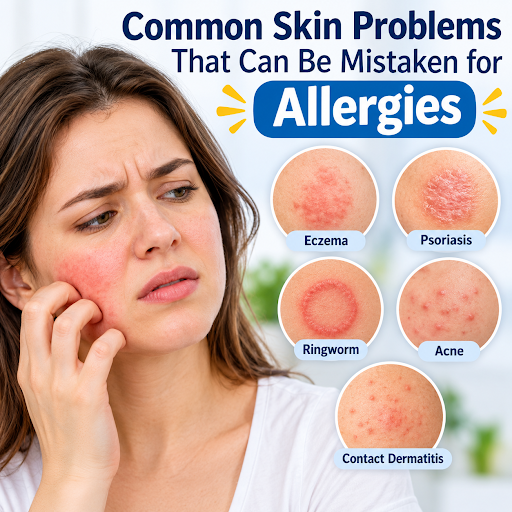
Skin irritation, redness, itching and unusual rashes are often associated with allergic reactions. However, not every skin condition that causes these symptoms is an allergy. Several common skin problems can produce similar signs, making it difficult to identify the actual cause without proper examination. Conditions such as eczema, fungal infections, psoriasis, rosacea and granuloma annulare can sometimes resemble allergic reactions.
Understanding the difference between these conditions is important because each skin problem may require a different approach to treatment and management. Using an unsuitable cream or repeatedly taking allergy medication without knowing the cause can delay appropriate care. For example, a fungal infection may become worse if treated with certain steroid creams without antifungal medication.
Common Skin Problems can affect people of different ages and skin types. Some develop because of environmental exposure, while others are associated with infections, immune system activity, genetics or other underlying factors. Although itching and redness may appear similar, the location, shape, duration and development of a rash can provide useful clues..
1. Eczema (Atopic Dermatitis)
Eczema is one of the most frequently confused skin conditions because it can cause intense itching, redness, dryness and inflammation. These symptoms are also common during allergic reactions, particularly contact dermatitis. However, eczema is a chronic inflammatory skin condition that involves a weakened skin barrier and an abnormal inflammatory response.
People with eczema may experience rough, flaky or cracked skin, particularly on the hands, face, neck, elbows and behind the knees. Scratching can make the affected areas more irritated and may increase the risk of skin infections.
Unlike a temporary allergic rash, atopic dermatitis often follows a recurring pattern. Symptoms may improve for a period before returning during stressful situations, cold weather or exposure to irritating substances.
Common management approaches include:
- Applying fragrance-free moisturisers regularly.
- Using gentle cleansers instead of harsh soaps.
- Avoiding known skin irritants.
- Taking shorter baths or showers with lukewarm water.
- Following a healthcare professional’s recommended treatment plan.
Although eczema and allergies can occur together, they are not the same condition. Identifying the correct cause helps prevent unnecessary treatments.
2. Contact Dermatitis
Contact dermatitis develops when the skin reacts to a substance it touches. It can result from direct irritation or an allergic response. This is one reason people frequently confuse it with other allergic skin problems.
Irritant contact dermatitis occurs when substances damage or irritate the skin. Common triggers include detergents, cleaning products, fragrances, solvents and repeated exposure to water. Allergic contact dermatitis develops when the immune system reacts to a particular substance, such as nickel, fragrance ingredients or certain preservatives.
Symptoms may include:
- Redness and swelling.
- Itching or burning sensations.
- Dryness and scaling.
- Small blisters in some cases.
- Cracked or uncomfortable skin.
The affected area often corresponds to where the irritating or allergenic substance touched the body. For instance, a rash beneath a watch strap may suggest a reaction to metal or another material.
Identifying the trigger is an important part of management. A dermatologist may recommend patch testing when allergic contact dermatitis is suspected. Avoiding the responsible substance can help prevent recurring episodes.
3. Fungal Skin Infections
Fungal infections are another example of skin problems that can easily be mistaken for allergies. Ringworm, medically known as tinea corporis, is a common fungal infection that may produce red, itchy and circular patches on the skin.
The affected areas often have a raised, scaly border with clearer skin towards the centre. However, appearances can vary, and not every fungal infection forms a perfect ring.
Fungal infections can affect different body areas, including the feet, groin, scalp and body. They may spread through direct contact with an infected person, animals or contaminated objects.
Common symptoms include:
- Circular or irregular patches.
- Itching and mild irritation.
- Scaling around the affected area.
- Gradually expanding skin lesions.
- Changes in skin colour.
Unlike an allergic rash, ringworm is caused by fungi and usually requires antifungal treatment. Using steroid creams without appropriate diagnosis can mask the infection and sometimes allow it to spread.
Keeping the skin clean and dry, avoiding shared towels and wearing breathable clothing can help reduce the risk of certain fungal infections.
4. Psoriasis
Psoriasis is a chronic immune-mediated skin condition that causes skin cells to build up more quickly than usual. This leads to thickened patches that may appear red, inflamed and covered with silvery-white scales.
Because psoriasis can cause redness, itching and irritation, some people initially mistake it for an allergic reaction or persistent eczema.
Commonly affected areas include the elbows, knees, scalp, lower back and nails. In some individuals, psoriasis may also affect the joints, causing pain, swelling and stiffness.
Symptoms can vary in severity. Some people experience small patches, while others develop larger areas of inflammation.
Factors that may trigger or worsen psoriasis include:
- Physical or emotional stress.
- Skin injuries.
- Certain infections.
- Cold and dry weather.
- Some medications.
Psoriasis is not contagious and cannot spread through ordinary physical contact. Treatment depends on the type and severity of the condition and may include moisturisers, prescription topical medicines, phototherapy or systemic treatments.
Recognising psoriasis early can help people manage flare-ups and reduce the impact on daily activities.
5. Rosacea
Rosacea is a chronic inflammatory skin condition that mainly affects the face. It is frequently mistaken for an allergic reaction because it can cause redness, visible blood vessels, swelling and small acne-like bumps.
The cheeks, nose, forehead and chin are commonly affected. Some people experience temporary flushing, while others develop persistent redness that becomes more noticeable over time.
Unlike many allergic rashes, rosacea is not usually caused by exposure to a specific allergen. Certain environmental and lifestyle factors may trigger flare-ups, including:
- Hot weather and sudden temperature changes.
- Sun exposure.
- Spicy foods.
- Hot drinks.
- Alcohol.
- Emotional stress.
- Certain skincare products.
Rosacea can also cause eye-related symptoms, including dryness, irritation and a gritty sensation. These symptoms should not be ignored.
People experiencing persistent facial redness should consult a dermatologist rather than assuming that they have an allergy. Gentle skincare, sun protection and appropriate prescription treatments can help control symptoms.
6. Granuloma Annulare
Granuloma annulare is a relatively uncommon inflammatory skin condition that can easily be confused with allergic rashes, ringworm and other skin disorders. It typically appears as small, firm bumps arranged in a circular or ring-shaped pattern.
The condition commonly affects the hands, feet, fingers and ankles, although it can develop on other parts of the body. Unlike fungal ringworm, granuloma annulare generally does not produce the same characteristic scaling around the edges.
Most cases are not painful, although some people experience mild itching or discomfort. The exact cause is not fully understood, but the condition is believed to involve an inflammatory response within the skin.
There are different forms of granuloma annulare, including:
- Localised granuloma annulare: Usually develops as one or several ring-shaped patches on the hands or feet.
- Generalised granuloma annulare: Produces more widespread bumps across different body areas.
- Subcutaneous granuloma annulare: Develops as deeper lumps beneath the skin.
- Perforating granuloma annulare: A less common form that may produce small lesions with central openings.
Granuloma annulare can sometimes disappear without treatment, although this may take months or years. In other cases, lesions persist or return after improving.
A dermatologist may diagnose the condition through a physical examination and, when necessary, a skin biopsy. Treatment depends on the type, extent and symptoms. Options may include prescription corticosteroids, other topical treatments, phototherapy or selected systemic medicines.
People researching complementary approaches may also encounter information about Herbal Supplements for Granuloma Annulare. However, it is important to understand that no herbal supplement has been established as a cure for this condition. Supplements should not replace a confirmed diagnosis or dermatologist-recommended treatment. Anyone considering them should discuss possible interactions and safety concerns with a qualified healthcare professional.
7. Seborrhoeic Dermatitis
Seborrhoeic dermatitis is a common inflammatory skin condition that mainly affects areas with a high concentration of oil-producing glands. It can cause redness, itching and flaky skin, making it appear similar to an allergic reaction.
The scalp is frequently affected, where the condition may resemble ordinary dandruff. However, it can also develop around the eyebrows, nose, ears, beard area and chest.
Typical symptoms include:
- White or yellowish flakes.
- Greasy-looking skin.
- Redness and irritation.
- Mild to moderate itching.
- Recurrent scaling around the scalp and face.
The condition is associated with an inflammatory response involving skin oils and the naturally occurring Malassezia yeast. It is not simply caused by poor hygiene and is not contagious.
Management may involve medicated shampoos, antifungal creams and prescribed anti-inflammatory treatments. Symptoms often improve with treatment but may return periodically.
If facial scaling or scalp irritation continues despite ordinary dandruff products, a dermatologist can help determine whether seborrhoeic dermatitis is responsible.
8. Keratosis Pilaris
Keratosis pilaris is a common skin condition characterised by tiny, rough bumps that usually develop on the upper arms, thighs, cheeks or buttocks. These bumps may be red, pink or close to the natural skin colour.
Because the affected areas can look inflamed, some people mistake keratosis pilaris for an allergic rash or a reaction to skincare products.
The condition develops when keratin, a protein found in the skin, accumulates and blocks hair follicles. It is generally harmless and does not usually cause significant discomfort.
Common characteristics include:
- Small, rough bumps.
- Dry or uneven skin texture.
- Mild redness around hair follicles.
- Symptoms that become more noticeable in cold weather.
- Rough patches that feel similar to sandpaper.
Keratosis pilaris often runs in families and is more noticeable in people with dry skin or certain forms of eczema.
Although there is no permanent cure, regular moisturising and gentle exfoliating products containing ingredients such as lactic acid or urea may improve skin texture. Harsh scrubbing should be avoided because it can increase irritation.
9. Heat Rash (Miliaria)
Heat rash develops when sweat becomes trapped beneath the skin because of blocked sweat ducts. It is particularly common during hot and humid weather, after exercise or when wearing tight clothing.
The condition can produce small red bumps, itching, prickling sensations and mild inflammation. These symptoms may resemble an allergic reaction, especially when the rash appears suddenly.
Heat rash commonly affects areas where sweat accumulates, such as the neck, chest, back, skin folds and areas covered by clothing.
Unlike many allergic skin reactions, heat rash is closely associated with excessive sweating and hot conditions.
Helpful preventive measures include:
- Wearing loose-fitting, breathable clothing.
- Staying in cool, well-ventilated environments.
- Taking cool showers when necessary.
- Avoiding excessive sweating where possible.
- Keeping affected skin clean and dry.
Most mild cases improve after the skin cools down and sweating decreases. Persistent, painful or infected-looking rashes require medical assessment.
10. Scabies
Scabies is a contagious skin infestation caused by microscopic mites that burrow into the outer layer of the skin. It can cause intense itching and a rash that is sometimes mistaken for an allergic reaction or eczema.
One of the most noticeable features is itching that becomes particularly severe at night. Small bumps, thin burrow-like lines and irritated patches may develop around the fingers, wrists, elbows, waist and other body areas.
Scabies spreads mainly through prolonged direct skin-to-skin contact. It can also spread through shared clothing or bedding in some circumstances.
Common symptoms include:
- Severe itching, especially at night.
- Small red or skin-coloured bumps.
- Thin lines or burrows in the skin.
- Irritation between the fingers.
- Rashes around the wrists and waist.
Unlike ordinary allergies, scabies requires specific prescription treatment to eliminate the mites. Close household contacts may also need treatment, even if they do not have symptoms.
Washing recently used clothing, towels and bedding according to healthcare guidance can help reduce the possibility of reinfestation.
How to Tell the Difference Between Allergies and Other Skin Problems
Although several skin conditions share similar symptoms, certain characteristics can help distinguish them. However, appearance alone cannot always provide an accurate diagnosis.
Consider the following differences:
| Skin condition | Common distinguishing feature |
| Eczema | Dry, itchy and inflamed patches |
| Contact dermatitis | Rash where the skin touches an irritating substance |
| Ringworm | Expanding circular patches with scaly borders |
| Psoriasis | Thickened patches with silvery scales |
| Rosacea | Persistent facial redness and visible blood vessels |
| Granuloma annulare | Firm bumps arranged in ring-shaped patterns |
| Seborrhoeic dermatitis | Greasy flakes and redness |
| Keratosis pilaris | Small, rough bumps around hair follicles |
| Heat rash | Small bumps associated with sweating |
| Scabies | Intense itching, often worse at night |
The duration of symptoms, affected body areas, possible triggers and changes in skin texture can all provide useful information.
A healthcare professional may recommend a physical examination, allergy testing, fungal testing or a skin biopsy depending on the suspected condition.
When Should You Consult a Dermatologist?
Not every skin rash requires urgent medical attention, but persistent or unexplained changes should not be ignored. Self-diagnosing a condition as an allergy may delay appropriate treatment.
Consider consulting a dermatologist if:
- A rash continues for several weeks without improvement.
- Skin irritation repeatedly returns.
- Redness or swelling spreads to other areas.
- You develop painful blisters or open sores.
- An unusual ring-shaped rash continues to grow.
- Over-the-counter treatments do not improve symptoms.
- You notice changes in skin texture or colour without an obvious explanation.
Seek urgent medical attention if a rash is accompanied by breathing difficulties, swelling of the tongue or throat, faintness or other signs of a severe allergic reaction. Fever, rapidly spreading redness, severe pain or signs of infection also require prompt assessment.
Supporting Skin Health Through Everyday Habits
Healthy skincare habits can help maintain the skin barrier and reduce irritation. Although these habits cannot prevent every skin condition, they may improve general skin comfort.
Choose gentle skincare products: Fragrance-free cleansers and moisturisers are often suitable for sensitive skin. Avoid products containing ingredients that have previously caused irritation.
Maintain skin hydration: Applying moisturiser regularly helps reduce dryness and supports the skin’s protective barrier.
Protect your skin from sunlight: Use suitable sun protection and avoid excessive exposure, particularly if you have a condition that worsens with sunlight.
Wear comfortable clothing: Breathable fabrics can reduce sweating and friction, especially during warmer months.
Avoid excessive scratching: Scratching can damage the skin and increase the risk of infection. Keeping nails short and using suitable moisturisers may help reduce irritation.
Maintain a balanced diet: A varied diet containing vegetables, fruits, healthy fats and adequate protein supports general nutritional health. However, dietary changes should not be considered a replacement for medical treatment.
People exploring natural wellness options may come across different Herbal Care Products marketed for general skin health. It is important to examine product ingredients, check their safety and avoid assuming that natural products can treat or cure inflammatory skin conditions. Supplements and herbal preparations may also interact with prescription medicines.
Frequently Asked Questions
1. What skin conditions are commonly mistaken for allergies?
Eczema, psoriasis, fungal infections, rosacea, contact dermatitis, granuloma annulare and scabies can all produce symptoms that resemble allergic reactions.
2. Can a fungal infection look like an allergic rash?
Yes. Fungal infections can cause red, itchy and inflamed patches. Ringworm may produce circular lesions that are sometimes confused with eczema or allergies.
3. Is granuloma annulare an allergic reaction?
No. Granuloma annulare is an inflammatory skin condition that commonly produces ring-shaped groups of small bumps. Its exact cause is not fully understood.
4. Can skin problems disappear without treatment?
Some conditions, including certain cases of granuloma annulare and mild heat rash, may improve without specific treatment. Others require medical care.
5. When should I seek medical advice for an unexplained rash?
Consult a healthcare professional if a rash persists, spreads, becomes painful, develops signs of infection or does not respond to appropriate treatment.
Conclusion
Many skin conditions can resemble allergic reactions because they share symptoms such as redness, itching, swelling and irritation. However, eczema, fungal infections, psoriasis, rosacea, granuloma annulare, seborrhoeic dermatitis and other conditions have different underlying causes and treatment requirements.
Recognising the distinguishing features of these Common Skin Problems can help people make better decisions about their skin health. Rather than relying on appearance or repeatedly using allergy medication, seek professional advice when symptoms persist or become unusual.
An accurate diagnosis is the first step towards appropriate treatment. With suitable skincare, medical guidance and attention to possible triggers, many skin conditions can be managed more effectively.
Medical Disclaimer
This article is intended for general educational and informational purposes only. It does not provide medical advice, diagnosis or treatment recommendations. Skin conditions can have similar symptoms, and an accurate diagnosis may require professional examination and testing. Always consult a qualified healthcare professional or dermatologist before starting treatment or using herbal supplements for a skin condition. Do not discontinue prescribed medication or replace medical treatment with herbal products without professional guidance.