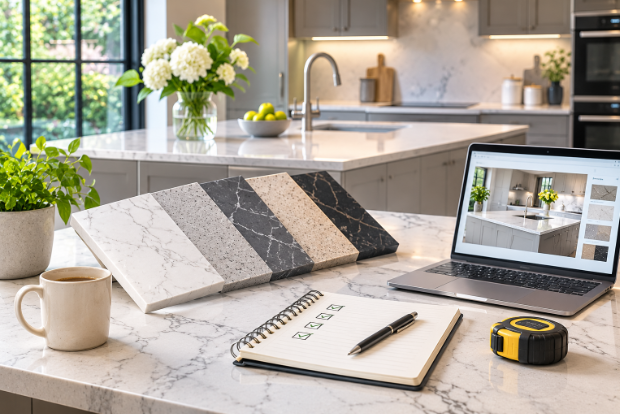
Few surfaces influence the look and daily usability of a kitchen as much as the worktop. It is touched, wiped, and used for chopping, hot pans, and homework every single day, so it needs to be tough as well as attractive. Over the past two decades, engineered quartz has become one of the most popular choices in British homes, and quartz countertops in the UK are now supplied by fabricators and appear in new kitchens and refurbishments alike. In Britain, the product is usually called a worktop, but the material is the same. It is made from crushed natural quartz, resin binders, and pigments, which are pressed into slabs and cured. The result is a dense, non-porous surface with a consistent pattern. Because the investment is significant, understanding the basics first helps avoid disappointment later. This guest post explains how quartz differs from other materials, what choices are available, what installation involves, and how to keep the surface looking fresh for many years.
How Engineered Quartz Compares With Natural Stone
Quartz stands apart because it is engineered rather than quarried. Granite and marble are cut directly from the earth, so every slab has natural variation, but they are porous and usually need sealing to resist stains. Marble also reacts to acids such as lemon juice and vinegar, which can leave dull marks called etching. Quartz contains around 90 percent crushed stone bound with resin, so it does not require sealing and resists most household stains. It is also harder than many natural stones, although it is not indestructible. Heat is the main weakness, because resin can discolour or crack under a very hot pan, so a trivet is always sensible. Anyone comparing quartz countertops in the UK showrooms display with granite, laminate, or solid wood should consider durability, appearance, and upkeep together instead of focusing on one factor alone. Quartz also tends to be less suited to outdoor use, since prolonged sunlight can fade the resin over time.
Colours, Finishes, and Thickness Options Explained
Design choice is where quartz excels. Because pigments are mixed during manufacture, colours range from pure white and soft grey to deep charcoal and warm beige, and many slabs imitate the veining of marble without its sensitivity to acid. Finishes include polished, which is glossy and reflective, honed or matt, which hides fingerprints and has a softer look, and textured surfaces with a subtle grain. Thickness is usually 20 millimetres or 30 millimetres. The thinner slab suits modern, slim profiles, while the thicker option gives a more substantial appearance and is often chosen for islands. Edge profiles such as square, bevelled, and bullnose change the character of the kitchen, so view samples under the lighting in your own home. A good supplier of quartz countertops in the UK will let customers inspect in person and take small samples home, which is wise because colours can look different in showrooms than beside your cabinets. Patterns that run through the slab also affect how well joins are hidden, so ask about slab sizes and vein matching.
Conclusion
Cost depends on brand, thickness, and complexity, with prices usually quoted per square metre before fabrication and fitting. Templating, cutting for sinks and hobs, and installation add to the total, so request an itemised quotation. Fitting should be done by trained fabricators, because slabs are heavy and cutting errors are expensive. Buyers who want to compare colours and finishes before ordering can browse the ranges of specialist suppliers such as Florence Quartz. Day-to-day care is simple: wipe with warm water and mild soap, avoid abrasive pads and harsh chemicals such as bleach or oven cleaner, and use chopping boards to protect the surface and your knives. Wipe spills promptly, even though the material resists staining. Choosing the right quartz countertops in the UK that homeowners can enjoy for decades means balancing budget, style, and practicality. Check the length of the warranty, ask about slab availability, and confirm lead times so that your project is not delayed. With careful planning, the surface will stay attractive and easy to maintain.