The dinner rush exposes problems that are easy to miss during a quiet afternoon. A waiter changes an order after sending it to the kitchen. A takeaway customer arrives before the food is ready. Two tables request their bills while a delivery order waits for collection.
Each request needs the right information to reach the right person. When those handovers depend on shouted instructions or handwritten corrections, staff spend valuable time checking what happened.
For UAE business owners searching for POS for Restaurant Software, this is a useful starting point: follow what happens to an order throughout service. A restaurant POS should help the team capture requests, communicate changes, track preparation and complete payment with a clear record.
The first test is order entry. Restaurant menus contain choices that affect both preparation and price. A customer might select a portion size, add a side dish or request a change to the standard serving.
These options should be easy for staff to enter and easy for the kitchen to understand. Structured modifiers can help distinguish a paid addition from a preparation instruction. They also give employees a consistent way to record common requests.
Consider a burger ordered with extra cheese and no onions. The additional charge needs to appear on the bill, while both instructions need to reach the kitchen. A useful demonstration should show the customer-facing total and the kitchen ticket together.
Changes made after an order is submitted deserve particular attention. Restaurants need to know whether an updated instruction becomes clearly visible or simply replaces the original information without drawing attention to the change.
Kitchen coordination is the next step. When several orders arrive close together, staff need to understand what is waiting, what is being prepared and what is ready to serve.
A kitchen display can provide a shared view of outstanding orders, but its usefulness depends on configuration. Order details must be readable, preparation statuses must be clear and staff must understand who updates them.
Restaurants with separate cooking stations should ask how items reach the relevant team. Drinks, grilled dishes and desserts may follow different preparation routes. Owners should also check how the system handles an order containing items from several stations.
The practical goal is to give the service team reliable information. If a guest asks about a delayed meal, the waiter should be able to check its status without repeatedly interrupting the kitchen.
Dine-in, takeaway and delivery orders introduce different requirements. A table order needs a table reference. A collection order needs a recognisable customer or order identifier. A delivery order may require an address, contact details and dispatch information.
Keeping these order types visible helps staff organise preparation and handover. It also gives managers a clearer picture of where demand is coming from.
If the restaurant accepts orders through external platforms, integration details need to be confirmed individually. Ask whether orders enter the POS automatically, how menu updates are handled and what happens when an item becomes unavailable. An online-ordering feature does not necessarily include every delivery marketplace.
Billing needs to work just as clearly as order entry. Guests may request separate bills, use different payment methods or question an item that was cancelled earlier.
During a demonstration, test a complete meal with additions, a removed item and a split payment. Check whether the final receipt matches what was served and whether the transaction remains easy to review afterwards.
Managers should also establish who can approve discounts, cancel items or issue refunds. Appropriate permissions and a record of changes help explain adjustments when the team reviews the shift.
Behind service, inventory requires its own attention. Selling a finished dish and tracking its ingredients are different tasks. A restaurant may need to record purchases, preparation losses, spoilage and internal usage alongside sales.
Owners should confirm whether the proposed system supports recipe-based ingredient deductions or primarily tracks individual stock items. Where recipe tracking is available, ask how portion sizes, substitutions and changes to recipes affect quantities.
Software records are most useful when the team follows consistent receiving and stock-counting procedures. Comparing expected stock with physical quantities can then help managers investigate differences instead of treating every discrepancy as an unexplained loss.
Reporting should connect these operational details to decisions. Daily revenue is useful, but managers may also need to review preparation times, cancelled items, discounts and sales by order type.
For example, a dish that sells frequently but takes unusually long to prepare may create pressure during peak service. Reviewing sales alongside preparation information can help the team decide whether to adjust the process, staffing or menu.
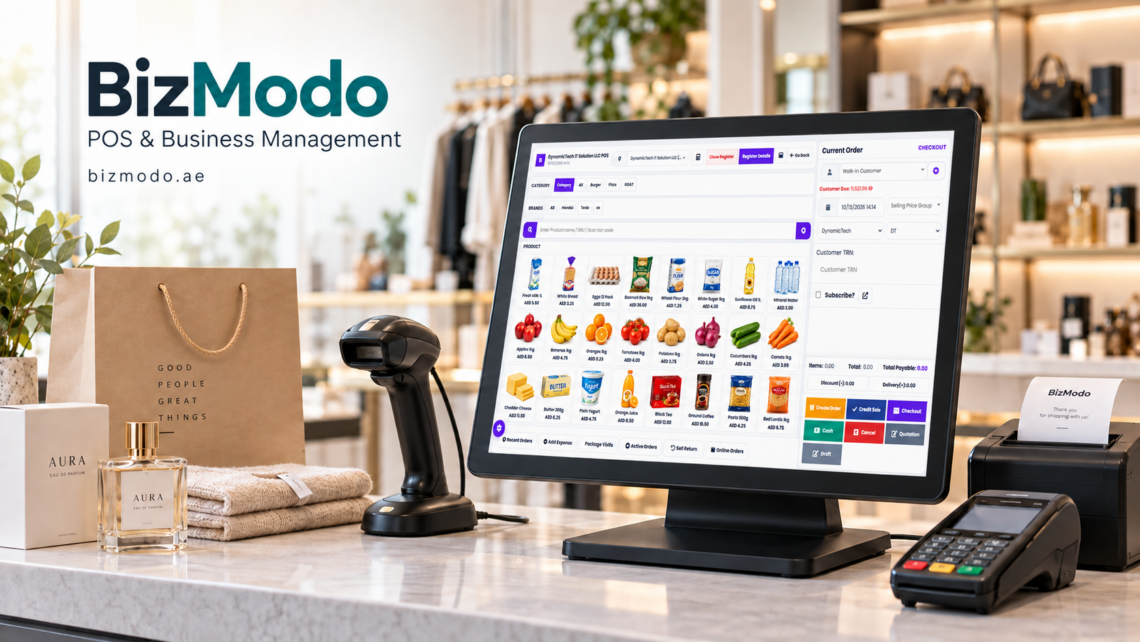
BizModo’s POS for Restaurant Software offering includes kitchen displays, order modifiers, table management, QR ordering, inventory tools and reporting. Its restaurant page also describes cooking-time reports, wastage tracking and support for multiple locations. Restaurant owners can use these published capabilities to build a demonstration around their own menu and service requirements.
Before choosing a system, recreate a demanding service scenario. Enter a table order, change one item, add a takeaway request, mark dishes ready and settle the bill using two payment methods. Then review the kitchen records and transaction report.
That exercise reveals how the software behaves when the restaurant needs it most. A suitable POS should give staff clear information at each handover and leave managers with records they can use to improve the next service.