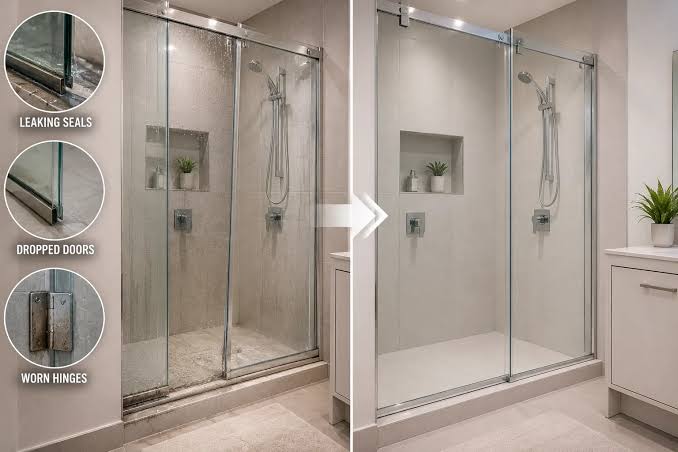
A shower screen can develop problems gradually. A door may start sticking, a seal may begin leaking, or a hinge may become loose. These issues can seem minor at first, but ignoring them can lead to further damage and, in the case of damaged glass, a serious safety concern.
If your shower screen is no longer working properly, a professional glazier can inspect the glass, hinges, seals, rollers, frame and other fittings to identify the cause and recommend the appropriate repair or replacement.
Here are some of the most common signs that it is time to arrange shower screen repair.
1. Your Shower Screen Door Is Difficult to Open or Close
A shower screen door should open and close smoothly without excessive force. If you need to push, pull or lift the door to operate it, there may be an issue with the hinges, rollers, alignment or frame.
For sliding shower screens, worn rollers or problems with the track can cause the door to drag, stick or jump while moving. Hinged doors may become difficult to operate when hinges loosen or the door becomes misaligned.
A glazier can inspect the door and determine whether the problem can be resolved by adjusting or replacing the hardware rather than replacing the entire shower screen.
2. The Shower Screen Door Is Dropping
If your shower door appears lower on one side or starts rubbing against the floor, shower tray or another panel, do not ignore it.
A dropping door can indicate:
- Loose or worn hinges
- Misaligned hardware
- Worn rollers
- Movement around the fixing points
- Incorrect door alignment
- Problems with the supporting structure
Continued use can place unnecessary stress on the glass and fittings. Professional inspection can help identify the underlying problem before it becomes more difficult or expensive to repair.
3. Water Is Leaking Around the Shower Screen
Water escaping from your shower screen is one of the most common reasons homeowners arrange repairs.
You may notice water:
- Running underneath the shower door
- Escaping between the glass and wall
- Pooling outside the shower
- Running along the bottom of the screen
- Appearing around old silicone joints
Worn seals, damaged door sweeps, deteriorated silicone and alignment issues can all contribute to leaks. In many cases, the glass itself does not need to be replaced.
Replacing worn seals or repairing the affected areas may restore proper water control. If the leak continues after previous repairs, however, a glazier should inspect the screen to determine whether there is a larger installation or alignment problem.
4. Your Shower Screen Seal Is Damaged
Rubber seals and door sweeps are exposed to water and regular movement every day. Over time, they can become brittle, split, shrink or pull away from the glass.
A damaged seal can allow water to escape from the shower and may also make the door feel less secure.
If the glass and hardware are otherwise in good condition, shower screen seal replacement may be all that is required.
Getting a worn seal repaired early can help prevent a small leak from becoming a larger bathroom maintenance problem.
5. The Shower Screen Hinges Are Loose
Loose hinges should not be ignored, particularly on frameless shower screens.
If you notice that a hinge moves, the door is sagging, or the door no longer closes correctly, arrange a professional inspection. The issue may involve the hinge, fixing points, alignment or another component.
A glazier can assess the condition of the hardware and determine whether adjustment or replacement is appropriate.
Regular maintenance checks are also recommended for shower screen hardware. Manufacturer maintenance guidance commonly recommends checking hinges, fixings and glass clearances periodically.
6. The Shower Glass Is Cracked or Chipped
Cracked shower glass requires immediate attention.
Most modern shower screens use toughened safety glass. While toughened glass is designed for safety, a damaged panel should not simply be patched or glued. Once the glass is cracked, the appropriate solution is generally replacement of the damaged panel.
Pay particular attention to:
- Cracks near corners
- Chips along glass edges
- Damage around hinge areas
- Cracks around cut-outs or fittings
- Glass that has started to move or sit incorrectly
If you find a crack or significant chip, avoid using the affected shower until it has been professionally assessed.
7. Your Shower Screen Is Rattling or Moving
A shower screen should remain stable during normal use.
If the glass rattles when the door moves, the panel shifts when touched, or fittings appear loose, there may be an issue with the hardware, fixings or alignment.
Movement can also indicate that components have become worn over time.
Rather than tightening random fittings yourself, have the screen inspected by a glazier. Incorrect adjustment can potentially place additional pressure on the glass.
8. The Shower Door No Longer Closes Properly
A shower door that leaves a noticeable gap, swings open by itself or fails to close against the seal can indicate an alignment or hardware problem.
For example, a hinged door may require hinge adjustment, while a sliding door may have worn rollers or track components.
Getting the problem repaired can improve:
- Door operation
- Water containment
- Bathroom usability
- Hardware performance
- Overall shower screen condition
A professional inspection can establish whether the existing screen can be repaired or whether replacement would be more practical.
9. The Silicone Around Your Shower Screen Is Deteriorating
Silicone helps seal areas around the shower screen and prevent water from entering unwanted areas.
Over time, silicone can:
- Crack
- Shrink
- Peel away
- Discolour
- Develop gaps
- Allow water to pass behind the screen
Simply applying new silicone over old, deteriorated silicone may not provide a proper long-term solution. The existing material generally needs to be assessed and, where necessary, removed before the area is correctly resealed.
If you repeatedly experience leaks, a glazier should inspect the entire shower screen rather than treating only the visible water leak.
10. Your Shower Screen Has Been Damaged by an Impact
A shower screen can be damaged when a hard object hits the glass or when a door swings into a wall, tile or another part of the enclosure.
Even if the damage appears small, glass edges and corners deserve particular attention. Damage in these areas can compromise the panel.
If you notice a chip, crack or unusual mark after an impact, arrange an inspection before continuing to use the shower.
When Should You Repair a Shower Screen?
Not every shower screen problem means you need a completely new screen.
If the glass remains intact, common repairable problems may include:
- Worn shower screen seals
- Loose hinges
- Damaged rollers
- Sliding door problems
- Loose handles
- Minor alignment issues
- Deteriorated silicone
- Hardware problems
A professional glazier can inspect the screen and determine which components need attention.
When Does a Shower Screen Need Replacement?
Replacement may be required when the glass itself is cracked or severely damaged. It may also be considered when the existing frame, hardware or screen system has deteriorated significantly or repeatedly develops problems.
A professional assessment is important because replacing only one component may not solve the underlying problem.
For damaged toughened glass, repair is generally not an option. The affected panel needs to be replaced with suitable safety glass.
Why Professional Shower Screen Repair Matters
Shower screens combine glass, hinges, rollers, seals, brackets and other fittings. A problem with one component can affect the operation of the entire screen.
A professional glazier can check:
- Condition of the glass
- Door alignment
- Hinges and brackets
- Rollers and tracks
- Seals and sweeps
- Silicone joints
- Fixing points
- Clearance between glass panels
- Overall operation of the screen
This helps identify the actual cause rather than simply treating the most obvious symptom.
What to Do If Your Shower Screen Is Damaged
If you notice a crack, serious chip, loose glass or significant movement, stop using the affected shower until it can be assessed.
For less serious issues such as leaking seals, stiff doors or worn rollers, arranging a repair early can prevent the problem from becoming more complicated.
Before booking a service, you can also take clear photographs of the shower screen and the damaged area. Photos can help a glazier understand the problem and prepare for the repair.
Looking for Shower Screen Repair?
Whether your shower screen is leaking, sticking, dropping, rattling or showing signs of damaged glass, getting the problem assessed early can help you determine the right solution.
Shower Screen Repair provides professional assistance for shower screen problems, including repairs, hardware issues, seals and replacement requirements. If you are unsure whether your shower screen needs a simple repair or a new panel, arrange an inspection so the condition can be properly assessed.
Book Your Shower Screen Repair
Don’t let a small shower screen problem turn into a bigger bathroom issue. Get your shower screen checked and find out what needs to be repaired or replaced.
Visit our website: Shower Screen Repair to learn more about the service and request assistance.
Frequently Asked Questions
Can a cracked shower screen be repaired?
Cracked toughened shower glass generally cannot be repaired. The damaged panel normally needs to be replaced with suitable safety glass.
Why is my shower screen leaking?
Common causes include worn seals, damaged door sweeps, deteriorated silicone, poor alignment or gaps around the screen. The exact cause should be identified before deciding on the repair.
Can a shower screen door hinge be repaired?
Depending on its condition, a hinge may be adjusted, tightened or replaced. A glazier can inspect the hinge and surrounding glass before recommending the appropriate solution.
Do I need to replace the whole shower screen if the door is not working?
Not necessarily. Problems with rollers, hinges, seals and other hardware can often be addressed without replacing the entire screen when the glass and supporting components remain in good condition.
When should I call a glazier for shower screen repair?
Arrange professional assistance when you notice cracked or chipped glass, loose hinges, a dropping door, persistent leaks, damaged seals, rattling glass, difficult door operation or other unusual changes.