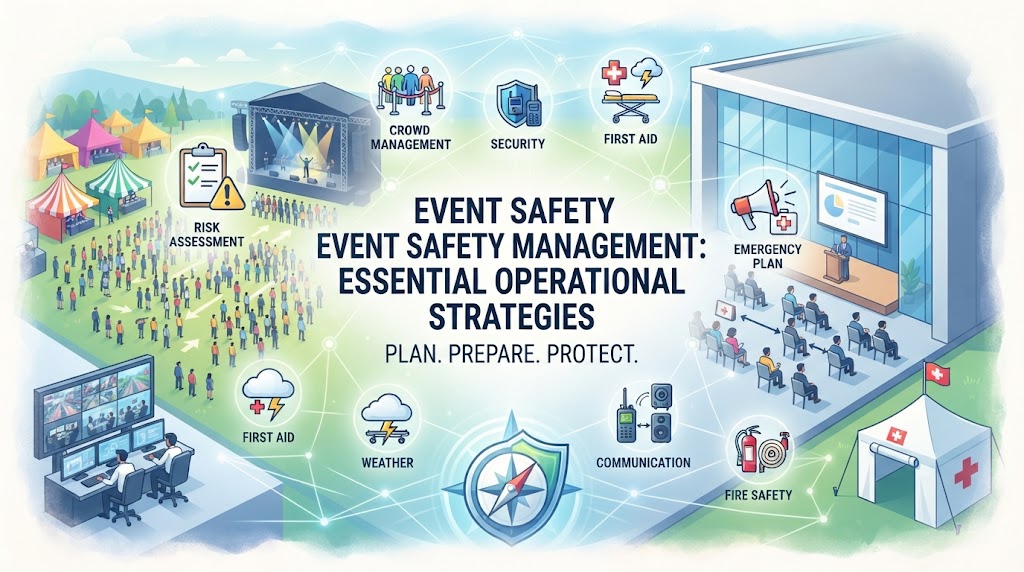
Managing large-scale gatherings requires meticulous operational planning, proactive risk assessments, and strict adherence to safety standards. Whether organizing an outdoor music festival, a corporate conference, or a regional sports competition, venue managers and event planners face complex risk environments. A single lapse in security or emergency coordination can result in severe injuries, financial liabilities, and irreparable brand damage. Integrating standardized safety guidelines transforms incident management from reactive troubleshooting into a structured operational standard.
Establishing Core Safety Planning and Risk Assessment
Every safe event begins with identifying potential hazards long before the first attendee arrives on site.
Performing Comprehensive Risk Assessments
A thorough risk assessment identifies physical, environmental, and human hazards specific to your venue and crowd demographics. Key elements include:
- Site Inspection: Reviewing structural stability, emergency exits, electrical setups, and temporary staging installations.
- Capacity Calculations: Setting clear occupant load limits to prevent overcrowding and maintain clear egress corridors.
- Environmental Evaluation: Monitoring local weather forecasts, heat indexes, and outdoor site conditions to anticipate severe weather impacts.
- Demographic Analysis: Evaluating crowd behavior patterns based on event type, historical data, and expected attendance profiles.
Documenting these evaluations creates a clear baseline for deploying physical security and medical resources.
Developing Emergency Action Plans
An Emergency Action Plan (EAP) outlines precise operational protocols for staff during unforeseen incidents. Essential components include:
- Chain of Command: Identifying primary incident commanders and delegating responsibilities across security, medical, and operational teams.
- Evacuation Procedures: Marking clear, unobstructed primary and secondary evacuation routes throughout the venue.
- Communication Channels: Establishing primary radio frequencies, backup mobile networks, and public address notification templates.
- Specialized Response Teams: Assigning trained staff to manage specific scenarios such as severe weather, fires, or medical crises.
Crowd Management and Physical Site Security
Effective crowd dynamics depend on clear spatial design, visible staff placement, and strategic access control points.
Managing Crowd Flow and Access Points
Controlling entry points and internal crowd movement minimizes congestion and reduces queue times. Key strategies include:
- Staggered Entry Schedules: Implementing timed entry slots to distribute arrival waves evenly across venue gates.
- Barrier Systems: Utilizing heavy-duty fencing, bike racks, and stanchions to create orderly queuing lanes and isolate restricted areas.
- Directional Signage: Placing high-visibility, illuminated signs above eye level to guide crowds toward exits, restrooms, and medical stations.
- Ingress and Egress Monitoring: Monitoring real-time crowd densities at key choke points to adjust entry rates dynamically.
Coordinating On-Site Security Operations
Integrating security teams ensures rapid response capabilities and maintains order across the premises:
- Access Control: Verifying credentials, screening bags, and deploying metal detectors at perimeter entry points.
- Roving Patrols: Positioning security personnel across high-density areas to identify safety issues early.
- De-escalation Procedures: Training staff to handle aggressive behavior or verbal disputes calmly before escalation occurs.
- Vendor Access Protocols: Regulating loading dock access, credential verification, and delivery schedules for third-party contractors.
Incident Response Protocols and Emergency Preparedness
Prompt, coordinated action during critical incidents minimizes risks to attendee health and property.
Preparing for Medical Emergencies
Medical incidents require immediate access to trained personnel and specialized equipment. Key preparation steps include:
- Dedicated First Aid Stations: Establishing prominently marked medical tents staffed by certified first responders.
- Emergency Vehicle Access: Reserving dedicated lane access for ambulances entering and leaving the venue premises.
- Automated External Defibrillator (AED) Placement: Positioning AED units at regular intervals across high-footprint areas.
- Medical Triage Protocols: Implementing standardized assessment tools to prioritize severe cases during multi-patient situations.
Handling Unforeseen Incidents and Critical Disruptions
When meeting emergencies or sudden crowd surges, operational staff must execute coordinated protocols swiftly:
- Immediate Stoppage Rules: Authorizing stage managers and incident commanders to pause activities when safety thresholds are breached.
- Public Announcements: Broadcasting clear, calm evacuation or shelter-in-place instructions via main sound systems and video screens.
- First Responder Integration: Handing over incident control seamlessly to local municipal police, fire, or emergency services upon their arrival.
- Incident Logging: Documenting timeline details, staff actions, and witness statements immediately following any security or medical incident.
Implementing comprehensive event safety protocols safeguards both attendees and staff while preserving compliance with local municipal codes.
Regulatory Compliance and Documentation Requirements
Maintaining clear documentation ensures legal compliance and validates that safety measures meet industry standards.
Essential Safety Documentation Checklist
Organizers must maintain updated records before, during, and after every gathering:
- Permits and Licenses: Securing necessary municipal assembly permits, health department authorizations, and noise variance approvals.
- Vendor Insurance Certificates: Verifying commercial general liability and workers’ compensation coverage for all contracted partners.
- Structural Sign-Offs: Obtaining written engineering certifications for temporary stages, bleachers, and heavy rigging structures.
- Staff Training Records: Recording safety briefings, credential assignments, and emergency drill completions for all event personnel.
Working with resources from Safety docs gives venue managers standard templates, safety manuals, and compliance checklists tailored for commercial event operations.
Protecting Life and Ensuring Event Success
Successful event management relies on rigorous preparation, clear communication, and disciplined safety protocols. By conducting thorough risk assessments, managing crowd movements effectively, and keeping emergency response plans current, event planners preserve physical safety and operational continuity. Partnering with certified security professionals and leveraging standardized safety documentation ensures that every gathering operates efficiently, securely, and in full compliance with regulatory codes.
Frequently Asked Questions
Q1: What is the primary purpose of an event risk assessment?
An event risk assessment identifies potential physical, environmental, and operational hazards to establish effective safety controls before an event begins.
Q2: How do event managers calculate safe crowd capacity for a venue?
Capacity is calculated using municipal building codes, usable floor space dimensions, available exit widths, and local fire department safety regulations.
Q3: What critical information should be included in an emergency announcement?
Announcements should provide clear instructions, state the exact nature of the action required, identify safe exit paths, and maintain a calm tone.
Q4: Why are dedicated emergency access lanes necessary at event venues?
Dedicated lanes ensure ambulances and fire trucks can reach incidents quickly without getting blocked by pedestrian crowds or support vehicles.
Q5: How often should event safety documentation and emergency plans be updated?
Safety documentation must be updated for every event to account for venue layouts, seasonal weather risks, crowd numbers, and local regulatory changes.