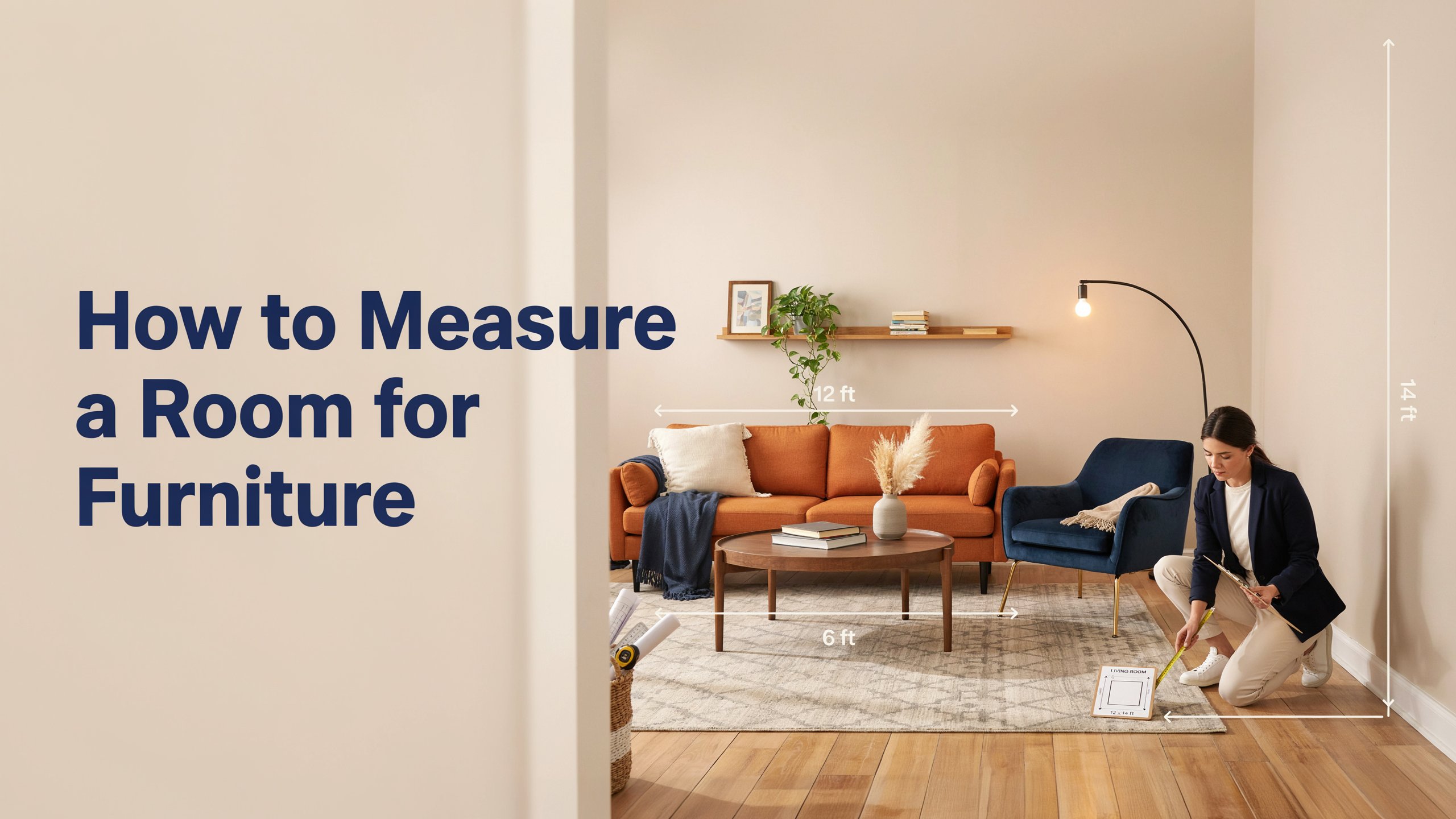
It is easier to pick furniture if you are aware of the space available. What might look great in a showroom may be too big for your home when you arrive at the house. To prevent these issues and ensure you have a well-functioning home, you should measure accurately before making a purchase.
1. Start by Measuring the Room
The first thing you need to do is measure the room from wall to wall using length and width. Measure using a measuring tape and record each measurement in a notebook. If the room is not a typical shape, measure each wall individually and draw a plan of the room.
For instance, a 15 x 12 foot room has an area of 180 sq. ft. If you have an idea of the space available, you will be better equipped to determine the amount of furniture that will fit into a room.
2. Measure Doors, Windows, and Built-In Features
Furniture placement is influenced by doors, windows, closets, etc. Take measurements of width and location on each wall. Keep in mind the space required to open doors, drawers and cabinets to their full extent.
Also, mark the position of electrical outlets, heating units, and other fittings that should be accessible. These are important details to consider when learning how to measure a room for furniture, as they help you avoid blocking essential features when arranging furniture.
3. Check the Dimensions of Furniture
When purchasing furniture, read the dimensions that are listed. Take the measurements width, depth and height of bed, sofa, bookshelf, dining table, etc. Check the room size and compare with the measurements of those pieces to see if they will fit.
When measuring your room for furniture, keep in mind that the size of the furniture is just one aspect of the equation. There should also be room for clearance around items so that people can walk around and use the furnishings easily.
4. Consider Furniture Delivery Access
If you want an item of furniture to be installed in a particular spot, it has to fit through your home’s entrance first. Take measurements of doorways, hallways, staircases and other narrow passages that are part of the delivery path.
In the case of large pieces, ask if the piece can fit around corners. Ask the retailer if it can be taken apart or sent in parts if necessary.
5. Plan a Comfortable Furniture Arrangement
After taking the measurements, make a rough sketch of the floor plan. Point out the position of doors, windows and permanent structures and place the furniture items you would like to put in place.
Provide sufficient space for pedestrian movement and daily living. Do not obstructing doors or overcrowd the room with large items. Use painter’s tape to make furniture measurements directly on the floor to better visualize the furniture layout.
6. Double-Check Before Making a Purchase
Check your measurements before placing any orders. Ensure that the furniture will fit in the room, provide easy maneuvering and match the intended layout. Double-checking can save the hassle of costly returns and unnecessary reordering.
Conclusion
Making sure that the rooms are measured properly is crucial if you wish to ensure that the pieces of furniture are suitable and comfortable to be used in your home. Use the measurements to make informed buying decisions, such as measuring walls and checking furniture dimensions; plan clear walking paths. Houseura provides construction advice, home improvement and renovation information that helps property owners design functional spaces to meet their needs.