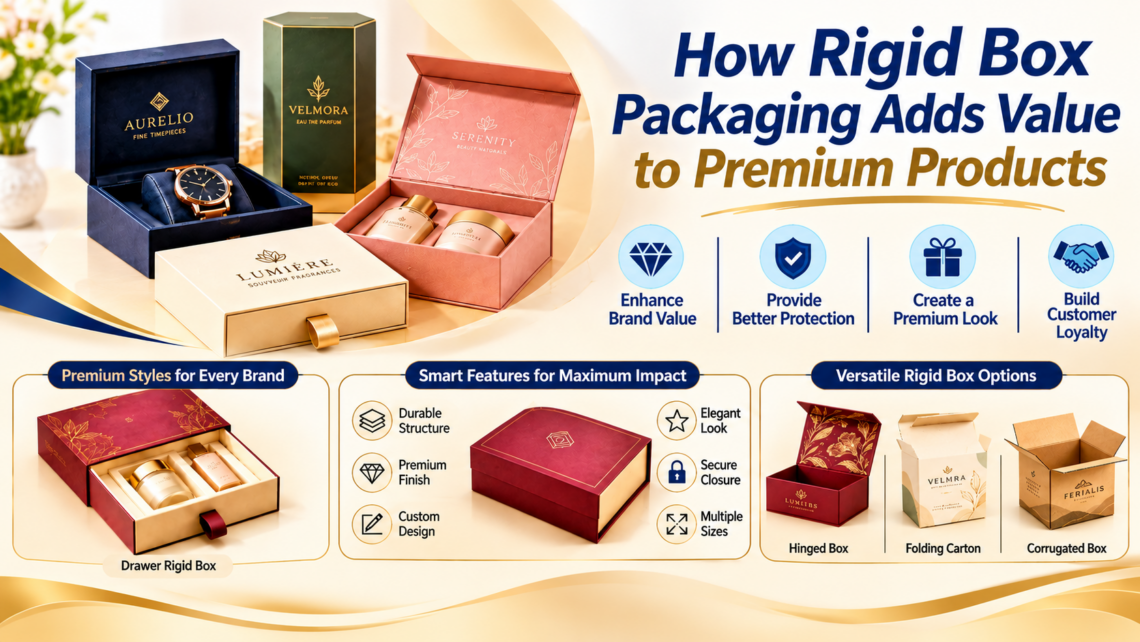
Packaging is an important part of how businesses protect, present, and deliver their products. While standard cartons are suitable for many everyday applications, premium products often require packaging that offers a more refined appearance and a sturdy structure. Rigid boxes are widely used for this purpose because they combine durability with attractive presentation.
From luxury gifts and jewelry to cosmetics, electronics, and retail products, rigid packaging can help businesses create a memorable impression. Understanding its construction, benefits, and customization options makes it easier to select the right packaging for different products.
What Is Rigid Box Packaging?
Rigid boxes are packaging containers made from thick, sturdy paperboard. Unlike folding cartons, which are designed to collapse for storage, rigid boxes generally maintain their shape. They are often wrapped with decorative paper or printed material to create a polished exterior.
Their solid construction makes them suitable for products that need a more substantial packaging structure. Common styles include two-piece boxes with separate lids and bases, magnetic closure boxes, drawer-style boxes, and hinged-lid designs.
Each style offers a different opening experience and can be selected according to the product, brand identity, and intended use.
Everything You Need to Know About Rigid Box Packaging
For businesses exploring premium packaging, everything you need to know about rigid box packaging starts with understanding its structure and purpose. These boxes are designed to combine product presentation with practical protection.
Rigid packaging is commonly selected for products where appearance and unboxing experience matter. Its firm structure can help keep items organized, while custom inserts can hold products in position during handling and transportation.
The packaging can also be designed around a particular product’s dimensions. This allows businesses to consider the box depth, lid style, internal compartments, and finishing details before production.
However, rigid boxes may require more storage space than flat-packed folding cartons and can involve higher production costs. Businesses should consider these factors when deciding whether this packaging format suits their requirements.
Benefits of Using Rigid Boxes
Rigid boxes offer several advantages for businesses selling premium or presentation-focused products.
Strong construction: Thick paperboard provides a firm structure that can help protect products from everyday handling. The appropriate design and additional inserts are important for more delicate items.
Premium appearance: Their solid shape and decorative finishes can create an elegant presentation that supports a high-end brand image.
Customization options: Businesses can select different sizes, colors, materials, closures, and printing styles to match their products.
Improved organization: Internal trays, dividers, and inserts can help keep products neatly positioned inside the box.
Reusable packaging: Some customers may reuse well-designed rigid boxes for storing accessories, keepsakes, or other small items.
How Custom Rigid Boxes Support Brand Identity
Packaging is often part of a customer’s first physical interaction with a product. A carefully designed box can communicate quality, attention to detail, and brand consistency.
Custom rigid boxes give businesses the flexibility to create packaging that reflects their visual identity. Logos, brand colors, product details, and decorative graphics can be incorporated into the design.
Different finishing techniques can further improve the appearance. Popular options include:
- Foil stamping for metallic design elements
- Embossing and debossing for raised or recessed details
- Matte and gloss coatings for different surface effects
- Spot UV for highlighting selected areas
- Custom inserts for organizing and presenting products
The right combination depends on the product, target audience, and overall packaging budget. A simple design can look professional without requiring excessive decorative elements.
Popular Applications of Rigid Packaging
Rigid boxes are used across several industries because their structure and appearance can be adapted to different product categories.
Jewelry and accessories: Jewelry brands often use compact rigid boxes with soft inserts to hold rings, necklaces, bracelets, and other delicate items.
Cosmetics and beauty products: Premium skincare sets, perfumes, and beauty gift collections can benefit from packaging that creates an organized presentation.
Electronics: Selected electronic accessories and premium devices may use rigid boxes with fitted inserts to keep components arranged.
Corporate gifts: Businesses use customized rigid packaging for promotional items, employee gifts, and client appreciation sets.
Fashion products: Accessories, footwear-related products, and other fashion items can be presented in boxes designed around their dimensions.
Confectionery and specialty gifts: Chocolates and selected food gift collections may use rigid packaging when the materials and internal construction meet applicable food-contact requirements.
Choosing the Right Rigid Box Style
Selecting the right structure is an important step in packaging design. A two-piece box is a popular choice for gift sets and retail products because it has a separate lid and base. Magnetic closure boxes offer a different opening experience and are often used for premium presentation.
Drawer-style boxes provide a sliding opening that can work well for smaller products and accessories. Hinged-lid designs keep the lid attached to the base and can create a compact, organized format.
Before selecting a style, businesses should consider the product’s weight, dimensions, fragility, storage requirements, and how customers will open the package. These details help determine whether additional inserts or protective materials are necessary.
Important Factors Before Ordering
A successful packaging project begins with clear specifications. Businesses should measure their products carefully and communicate the required internal dimensions to the packaging supplier.
Material thickness, wrapping paper, printing quality, and finishing options can all influence the final result. It is also useful to request a sample or prototype before approving a large production order.
Budget and order quantity should be considered as well. More complex structures and premium finishes may increase production costs, so businesses should prioritize the features that provide the greatest value.
For companies interested in learning more about packaging structures and design possibilities, The Rigid Boxes offers additional information about rigid packaging solutions.
Conclusion
Rigid box packaging provides businesses with a combination of sturdy construction, attractive presentation, and flexible customization. It is particularly useful for products where packaging contributes to perceived value and the overall customer experience.
By evaluating box styles, materials, dimensions, printing methods, and internal inserts, businesses can develop packaging that suits their products and branding goals. A thoughtfully designed rigid box can do more than hold an item; it can help create a consistent and memorable product presentation.