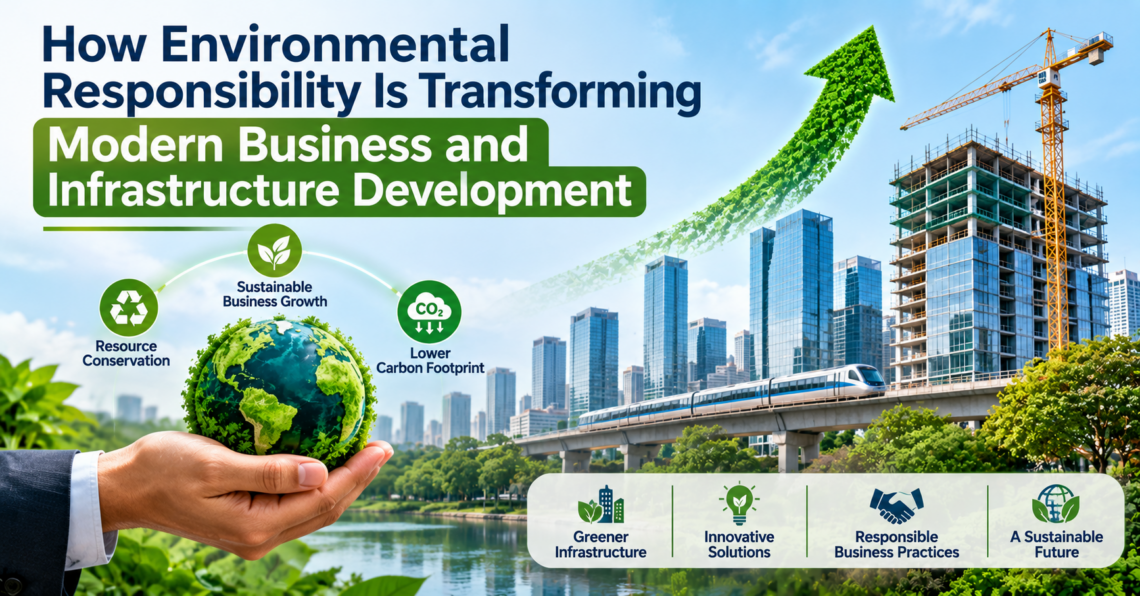
Environmental responsibility has become an important priority for businesses and infrastructure developers as climate concerns, resource limitations, and sustainability expectations continue to grow. Organizations are increasingly adopting practices that balance economic progress with environmental protection. ESG consulting firms in India help businesses understand environmental, social, and governance requirements while developing strategies to improve sustainability performance. This shift is influencing how companies operate, manage resources, plan infrastructure, and prepare for long-term growth.
1. Growing Awareness of Environmental Responsibility
Businesses are becoming more aware of how their operations affect the environment. Activities such as energy consumption, manufacturing, transportation, construction, and waste disposal can contribute to pollution and greenhouse gas emissions.Environmental responsibility encourages organizations to evaluate these impacts and adopt practices that reduce their environmental footprint. Companies are focusing on responsible resource utilization, pollution prevention, and sustainable operational methods.This approach not only supports environmental protection but also strengthens business reputation and stakeholder confidence.
2. Sustainable Infrastructure Development
Infrastructure development plays a significant role in economic growth, but it can also place pressure on natural resources. Roads, commercial buildings, industrial facilities, and residential developments require land, water, energy, and construction materials.Modern infrastructure planning increasingly considers environmental impacts before construction begins. Developers are adopting energy-efficient building designs, responsible material selection, improved drainage systems, and green infrastructure solutions.These practices help minimize environmental damage while creating infrastructure that remains functional and resilient over time.
3. Energy Efficiency and Renewable Energy Adoption
Energy consumption is one of the major contributors to environmental impact across industries. Businesses are exploring ways to reduce electricity usage and improve energy performance.
Some commonly adopted approaches include:
- Installing energy-efficient lighting and HVAC systems.
- Using solar panels and other renewable energy sources.
- Implementing smart energy monitoring systems.
- Improving building insulation and natural ventilation.
- Optimizing industrial equipment and production processes.
These measures can reduce energy expenses while supporting organizational carbon reduction goals.
4. Responsible Water Management
Water conservation is becoming increasingly important for businesses and infrastructure projects. Industrial operations, construction activities, and commercial buildings require significant amounts of water.Organizations are introducing rainwater harvesting, wastewater treatment, water recycling, and efficient plumbing systems to manage consumption.Effective water management reduces pressure on freshwater resources and helps businesses prepare for water-related challenges. Infrastructure developers can also incorporate sustainable drainage systems to reduce flooding risks and improve stormwater management.
5. Reducing Waste Through Circular Economy Practices
Traditional business operations often follow a linear model in which resources are extracted, used, and discarded. Circular economy practices encourage organizations to reduce waste by reusing, repairing, recycling, and recovering materials.In construction, this approach includes reusing suitable building materials, recycling demolition waste, optimizing material quantities, and selecting products with longer lifespans.Manufacturing businesses can also improve production efficiency by reducing packaging waste and recovering reusable materials. These practices help conserve resources and reduce landfill dependency.
6. The Importance of ESG in Business Decision-Making
Environmental, Social, and Governance (ESG) principles are influencing how organizations evaluate business performance and manage risks.The environmental component focuses on emissions, energy efficiency, waste management, and natural resource conservation. Social factors address employee welfare, workplace safety, and community impact. Governance focuses on transparency, ethical practices, and accountability.Integrating ESG considerations into business decisions helps organizations identify potential risks, establish measurable targets, and improve their approach to responsible growth.
7. Technology Is Supporting Sustainable Development
Technology is making environmental management more efficient and measurable. Digital tools allow businesses to monitor resource consumption, assess environmental performance, and identify areas that require improvement.Building Information Modeling (BIM), smart sensors, energy management platforms, and environmental monitoring systems are increasingly used in infrastructure projects.These technologies provide useful data for planning, construction, and building operations. They also help project teams make informed decisions and improve overall resource efficiency.
8. Climate Resilience in Modern Infrastructure
Climate-related challenges such as flooding, extreme temperatures, water scarcity, and severe weather events can affect infrastructure performance.Environmental responsibility encourages developers to consider these risks during the planning and design stages. Climate-resilient infrastructure may include improved drainage networks, heat-resistant materials, efficient cooling systems, water conservation measures, and sustainable landscaping.Planning for these challenges helps protect infrastructure investments and supports the long-term safety of communities.
9. Building Long-Term Business Value
Environmental responsibility is not limited to regulatory compliance or environmental protection. It can also create long-term business value through improved operational efficiency, reduced resource expenses, and stronger stakeholder relationships.Organizations that integrate sustainability into their business strategies can become better prepared for changing regulations, market expectations, and environmental challenges.Responsible practices can also improve brand credibility and support stronger relationships with customers, investors, employees, and business partners.
Conclusion
Environmental responsibility is transforming modern business operations and infrastructure development by encouraging efficient resource management, cleaner technologies, sustainable construction, and climate-conscious planning. Organizations that adopt these practices can reduce environmental impacts while improving operational performance and long-term resilience.Working with sustainability consultancy firms can help businesses assess environmental risks, develop practical sustainability strategies, monitor performance, and establish measurable improvement targets. Integrating environmental responsibility into everyday business decisions is an important step toward building a more sustainable and resilient future.