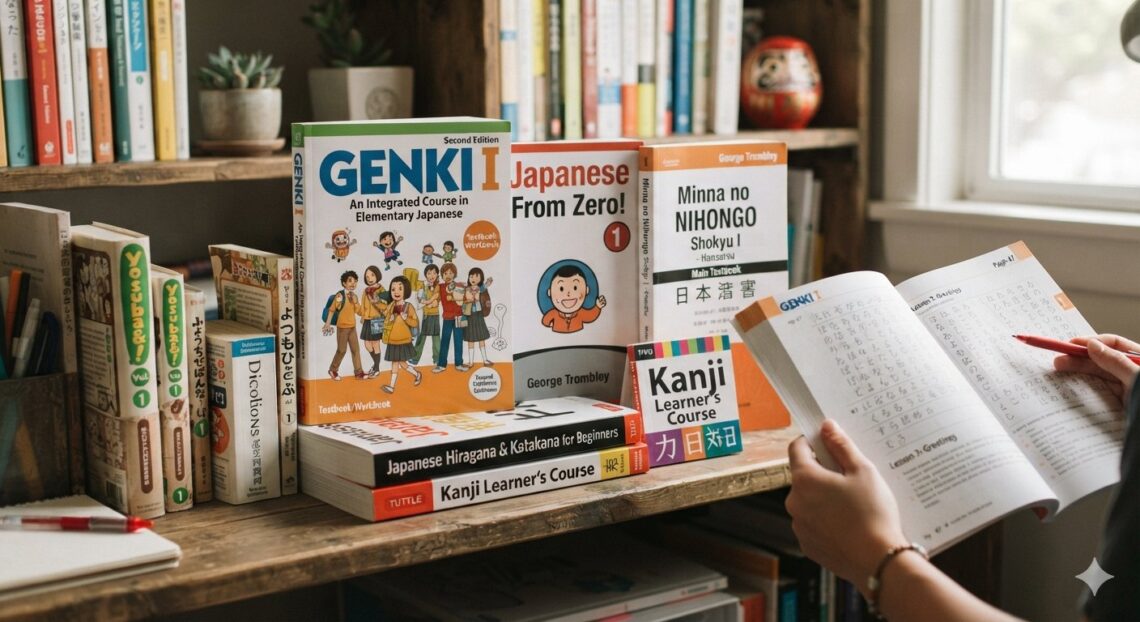
Genki or Japanese From Zero? Compare structure, level reached, pros and cons, and what to study next to pick the best beginner Japanese book.
Genki is the better choice for most beginners: it’s classroom-tested, systematic, and takes you through roughly JLPT N5 to N4 across two volumes. Japanese From Zero suits self-learners who want gentle, conversational explanations and video support, with a five-volume series that stretches further. Pick Genki for structure, Japanese From Zero for a friendlier pace.
What Are You Actually Choosing Between?
Your first Japanese textbook shapes your entire first year. Get the wrong one and you’ll stall at hiragana or burn out at the first set of particles.
Genki and Japanese From Zero both appear on almost every list of the Maximum Japanese Books for Beginners, but they rest on different ideas about how adults learn. Genki is built like a course. Japanese From Zero is built like a patient tutor.
This guide compares them honestly, explains how far each one can realistically take you, and shows what to read after you outgrow them.
Genki vs Japanese From Zero at a Glance
| Feature | Genki (3rd edition) | Japanese From Zero |
|---|---|---|
| Structure | Two textbooks (Genki I and II), each with a separate workbook, answer key and audio | Series of five main volumes, plus companion video lessons |
| Writing system | Kana and kanji from the start, no romaji | Eases you in; leans on romaji early (varies by edition and volume) |
| Teaching style | Dialogue, vocabulary, grammar notes, then exercises | Conversational, step-by-step, heavy on drills |
| Best for | Classes or disciplined self-study | Solo learners who want a gentle ramp |
| Approximate level | Roughly JLPT N5 to N4 | Beginner to lower-intermediate, depending on volume |
Treat the level estimates as approximate. The JLPT does not publish an official grammar or vocabulary list, so no textbook can claim an exact match.
How Far Can a Beginner Book Take You?
If you’re searching for the highest Japanese language levels a beginner series can reach, here’s the honest answer: no beginner textbook gets you to fluency, and none gets you to N1.
The JLPT runs from N5 (easiest) to N1 (hardest). Beginner books cover the bottom of that ladder. After that, you switch to intermediate materials and, increasingly, real Japanese.
| Stage | JLPT range | Typical materials |
|---|---|---|
| Absolute beginner | N5 | Genki I, Japanese From Zero 1-2 |
| Upper beginner | N4 | Genki II, later Japanese From Zero volumes |
| Intermediate | N3 | Tobira, Quartet, Shin Kanzen Master N3 |
| Upper intermediate and advanced | N2-N1 | Shin Kanzen Master N2/N1, native books, news, media |
The real answer to “how far will this book take me?” depends less on the book and more on how much you review and how soon you start using Japanese outside the textbook.
Genki: Strengths and Weaknesses
Genki, written by Eri Banno and colleagues and published by The Japan Times, is probably the most widely used beginner textbook in university courses.
Where Genki Shines
- Clear progression. Each lesson builds on the last, so you always know what you’re doing and why.
- Reading and writing from day one. Kana is introduced up front, and kanji arrives steadily rather than being postponed.
- Strong practice material. The workbook is where many learners finally absorb the grammar.
- Built-in ecosystem. Audio, an answer key and study resources make it easy to self-study.
- A natural next step. Many intermediate courses assume you’ve completed something like Genki I and II.
Where Genki Falls Short
- It moves briskly. Self-learners without a teacher can find grammar notes terse.
- The workbook is a separate purchase. Skipping it weakens the course considerably.
- Limited speaking practice on its own. You’ll need a tutor, language exchange or shadowing to build speaking skills.
- Dialogues feel textbook-like. They teach patterns, not natural speech.
Japanese From Zero: Strengths and Weaknesses
Japanese From Zero, by George Trombley and Yukari Takenaka, takes a more conversational approach, and the author’s video lessons give it a classroom feel without the classroom.
Where Japanese From Zero Shines
- Gentle onboarding. It’s less intimidating if the idea of learning kana and grammar simultaneously makes you anxious.
- Plenty of repetition. Patterns are drilled until they feel automatic.
- Practical, conversational focus. Early lessons aim at things you might actually say.
- A longer series. More volumes mean a longer runway within one consistent style.
Where Japanese From Zero Falls Short
- Romaji dependence. Leaning on romaji early can delay reading kana fluently. If you use the series, commit to kana early.
- Less rigorous structure. Review and testing are lighter than in Genki.
- Edition differences. Content and formatting vary between volumes and printings, so check which edition you’re buying.
Which One Should You Choose?
Ask yourself these questions in order:
- Do you have a class or a tutor? If yes, choose Genki. It’s designed to be taught from.
- Are you studying alone and easily discouraged? Japanese From Zero’s slower pace and video support may help you stay consistent.
- Do you want to read Japanese properly from the start? Genki’s no-romaji approach is the safer bet.
- Do you plan to take the JLPT? Genki is the more common stepping stone toward N4 preparation, but add dedicated JLPT practice books regardless of which you choose.
If you’re still undecided, a sensible compromise is Genki as the main course, with free online resources like Tae Kim’s Guide to Japanese Grammar for a second explanation when a point doesn’t click.
A Simple Study Plan With Either Book
A textbook doesn’t teach you Japanese. Your habits do. A workable weekly rhythm looks like this:
- Days 1-2: Read the lesson, learn the new vocabulary with flashcards.
- Days 3-4: Do the workbook or drill exercises, then check your answers.
- Day 5: Re-read the grammar, write five sentences of your own.
- Day 6: Listen to the audio and repeat aloud (shadowing).
- Day 7: Review old lessons, since forgetting is faster than learning.
Pair this with a spaced-repetition app for vocabulary and kanji, and use simple Japanese material such as graded readers or NHK’s easy Japanese resources as soon as you can handle them.
What to Read After Genki or Japanese From Zero
When you finish a beginner series, the jump to intermediate can feel steep. These are common next steps:
- Tobira: Gateway to Advanced Japanese is a popular bridge to intermediate Japanese.
- Quartet is an intermediate course, also from The Japan Times.
- Shin Kanzen Master series is a go-to for JLPT preparation at N3 through N1.
- Graded readers let you read real stories at a manageable level.
- Native media such as shows, podcasts and manga builds vocabulary that textbooks leave out.
The goal at this stage is volume: more reading and listening than you think you need.
Common Mistakes Beginners Make
- Switching books every month. Finish one series before judging it.
- Skipping the workbook or drills. Reading is passive, and exercises are where the learning happens.
- Postponing kana. Even with a romaji-friendly book, learn hiragana and katakana within your first weeks.
- Ignoring speaking and listening. A textbook alone leaves you reading well and speaking badly.
- Chasing JLPT levels instead of ability. Passing N4 and holding a conversation are different skills.
Read More Link Latest Update Blog:-
- Highest Hiragana Alphabet
- Qualified Japanese Language Institute
- Trained japanese language course
- Top Japanese Language Course in Delhi
- Latest Japanese Alphabet
- How to Learn Japanese at Home
- Strategic learn Japanese fast
- Learn Japanese Language Courses in India
FAQ’s
1. Which is better for beginners, Genki or Japanese From Zero?
Genki suits most beginners thanks to its structure and reading focus. Japanese From Zero suits those who want a gentler, more conversational pace.
2. Can I learn Japanese from Genki alone?
You can learn the fundamentals, but you’ll also need speaking and listening practice, plus a supplementary grammar source for tricky points.
3. Do I need the Genki workbook?
Yes, if you want to retain the material. The workbook provides most of the practice and writing exercises.
4. What JLPT level does Genki prepare you for?
Genki I and II together are commonly associated with N5 and N4, but alignment is approximate because the JLPT publishes no official syllabus.
5. Does Japanese From Zero use romaji?
Early material relies on romaji alongside kana. Check the edition you’re buying and learn kana early regardless.
6. How long does it take to finish Genki I and II?
That depends on your schedule. A class typically spreads them across a year or more, while intensive self-learners may move faster. Retention matters more than speed.
7. Is there a beginner book that takes you to N1?
No. Beginner books cover the lower levels. Reaching N1 requires intermediate and advanced materials plus years of real exposure to Japanese.
8. Should I learn kana before starting a textbook?
It helps. Even a few days with a hiragana chart makes Genki’s early lessons much smoother.
9. Are there free alternatives to Genki?
Yes. Tae Kim’s Guide to Japanese Grammar and NHK’s easy Japanese lessons are free, though they work best as supplements.
10. What should I study after finishing a beginner series?
Move to an intermediate course such as Tobira or Quartet, add JLPT prep books if you’re testing, and start reading and listening to native content.
Conclusion
Genki and Japanese From Zero are both solid starting points, just for different learners. Genki rewards structure and consistency. Japanese From Zero rewards patience and a slower, more guided approach.