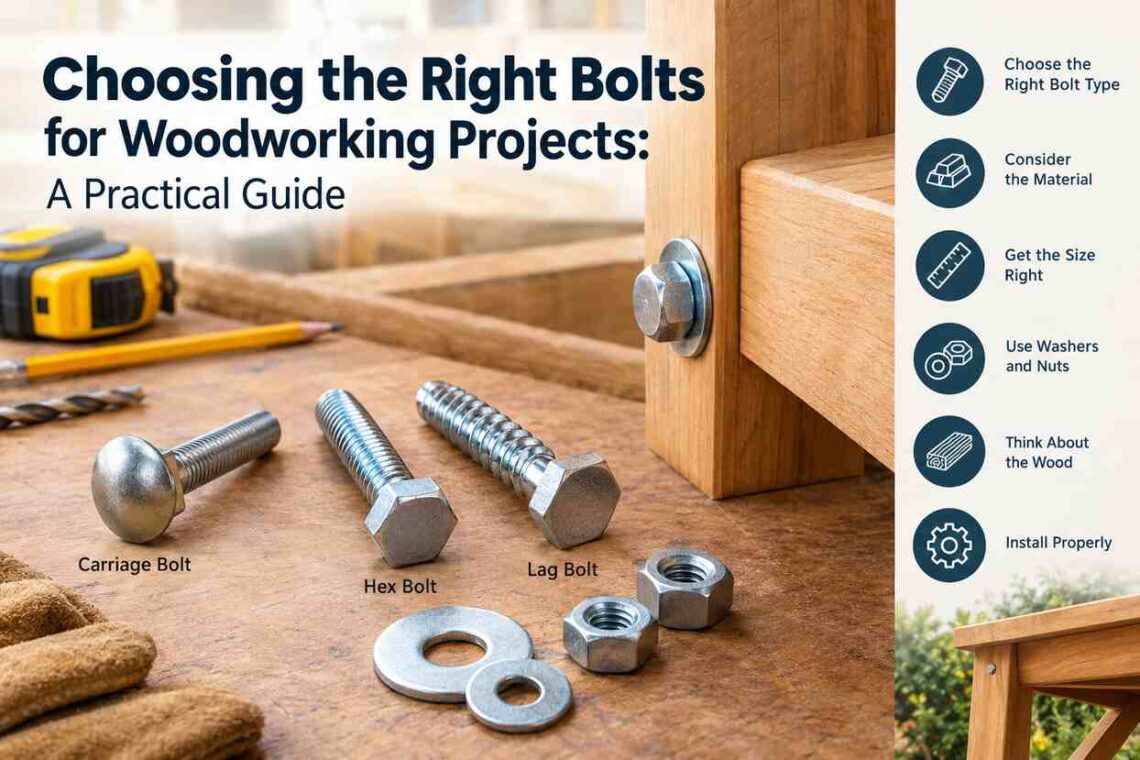
Woodworking projects often depend on more than quality timber and careful craftsmanship. The right fasteners play an important role in creating strong, stable, and long-lasting structures. While screws and nails are commonly used in woodworking, bolts are an excellent choice when a project requires greater strength, secure connections, or the ability to disassemble components later.
Choosing the right bolts for woodworking projects requires consideration of several factors, including bolt type, material, size, thread design, wood thickness, and expected load. Understanding these factors can help woodworkers create safer and more durable furniture, outdoor structures, workbenches, and other wooden assemblies.
Why Use Bolts in Woodworking?
Bolts are particularly useful when joining thick pieces of wood or connecting components that need substantial mechanical strength. Unlike many conventional screws, bolts are normally used together with nuts and washers, allowing pressure to be distributed across the joint.
This makes bolts suitable for applications such as heavy-duty workbenches, timber frames, garden structures, benches, tables, shelving systems, and outdoor woodworking projects.
Another advantage is serviceability. A bolted connection can generally be loosened and reassembled without destroying the wooden components. This is valuable for furniture that may need to be transported, repaired, modified, or adjusted in the future.
Choosing the Right Bolt Type
Different woodworking applications require different bolt designs. One popular option is the carriage bolt, which has a rounded head and a square section beneath the head. The square section helps prevent the bolt from rotating when the nut is tightened. Carriage bolts are widely used for furniture, benches, decks, and timber structures.
Hex bolts are another practical choice. They feature a hexagonal head that can be tightened with a wrench or socket. Hex bolts are often preferred for heavy-duty woodworking because they provide strong clamping force and are available in many sizes and grades.
Lag bolts, sometimes called lag screws, are also frequently used in woodworking. They have a large diameter and coarse threads designed to grip wood effectively. Unlike traditional bolts, lag bolts can be installed directly into timber without a conventional nut.
The appropriate choice depends on the design of the joint, accessibility, required strength, and whether future disassembly is important.
Selecting the Correct Bolt Material
Bolt material can significantly affect durability and performance. Carbon steel bolts are a common choice for indoor woodworking because they offer good strength at an economical price. However, they can be vulnerable to corrosion when exposed to moisture.
Stainless steel bolts are particularly useful for outdoor furniture, garden structures, decks, and woodworking projects exposed to humidity. Their corrosion resistance makes them a practical long-term option, although they may cost more than standard carbon steel fasteners.
Zinc-plated or galvanized bolts can provide additional corrosion protection and are often used in applications where moisture exposure is expected. When selecting bolt material, consider the environment in which the finished project will be used.
Getting the Bolt Size Right
Bolt diameter and length are two of the most important sizing considerations. A bolt should be strong enough to handle the expected load without unnecessarily weakening the wood.
For diameter, larger bolts generally provide greater clamping capacity, but bigger holes also remove more material from the timber. Excessively large holes can weaken narrow wooden components or cause splitting.
Bolt length should also be selected carefully. It needs to pass through the connected components and provide enough exposed thread for the washer and nut. However, an excessively long bolt may protrude unnecessarily and create an uncomfortable or unattractive finished surface.
Before drilling, measure the combined thickness of the materials and account for washers and nuts. Planning the complete connection helps prevent sizing mistakes.
Don’t Forget Washers and Nuts
Washers are simple components, but they are extremely important in many woodworking applications. A washer spreads the load from the nut or bolt head across a larger area of wood. This reduces the risk of the fastener sinking into soft timber or damaging the surface during tightening.
Flat washers are commonly used for general woodworking applications. Larger washers can be especially helpful when working with softer wood because they distribute pressure over a wider area.
The nut should also match the bolt’s diameter and thread specification. Using compatible components ensures that the connection can be tightened properly and maintained over time.
Consider the Type of Wood
The characteristics of the wood can influence bolt selection and installation. Hardwood and softwood behave differently under compression and drilling. Softer timber may require larger washers to prevent the fastener from pulling into the surface.
Wood movement is another important consideration. Natural wood expands and contracts as moisture levels change. A rigidly fastened joint may therefore experience additional stress over time.
For larger woodworking projects, proper joint design is just as important as choosing strong bolts. The fastener should complement the structural design rather than compensate for a poorly designed connection.
Proper Installation Matters
Even the best bolts can fail to perform properly if they are installed incorrectly. Drill holes accurately and keep them aligned through the connected pieces. Misaligned holes can make assembly difficult and place unwanted stress on the joint.
Avoid excessive tightening. While a secure connection is necessary, overtightening can crush wood fibers, damage surfaces, or reduce the integrity of the joint.
For visible furniture projects, consider the appearance of the bolt head as well. Decorative or low-profile fasteners may be more appropriate when aesthetics are important.
Common Mistakes to Avoid
One of the most common mistakes is selecting bolts based only on diameter or price. Strength, material, length, corrosion resistance, and compatibility should all be considered.
Another mistake is using ordinary steel bolts outdoors without adequate corrosion protection. Rust can eventually weaken the fastener and stain surrounding wood.
Using washers that are too small is also problematic, especially with soft timber. The washer may gradually sink into the wood under load, reducing the effectiveness of the connection.
Finally, avoid drilling holes too close to the edge of a wooden component. Adequate edge distance helps reduce the risk of splitting and improves the overall strength of the joint.
Final Thoughts
Choosing the right bolts for woodworking projects is a combination of engineering considerations and practical craftsmanship. The best fastener depends on the type of wood, joint design, expected load, environmental conditions, and desired appearance.
Carriage bolts, hex bolts, and lag bolts each have useful applications, while carbon steel, stainless steel, and galvanized options offer different levels of durability and corrosion resistance. Proper sizing, suitable washers, compatible nuts, accurate drilling, and controlled tightening are equally important.
By carefully matching the bolt to the project, woodworkers can create connections that are strong, reliable, serviceable, and built to last. Whether constructing a simple workbench or a demanding outdoor timber structure, selecting quality bolts is a small decision that can make a significant difference in the finished project.
Article published by: tokohasil.com