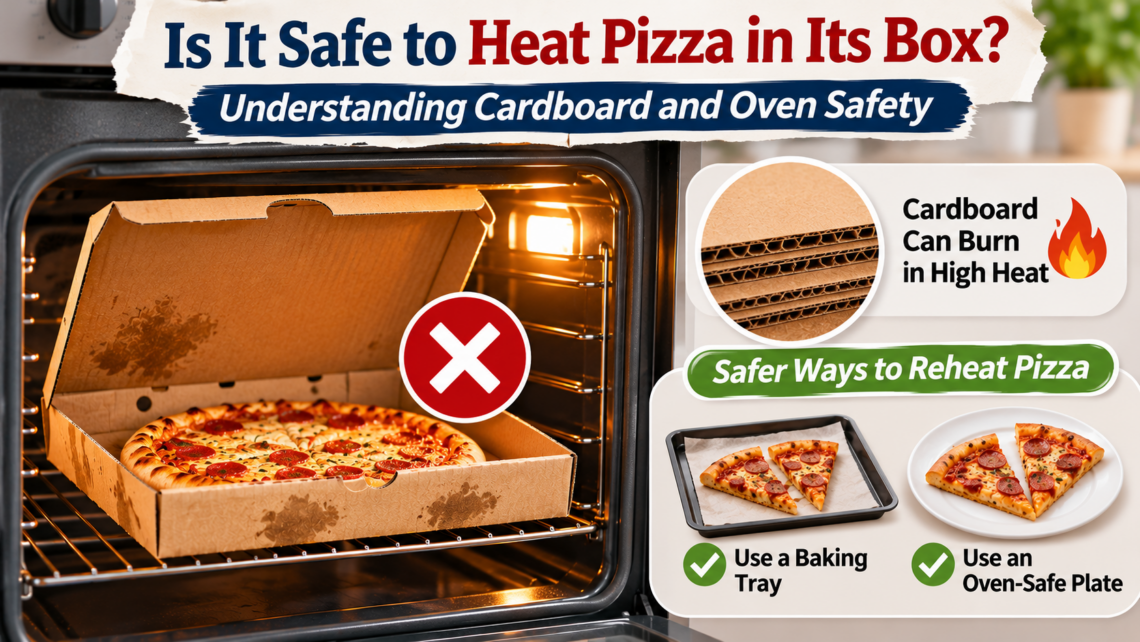
Pizza is one of the most convenient meals to order, share, and save for later. Whether you have leftover slices from dinner or a freshly delivered pizza that needs to stay warm, the cardboard box often seems like a practical way to handle it. However, packaging that works well for transportation may not be suitable for cooking appliances. This leads to an important question: Can you put a pizza box in the oven? Standard cardboard pizza boxes are not designed for oven heating, and using them this way can create unnecessary fire and food safety risks.
Understanding how pizza boxes are manufactured, how cardboard responds to heat, and what makes certain food packaging oven-safe can help you avoid common mistakes in the kitchen.
What Makes a Pizza Box Different From an Oven-Safe Container?
Pizza boxes are primarily manufactured from corrugated cardboard, a paper-based material designed to provide strength without adding excessive weight. Their construction usually includes flat outer paper layers and a fluted middle layer that creates a rigid structure. This design helps the box maintain its shape while carrying a hot pizza. It also provides some insulation, slowing heat loss during transportation.
However, insulation does not mean heat resistance. A pizza box can hold food that has already been cooked without being suitable for direct exposure to an oven’s heating elements.
Oven-safe containers are made and tested for specific cooking conditions. Depending on the product, these may include metal baking pans, heat-resistant glass dishes, ceramic cookware, or specially manufactured ovenable food trays. Ordinary pizza delivery boxes do not meet the same requirements.
Understanding How Cardboard Reacts to Oven Heat
Cardboard is manufactured from cellulose fibers, which are combustible. As temperatures rise, the material can lose moisture, change color, weaken, and eventually undergo thermal decomposition.
At sufficiently high temperatures, cardboard can char or ignite. The exact behavior depends on the material’s composition, exposure time, airflow, and proximity to heating elements.
Why Oven Temperature Settings Can Be Misleading
An oven does not maintain exactly the same temperature throughout its interior. During preheating and normal operation, heating elements may become significantly hotter than the temperature selected on the control panel. Surfaces near these elements can also experience higher temperatures.
Therefore, placing cardboard in an oven set to a relatively low temperature does not guarantee that the packaging will remain safe.
Why Used Pizza Boxes Present Additional Concerns
A used pizza box may contain grease, cheese residue, crumbs, or moisture. These substances can affect how the material responds to heat. Grease contamination can contribute to smoke or burning, while food residue may create unpleasant odors when exposed to high temperatures.
The condition of a used box is also unpredictable, making it unsuitable as a cooking or reheating container.
Can Cardboard Go in the Oven if It Has No Printing?
Some consumers believe that plain brown cardboard is safer than printed pizza packaging because it does not contain colorful graphics. However, can cardboard go in the oven safely simply because it is unprinted? No. The absence of printing does not eliminate the combustible properties of paper fibers.
Plain cardboard can still scorch, smoke, or catch fire when exposed to sufficient heat. Printing inks and adhesives may introduce additional considerations, but they are not the main reason ordinary cardboard should stay out of an oven.
The key issue is that standard cardboard packaging has not been designed or approved for direct oven heating.
Pizza Boxes, Frozen Pizza Discs, and Ovenable Trays: What’s the Difference?
Not every paper-based food package serves the same purpose. Some packaging products are manufactured specifically for heating applications, while others are intended only for storage or transportation.
| Packaging Material | Primary Purpose | Suitable for Oven Use? |
| Corrugated pizza delivery box | Carrying and protecting pizza | No |
| Standard frozen pizza cardboard disc | Supporting pizza during packaging | No, unless specifically approved |
| Ordinary paperboard food carton | Storage and retail presentation | Not without oven-safe instructions |
| Specially engineered ovenable tray | Heating food under specified conditions | Only as directed by the manufacturer |
| Metal pizza pan | Baking and reheating pizza | Yes, when rated for oven use |
The important distinction is the manufacturer’s intended use, not simply whether a material looks like cardboard.
What About Specially Designed Ovenable Paper Trays?
Some food manufacturers use engineered paper-based trays with coatings or structures developed for specific heating applications.These products may be tested for particular temperatures, durations, and appliance types.
However, approval for one heating method does not automatically mean a tray can be used in every oven. Always follow the exact instructions supplied with the food product or packaging.
Can I Bake Pizza on Cardboard From a Frozen Pizza Package?
Frozen pizzas frequently include a circular cardboard support beneath the crust. This disc helps prevent the pizza from bending or breaking while it is packaged, transported, and stored.
Because the disc fits perfectly beneath the pizza, some people assume it can double as a baking surface.
If you are asking, can I bake pizza on cardboard, the answer for an ordinary cardboard support is no.Before baking a frozen pizza, remove the external carton, plastic wrapping, and cardboard disc unless the manufacturer explicitly instructs otherwise.
Follow the preparation directions on the package. Depending on the product, the pizza may need to be placed directly on an oven rack, a baking sheet, or another specified cooking surface.Using the recommended surface helps the crust cook properly and reduces the risk of packaging-related problems.
Why Packaging Instructions Matter for Food Safety
Food packaging is designed around how a product will be stored, transported, prepared, and consumed. For example, a refrigerated food container may be suitable for cold storage but unsuitable for microwave heating. Similarly, a microwave-safe package is not automatically approved for a conventional oven.
These distinctions matter because materials behave differently under various heating conditions. A conventional oven uses surrounding hot air and radiant heat. A microwave primarily heats food through microwave energy. Air fryers circulate heated air in a relatively compact cooking chamber.
Packaging intended for one appliance may not perform safely in another. Consumers should therefore look for clear manufacturer instructions instead of relying on assumptions about material appearance.
The Role of Better Pizza Packaging Design
Pizza packaging must balance several practical requirements, including durability, convenience, cost, food protection, and transportation efficiency. A well-designed delivery box should support the pizza, resist ordinary handling damage, and make it easier for restaurants to transport orders.
Ventilation features can help release steam, while suitable paperboard construction provides enough rigidity to keep the box from collapsing during normal use.However, improving delivery performance does not necessarily make a box suitable for oven heating.
Search Packaging provides useful information about packaging materials, their intended applications, and common consumer questions. Understanding the intended purpose of food packaging helps both consumers and businesses make more informed decisions.
How to Identify Whether Food Packaging Is Oven-Safe
Before heating food in any package, check the product labeling and preparation instructions.
Look for Explicit Oven-Safe Instructions
The package should clearly state whether it is suitable for a conventional oven. General claims such as food-safe, recyclable, or microwave-safe do not establish oven compatibility.
Check Temperature and Time Limits
Some ovenable containers have specific maximum temperatures and heating durations. Exceeding those limits may affect the container’s performance.
Confirm the Approved Appliance Type
Packaging designed for microwave heating may not be suitable for a conventional oven, toaster oven, or air fryer.
Follow Food Preparation Directions
If the instructions say to remove the food from its packaging before cooking, transfer it to the recommended cookware.
When instructions are missing or unclear, using appropriate oven-safe cookware is the safer choice.
Practical Ways to Handle Pizza After Delivery
Safe pizza handling begins before reheating. If you plan to eat the pizza immediately, keep it in its delivery box only for normal serving and transportation purposes. Avoid placing the box on active burners or near other sources of intense heat.
If the pizza will be saved for later, refrigerate it promptly. According to USDA food safety guidance, perishable leftovers should generally be refrigerated within two hours, or within one hour when temperatures exceed 90°F.
For storage, transfer the slices to suitable food containers or wrap them properly to reduce moisture loss and protect them from contamination. When reheating refrigerated pizza, use appropriate cookware and heat leftovers to an internal temperature of 165°F. These practices are more reliable than attempting to warm food inside its original cardboard delivery packaging.
Common Misconceptions About Cardboard and Pizza Heating
One misconception is that cardboard is safe because it already holds hot pizza. In reality, contact with freshly cooked food is different from continuous exposure to an oven’s heating environment. Another misconception is that a low oven setting eliminates the risk. Ordinary cardboard has no established universal safe oven temperature, and localized hot spots can create unpredictable conditions.
Some people also assume that removing the pizza box lid makes the bottom half suitable for baking. However, the bottom panel is made from the same general combustible material and is not an approved baking tray. Finally, a box labeled recyclable or made from natural paper fibers should not be confused with an oven-safe product. Environmental characteristics and heat resistance are separate properties.
Conclusion
Pizza boxes are effective delivery containers, but their construction does not make them suitable for conventional oven heating. Ordinary corrugated cardboard can scorch, smoke, or ignite when exposed to excessive temperatures, and grease or food residue may introduce additional concerns.
The safest approach is to treat pizza packaging according to its intended purpose. Remove standard cardboard supports before baking frozen pizza, follow manufacturer instructions, and use appropriate cookware for reheating leftovers. Understanding the difference between food-contact packaging and oven-rated materials helps prevent avoidable kitchen hazards while supporting better food preparation habits.
Frequently Asked Questions
Can you put a pizza box in the oven to keep pizza warm?
No. Standard pizza delivery boxes are not oven-safe. Transfer the pizza to suitable cookware and follow your oven’s warming instructions.
Can cardboard go in the oven at 150°F?
Ordinary cardboard is not recommended for oven use, even at low settings. A low temperature does not establish that the packaging is oven-safe.
Can you put a pizza box in the oven without the lid?
No. Removing the lid does not make the cardboard base suitable for oven heating.
Can I bake pizza on cardboard if it comes with the frozen pizza?
Not unless the manufacturer specifically approves the cardboard support for oven use. Most standard frozen pizza discs must be removed before baking.
Are all paper-based food trays unsafe in ovens?
No. Some specially engineered trays are approved for specific oven applications. Follow their temperature, time, and appliance instructions.
Is a pizza box safe in an air fryer?
No. Ordinary cardboard pizza boxes should not be placed in air fryers because they are not designed for that heating environment.