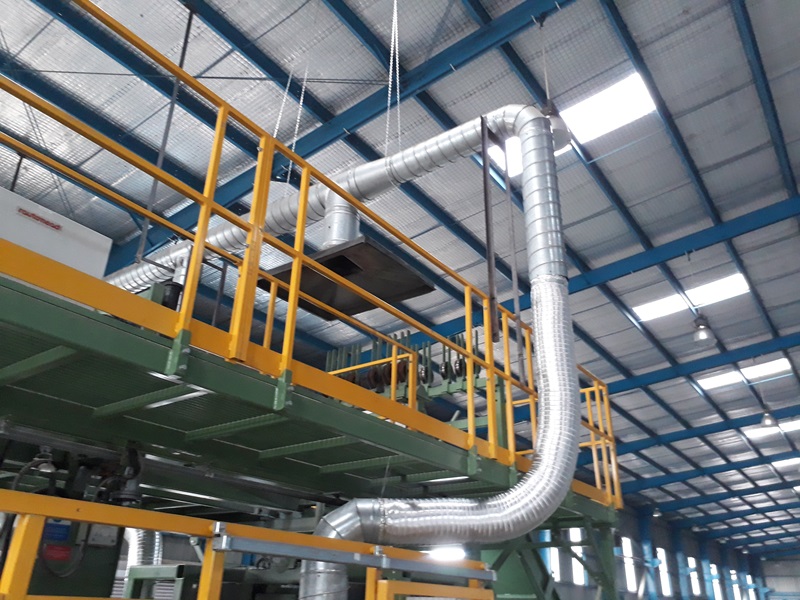
Industrial fumes are not always visible, but their impact on workplace air quality can be significant. Welding operations, chemical processing, metal treatment, painting, heating and manufacturing activities can release gases, vapours, smoke and airborne contaminants. When these emissions are not captured properly, they may spread across the production area, affect working conditions and create challenges for industrial ventilation.
A well-planned Fume Exhaust System helps control these emissions by capturing contaminated air and directing it through a suitable exhaust or treatment arrangement. However, successful fume management involves more than installing an exhaust fan. The extraction hood, ductwork, airflow, filtration or scrubbing equipment and discharge arrangement must work together.
GPT-INDIA, also known as Green Planet Technologies, develops industrial air pollution control and ventilation solutions for facilities with different process requirements. Understanding how a complete extraction system operates can help businesses make better decisions when planning new installations or upgrading existing ventilation infrastructure.
What Is a Fume Exhaust System?
A Fume Exhaust System is an industrial ventilation arrangement designed to collect and remove fumes, smoke, vapours and other airborne contaminants generated during manufacturing or processing activities.
The system generally captures emissions near their point of generation through a hood, enclosure or extraction connection. Contaminated air then travels through ductwork to suitable treatment equipment, where applicable, before being discharged through an exhaust arrangement.
The exact configuration depends on the type of contaminant, its concentration, temperature, production process and required treatment. A system handling welding fumes may have different requirements from one designed for chemical vapours or paint-related emissions.
The main objective is to prevent contaminants from spreading unnecessarily through the workplace and to manage extracted air according to the nature of the process.
Why Industrial Facilities Need Proper Fume Extraction
Fumes can originate from several stages of production. Welding and cutting may release fine particulate fumes, while chemical reactions and heating processes can generate gases or vapours. Painting and coating activities may release solvent-related emissions, depending on the materials used.
Without effective source capture, these contaminants can move beyond the immediate work area. General ventilation may help dilute airborne pollutants, but it does not always capture emissions before they spread.
A properly designed Fume extraction system addresses the problem closer to its source. Capturing contaminants at the point of generation can reduce their movement into surrounding production areas and make the overall ventilation strategy more effective.
It also helps businesses plan air movement around machinery, operator positions and production layouts rather than relying entirely on building-wide ventilation.
How a Fume Extraction System Works
The working process begins at the emission source. An extraction hood, canopy, enclosure or suitably positioned pickup point collects contaminated air. Its location and shape are important because the capture arrangement must suit the direction and behaviour of the rising or moving fumes.
Once captured, the air travels through a duct network. Duct dimensions, bends, connections and airflow resistance influence how effectively the system transports the extracted air.
Depending on the contaminant, the air may pass through treatment equipment before discharge. Particulate matter, chemical gases, acidic fumes and odorous vapours do not all respond to the same treatment method. Therefore, the treatment stage should be selected according to the actual pollutant characteristics.
The exhaust fan creates the pressure difference needed to move air through the system. Its selection must account for the airflow requirement and resistance across the entire extraction network.
Source Capture: The First Step Towards Effective Fume Control
One of the most important decisions in fume management is where the extraction point should be installed.
If a hood is positioned too far from the emission source, contaminants may escape into the surrounding atmosphere before reaching the extraction system. If the hood interferes with the operator or production process, workers may move it away from the required position or avoid using it.
The extraction arrangement should therefore reflect how the process actually operates. Welding stations, chemical mixing points, heating equipment and coating areas each produce different airflow patterns.
Enclosures can be useful where the process allows them, while partial hoods or flexible extraction arms may suit operations that require frequent movement. The objective is to capture emissions efficiently without disrupting production activities.
Choosing a Suitable Wet Scrubber for Fume Treatment
Not every fume can be controlled through mechanical extraction alone. Some industrial processes generate gases or vapours that require treatment before the extracted air is released.
A Wet Scrubber is one technology used for controlling certain gaseous pollutants and, depending on its design, particulate matter. It brings contaminated gas into contact with a liquid so that selected pollutants can be absorbed, neutralised or otherwise removed through the treatment process.
The appropriate scrubber configuration depends on the chemical properties of the contaminant, gas temperature, concentration, liquid selection and required treatment performance.
Industrial applications may require different arrangements, including single-stage or multi-stage systems. Some processes may also need chemical dosing, recirculation, pH monitoring or additional treatment stages.
A Wet Scrubber should never be selected simply because it is available as a standard product. The pollutant chemistry and operating conditions need to be evaluated first. The wrong liquid or treatment arrangement may provide inadequate removal or create additional process complications.
The Role of an Axial Flow Fan in Industrial Ventilation
An Axial flow fan moves air primarily along the direction of its rotating shaft. This operating principle makes axial fans suitable for several ventilation applications where relatively large volumes of air need to be moved.
They are commonly considered for general ventilation, air circulation and exhaust duties where the system resistance is compatible with the fan’s performance characteristics.
In a fume extraction application, however, fan selection requires careful evaluation. The fan must deliver the required airflow against the resistance created by hoods, ductwork, bends, dampers and treatment equipment.
An axial fan may be suitable for certain exhaust arrangements, but it is not automatically the right choice for every industrial extraction network. The actual operating point and system pressure requirements should guide the selection.
When Centrifugal Blowers Are a Better Choice
Centrifugal Blowers are widely used in industrial air movement systems where the application requires the fan to overcome a particular level of system resistance.
Air enters the blower near the centre of the rotating impeller and is accelerated outward. The casing converts part of this velocity into pressure, allowing the blower to move air through connected ductwork and equipment.
In industrial fume extraction, centrifugal blowers may be considered where the system includes long duct runs, multiple extraction points, filtration equipment or scrubbers that contribute to overall pressure losses.
The selection depends on airflow, static pressure, gas temperature, contaminant characteristics and the material compatibility required for the equipment. Impeller design and construction materials should also be considered according to the application.
Choosing between an axial fan and a centrifugal blower should therefore be based on the complete system design rather than on equipment type alone.
Axial Flow Fan vs Centrifugal Blowers: Understanding the Difference
Although both technologies move air, their performance characteristics and typical applications differ.
An axial flow fan moves air along the shaft direction and is often considered for ventilation duties involving substantial airflow and comparatively lower system resistance. A centrifugal blower changes the direction of airflow through its impeller and is commonly used where the system needs to overcome higher resistance.
For a straightforward ventilation arrangement, an axial fan may be a practical option. For a more complex extraction network with treatment equipment and considerable duct resistance, a centrifugal blower may be more appropriate.
The final decision should be based on the fan curve, required operating point, system resistance and process conditions. Neither technology should be selected using airflow capacity alone.
Why Duct Design and Airflow Balancing Matter
Even a suitable fan cannot compensate for poorly planned ductwork. Excessive bends, unsuitable duct dimensions, abrupt transitions and poorly positioned connections can increase pressure losses and reduce extraction performance.
In systems serving multiple workstations, airflow balancing becomes particularly important. If one branch receives too much airflow, other extraction points may not receive the quantity required for effective capture.
Dampers and properly designed branch connections can help regulate airflow distribution. The system should also allow maintenance access for inspection and cleaning, especially where deposits may accumulate inside ducts.
A complete design considers the extraction points, duct routing, fan location and treatment equipment together. This approach helps prevent individual components from being selected without considering their effect on the overall network.
Factors to Consider Before Installing a Fume Exhaust System
Every industrial process has its own emission characteristics, so the system should be planned around the actual application.
The first consideration is the nature of the contaminant. Businesses should identify whether the process generates particulate fumes, acidic gases, solvent vapours, odours or a combination of pollutants. This information helps determine the appropriate capture and treatment arrangement.
Airflow requirements are another important factor. The number of extraction points, hood dimensions, distance from the emission source and production layout all influence the required airflow.
Temperature and chemical compatibility should also be evaluated. Hot gases or corrosive contaminants may require suitable construction materials and equipment arrangements.
Finally, maintenance access should be considered during the design stage. Fans, ducts, scrubbers and other components need inspection and servicing. A system that is difficult to maintain can create avoidable operational problems over time.
Common Fume Extraction Problems and Their Possible Causes
Weak extraction at the workstation may indicate that the hood is poorly positioned, the ductwork is restricted or the fan is not delivering the required airflow. In multi-point systems, the problem may also be related to uneven airflow distribution.
Unusual vibration or noise from the fan can indicate mechanical issues, installation problems or operating conditions outside the intended range. These symptoms should be investigated rather than ignored.
If a Wet Scrubber is installed, changes in liquid circulation, pressure drop or treatment conditions may affect its performance. The cause should be assessed according to the equipment design and the contaminant being treated.
Regular inspection, operating records and planned maintenance can help identify developing issues before they affect production.
How GPT-INDIA Supports Industrial Fume Control Requirements
GPT-INDIA works in industrial air pollution control, dust collection, ventilation and exhaust technology. Its solutions are developed for manufacturing environments where air movement and pollutant management need to be considered together.
Depending on the application, an industrial air pollution control arrangement may involve a Fume Exhaust System, Fume extraction system, Wet Scrubber, Axial flow fan or Centrifugal Blowers. The suitable combination depends on the emissions generated, extraction points, airflow requirement and treatment needs.
GPT-INDIA also works across related industrial equipment categories, including Bag Filters, Pulse Jet Bag Filters, Dust Collectors, Dust Extractors, Activated Carbon Filters, Cyclone Dust Collectors, Air Washer Systems and other air pollution control solutions.
For businesses planning an installation, the first step should be to understand the process and identify the contaminants that need to be captured or treated. Equipment selection can then be aligned with the actual operating requirements.
GPT-INDIA Contact Information
Green Planet Technologies (GPT-INDIA)
Office Address: 59/2/1, Site 4, Industrial Area, Sahibabad, Distt. Ghaziabad–201010, Uttar Pradesh, India
Phone: +91-9773500660
Email: info@gpt-india.com
Frequently Asked Questions
What is a Fume Exhaust System used for?
A Fume Exhaust System collects and removes fumes, smoke, vapours and other airborne contaminants generated during industrial processes. It captures emissions through hoods or extraction points and transports them through ductwork for suitable exhaust or treatment.
What is the difference between a Fume Exhaust System and a Fume extraction system?
The terms are often used for closely related industrial ventilation arrangements. Fume extraction generally describes the capture of contaminants at their source, while a Fume Exhaust System may refer to the wider arrangement that transports and discharges or treats the extracted air.
When is a Wet Scrubber required in a fume extraction system?
A Wet Scrubber may be required when extracted air contains gases or pollutants that can be treated through gas-liquid contact. Its suitability depends on the chemical properties, concentration and temperature of the contaminants.
What is the function of an Axial flow fan?
An Axial flow fan moves air mainly along the direction of its shaft. It is commonly used for ventilation and exhaust applications where its airflow and pressure characteristics match the system requirements.
When should industries use Centrifugal Blowers?
Centrifugal Blowers are commonly considered for applications where air must move through ductwork or equipment that creates significant resistance. Selection depends on the required airflow, static pressure and operating conditions.
Can an axial fan and centrifugal blower be used in the same industrial facility?
Yes. Different ventilation and extraction duties within one facility may require different fan types. Each unit should be selected according to the airflow and pressure requirements of its own system.
How can I improve the performance of an industrial fume extraction system?
Review hood positioning, duct condition, airflow distribution, fan performance and treatment equipment. Regular inspection and maintenance can help identify restrictions, leakage or component problems affecting extraction.
Conclusion
Industrial fume management requires a coordinated approach to source capture, air transportation, treatment and exhaust. A properly planned Fume Exhaust System should reflect the contaminants generated by the process rather than relying on a standard equipment combination.
The selection of a suitable Fume extraction system, Wet Scrubber, Axial flow fan or Centrifugal Blowers depends on airflow requirements, system resistance, pollutant characteristics and operating conditions. When these factors are evaluated together, industries can develop a more practical approach to workplace ventilation and emission control.
GPT-INDIA supports industrial air pollution control requirements with equipment solutions designed around different manufacturing applications. The right starting point is always a clear understanding of the process, the emissions involved and the performance expected from the complete system.