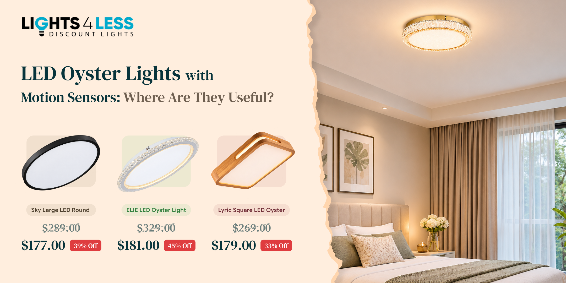
LED oyster lights with motion sensors automatically switch on when movement is detected, providing convenient lighting for hallways, garages, laundries, storage rooms and suitable entrance areas.
They are particularly useful in spaces where people frequently enter and leave, or where hands-free lighting makes everyday activities easier. However, choosing the right fitting involves more than simply checking whether it has a motion sensor. Brightness, detection coverage, operating time and installation suitability are equally important.
In this guide, we’ll explore where motion sensor oyster lights work best, how PIR and microwave sensors differ, and what to consider when choosing a fitting for your home.
Where Are Motion Sensor Oyster Lights Useful?
LED oyster lights with motion sensors are useful in hallways, garages, laundries, walk-in wardrobes, storage rooms and suitable entrance areas. They automatically illuminate a space when movement is detected, making them convenient for areas where people frequently enter and leave. Before choosing a fitting, check its sensor coverage, brightness, operating settings and installation suitability.
What Is an LED Oyster Light with a Motion Sensor?
An LED oyster light with a motion sensor is a surface-mounted ceiling light that automatically switches on when movement is detected within its sensor’s coverage area.
Unlike a standard oyster light operated using a wall switch, a motion sensor model can provide illumination when someone enters a room. This makes it a convenient option for hallways, garages, laundries and storage spaces where lighting is often needed for short periods.
Motion sensor functionality is not included in every LED oyster light. Sensor technology, detection coverage and operating settings vary between models, so check the individual product specifications before purchasing.
How Does a Motion Sensor Oyster Light Work?
A motion sensor oyster light detects movement within a specified area and activates the LED light automatically. When movement is no longer detected, the fitting may switch off after a preset period.
Depending on the model, settings may control how long the light stays on and whether it activates only when surrounding light levels fall below a certain threshold.
The way movement is detected depends on the sensor technology. PIR and microwave sensors work differently, so understanding these differences can help you compare suitable fittings.
PIR vs Microwave Motion Sensors: What’s the Difference?
Motion sensor oyster lights can use different technologies to detect movement. PIR (passive infrared) and microwave sensors are two common options. Understanding their differences can help you assess which type may suit your room and installation requirements.
Buy Now: https://lights4less.com.au/blogs/news/led-oyster-lights-motion-sensors