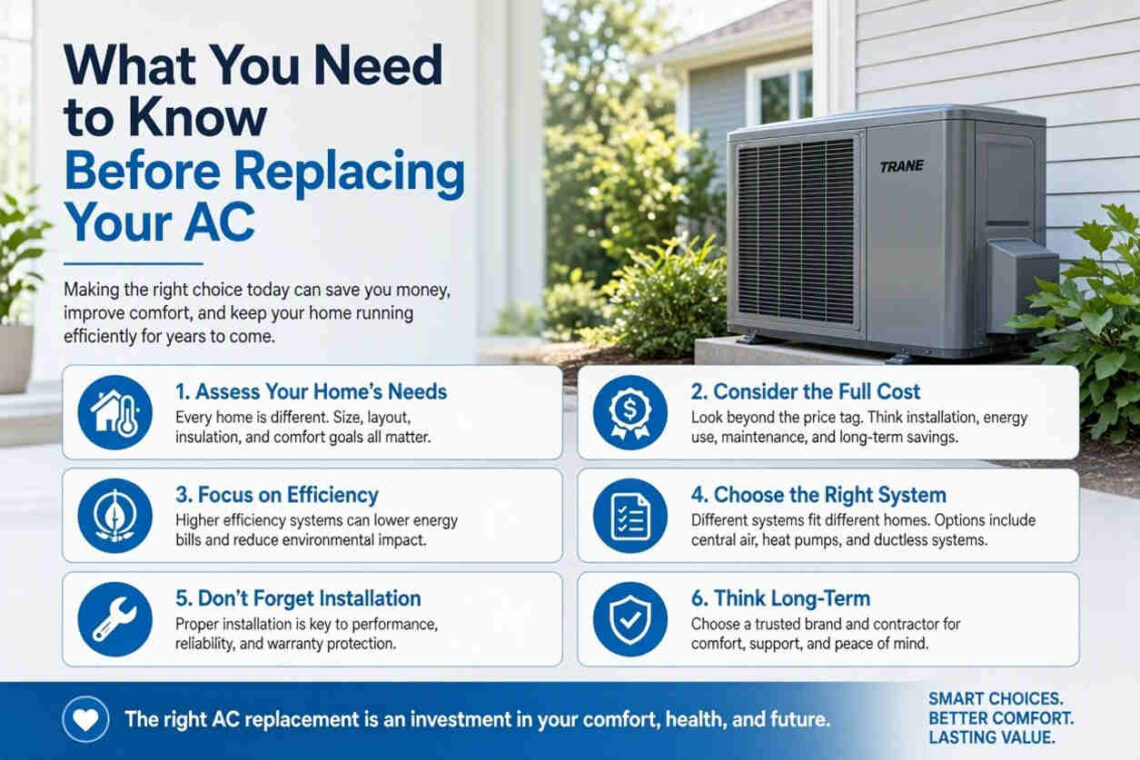
Replacing an air conditioning system is a major home improvement decision. A new AC 1/2 pk can improve indoor comfort, reduce energy consumption, and provide more reliable cooling. However, choosing the right replacement requires more than simply buying a newer model. Factors such as system size, efficiency, installation quality, indoor air needs, and long-term operating costs all deserve careful consideration.
Before scheduling an AC replacement, homeowners should understand the most important factors that influence performance and value. Proper preparation can help prevent costly mistakes and ensure that the new system delivers dependable cooling for years.
1. Know Why Your AC Needs Replacement
The first step is determining whether replacement is actually necessary. Some air conditioning problems can be resolved through professional repair or maintenance. However, an aging system with frequent breakdowns, declining performance, unusual noises, or rising energy bills may be approaching the end of its useful life.
Older systems may also use outdated components or refrigerants that can make repairs increasingly difficult or expensive. If repair costs are becoming frequent or the system struggles to maintain comfortable temperatures, replacement may provide better long-term value.
A professional HVAC assessment can help determine whether repair or replacement makes the most sense for your home.
2. Choose the Correct AC Size
One of the most important considerations during AC replacement is system sizing. Bigger does not necessarily mean better. An oversized air conditioner may cool a room quickly but cycle on and off too frequently. This can reduce efficiency, increase wear, and make humidity control more difficult.
An undersized system can create the opposite problem. It may run continuously while struggling to reach the desired temperature, resulting in higher energy consumption and poor comfort.
A qualified HVAC professional should evaluate factors such as home size, insulation, window placement, ceiling height, local climate, and heat-producing appliances before recommending equipment capacity.
3. Compare Energy Efficiency
Energy efficiency should be an important part of the replacement decision. Modern AC systems can offer improved efficiency compared with older equipment, potentially reducing monthly electricity consumption.
When comparing models, look at the system’s efficiency ratings and consider how the equipment is expected to perform under your home’s actual operating conditions. A highly efficient system may have a higher initial purchase price, but lower operating costs can make it a worthwhile investment over its lifespan.
Homeowners should evaluate both the upfront cost and the estimated long-term energy savings rather than choosing equipment based solely on purchase price.
4. Consider the Entire System
An AC replacement is not always about replacing only the outdoor condenser. The indoor coil, air handler, blower, thermostat, electrical components, and ductwork can all influence system performance.
If an older indoor component is incompatible with a new outdoor unit, the system may not operate as efficiently as expected. Similarly, damaged, undersized, or poorly sealed ductwork can waste conditioned air and reduce comfort.
Ask the HVAC contractor to inspect the complete system before installation. Addressing related problems at the same time can help the new AC perform more effectively.
5. Think About Your Thermostat
A new air conditioner can perform better when paired with an appropriate thermostat. Depending on the system, homeowners may choose from basic programmable thermostats, smart thermostats, or advanced controls designed to manage variable-speed equipment.
Smart controls can provide scheduling options, remote access, temperature monitoring, and other features. However, compatibility is essential. Before purchasing a thermostat separately, confirm that it works with the selected HVAC equipment.
A properly configured thermostat can also help prevent unnecessary cooling and improve overall energy management.
6. Evaluate Installation Quality
Even the best AC equipment can perform poorly if it is installed incorrectly. Installation quality affects airflow, refrigerant performance, electrical safety, drainage, and overall system efficiency.
A professional installer should follow manufacturer specifications and local requirements. The installation process may include checking refrigerant lines, electrical connections, condensate drainage, airflow, and system operation.
Homeowners should also ask about warranties and what is covered by the equipment manufacturer versus the installation contractor. Clear warranty information can prevent confusion if a problem occurs later.
7. Prepare for the Total Cost
The price of a new AC system involves more than the equipment itself. Installation labor, electrical upgrades, duct modifications, thermostat replacement, refrigerant-related work, permits, and disposal of the old equipment may affect the final cost.
Before approving the project, request a detailed estimate that explains what is included. Comparing several professional quotes can help homeowners understand the market and identify unusually low bids that may leave important work out of the contract.
The cheapest option is not always the most economical choice. A properly installed, efficient system can provide better value over many years.
8. Plan for Long-Term Maintenance
AC replacement should also be viewed as the beginning of a new maintenance cycle. Regular maintenance can help protect the equipment and preserve its performance.
Simple tasks such as replacing or cleaning filters, keeping outdoor units clear of debris, checking airflow, and scheduling professional inspections can make a significant difference. Preventive maintenance may also identify small problems before they develop into expensive repairs.
Homeowners should ask their HVAC provider about recommended maintenance intervals and service plans for the new system.
9. Consider Indoor Comfort
Modern AC systems can provide more than basic temperature reduction. Depending on the equipment and installation, homeowners may also benefit from better humidity control, improved airflow, quieter operation, and more consistent temperatures throughout the house.
If certain rooms are consistently warmer or cooler than others, mention the problem before installation. The contractor may be able to identify airflow, insulation, ductwork, or zoning issues that should be addressed as part of the replacement project.
Conclusion
Replacing an AC is a significant investment, but careful planning can make the process much easier. Before making a decision, evaluate the condition of your existing system, select the correct capacity, compare efficiency ratings, inspect related components, and consider the quality of installation.
It is equally important to look beyond the initial purchase price. Installation, energy consumption, maintenance, comfort, warranty coverage, and expected system lifespan all contribute to the true value of an AC replacement.
By working with a qualified HVAC professional and choosing equipment based on the specific needs of your home, you can create a cooling system that delivers reliable comfort and efficient performance for years to come.