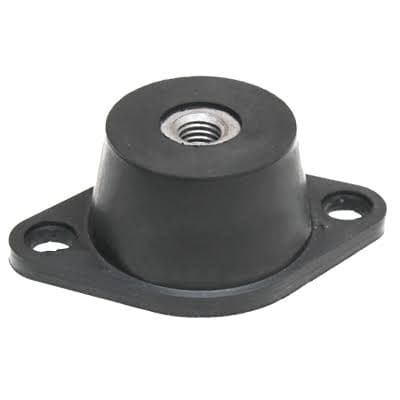
Vibration is a common challenge in industrial environments. Motors, compressors, pumps, generators, and other machinery produce movement that can travel through equipment frames and supporting structures. Over time, excessive vibration may contribute to noise, loose connections, premature wear, and inconsistent machine performance. Properly selected rubber isolator mounts help address these problems by placing a resilient barrier between equipment and its supporting surface, reducing the transmission of unwanted vibration.
These components are used in manufacturing facilities, commercial buildings, transportation equipment, and mechanical installations. However, selecting an effective mount requires more than choosing a piece of rubber that fits beneath a machine. Material properties, equipment weight, vibration frequency, temperature, and installation conditions all influence performance. Understanding these factors helps maintenance teams and equipment designers make informed decisions.
What Are Rubber Isolator Mounts and How Do They Work?
Rubber isolator mounts are vibration-control components made from elastomeric materials, often combined with metal inserts, plates, or threaded fasteners. Their purpose is to absorb and reduce the transmission of mechanical vibration between equipment and the structure supporting it.
Rubber behaves differently from rigid materials because it can deform under load and return toward its original shape. When a vibrating machine is supported by an appropriately designed rubber mount, some of the movement energy is dissipated within the elastomer rather than being transferred directly to the floor or frame.
The effectiveness of an isolator depends on several factors. Rubber hardness, thickness, shape, load distribution, and dynamic properties all influence how it responds to vibration. A mount that is too stiff may transmit considerable vibration, while one that is too soft may allow excessive equipment movement.
It is also important to distinguish vibration isolation from simple cushioning. A suitable mount must support the equipment safely while providing the required degree of vibration control.
Common Types of Rubber Isolator Mounts
Different designs serve different equipment and installation requirements. Understanding their characteristics helps narrow the selection.
Cylindrical Rubber Mounts
Cylindrical mounts generally feature a rubber body with metal end fittings or threaded studs. Their compact shape makes them suitable for motors, pumps, small compressors, and machinery assemblies.
Depending on their construction, they can accommodate compression, shear, or a combination of loading conditions. The mounting orientation and manufacturer’s load ratings should determine how they are installed.
Sandwich or Pad-Style Mounts
Sandwich mounts use layers of rubber between metal plates or other rigid surfaces. They are commonly used beneath equipment bases, frames, and support structures.
Rubber isolation pads are another related option. These can provide a practical interface between machinery and a floor or mounting platform. Their performance depends on thickness, material composition, contact area, and applied load.
Conical Rubber Mounts
Conical mounts have a tapered rubber profile that provides specific deflection characteristics. Their geometry can help accommodate different loading conditions and equipment movement.
They are used in selected industrial and mechanical applications where a compact mount with controlled flexibility is needed. Correct orientation and load compatibility are important for consistent performance.
Metal-Bonded Rubber Mounts
These mounts combine rubber with bonded metal components, creating a compact assembly that can be attached to equipment using bolts or threaded connections.
They are useful where the installation requires a defined mounting interface and reliable mechanical attachment. The bond between rubber and metal should be suitable for the expected loads, temperature, and operating environment.
How to Select the Right Rubber Isolator Mounts
Choosing an isolator is an engineering decision involving the machine, its operating conditions, and the supporting structure. A step-by-step assessment helps prevent poor performance.
Step 1: Identify the Equipment and Its Operating Behavior
Start by identifying the machine being supported. A ventilation fan, industrial pump, generator, and precision instrument produce different vibration patterns.
Determine whether the equipment operates continuously, starts and stops frequently, or experiences changing loads. These details influence the type of isolation required.
Step 2: Calculate the Supported Load
Establish the total operating weight, including accessories and materials carried by the equipment. Then determine how that weight is distributed across the mounting points.
Do not assume that every mount carries an equal share. Uneven machine geometry and center-of-gravity location can create different loads at individual supports. Use manufacturer ratings and qualified engineering calculations to verify suitability.
Step 3: Consider Vibration Frequency
Vibration frequency is a critical factor in isolator selection. A mount must have appropriate dynamic characteristics for the equipment’s operating range.
An isolator that works well for one machine may perform poorly with another operating at a different speed. For demanding applications, vibration measurements and specialist assessment can help identify a suitable design.
Step 4: Evaluate the Operating Environment
Rubber compounds respond differently to environmental conditions. Temperature extremes, oil exposure, cleaning chemicals, moisture, and ultraviolet exposure can affect flexibility and service life.
For example, equipment in a washdown area may require a compound with suitable moisture and chemical resistance. Machinery exposed to oil or grease may need a different material from equipment installed in a clean, dry workshop.
Step 5: Check Mounting Dimensions and Deflection
Confirm the available installation space, bolt arrangement, mount dimensions, and permitted compression. The mount should fit securely without being excessively compressed or stretched.
Manufacturers provide specifications for load capacity and deflection. Following these limits helps prevent premature damage and excessive equipment movement.
Common Mistakes and Challenges
One frequent mistake is choosing mounts based only on equipment weight. Although load capacity is essential, it does not establish whether the mount will isolate the machine’s operating vibration effectively.
Another issue is selecting rubber with unsuitable hardness. A very hard compound may offer limited isolation, while an overly soft one can allow excessive movement or instability. The correct balance depends on the equipment and its operating conditions.
Incorrect installation can also reduce performance. Uneven mounting heights, loose fasteners, poor alignment, or incompatible support surfaces may create unwanted movement. In addition, rubber components can deteriorate through aging, heat, chemical exposure, and repeated loading.
Finally, isolators should not be expected to correct every vibration problem. Unbalanced rotating parts, worn bearings, misaligned shafts, and damaged foundations may require separate mechanical attention.
Practical Tips for Better Performance
A few consistent practices can help maintain effective vibration isolation:
- Match the material to the environment: Check temperature limits and resistance to oils, moisture, and cleaning chemicals.
- Distribute loads correctly: Confirm that each mount operates within its rated capacity.
- Follow installation specifications: Use the recommended mounting arrangement and fastening requirements.
- Inspect regularly: Look for cracks, hardening, deformation, separation, and other signs of deterioration.
- Investigate unusual vibration: Do not rely on isolators to compensate for underlying mechanical faults.
- Keep maintenance records: Document component specifications, installation dates, and inspection findings.
Consider a manufacturing facility experiencing excessive vibration from a production pump. Replacing worn mechanical parts may be necessary, but the support arrangement should also be evaluated. Properly selected isolators can reduce vibration transmission to nearby structures, while routine inspections help identify changes in performance before they affect surrounding equipment.
Conclusion
Rubber isolator mounts provide a practical way to reduce vibration transmission, manage equipment movement, and protect supporting structures. Cylindrical, sandwich, conical, and metal-bonded designs each offer different characteristics for industrial applications. The right selection depends on equipment weight, vibration frequency, material compatibility, and mounting requirements. By evaluating these factors carefully and maintaining the components regularly, businesses can support quieter, more stable, and more dependable machinery operation.