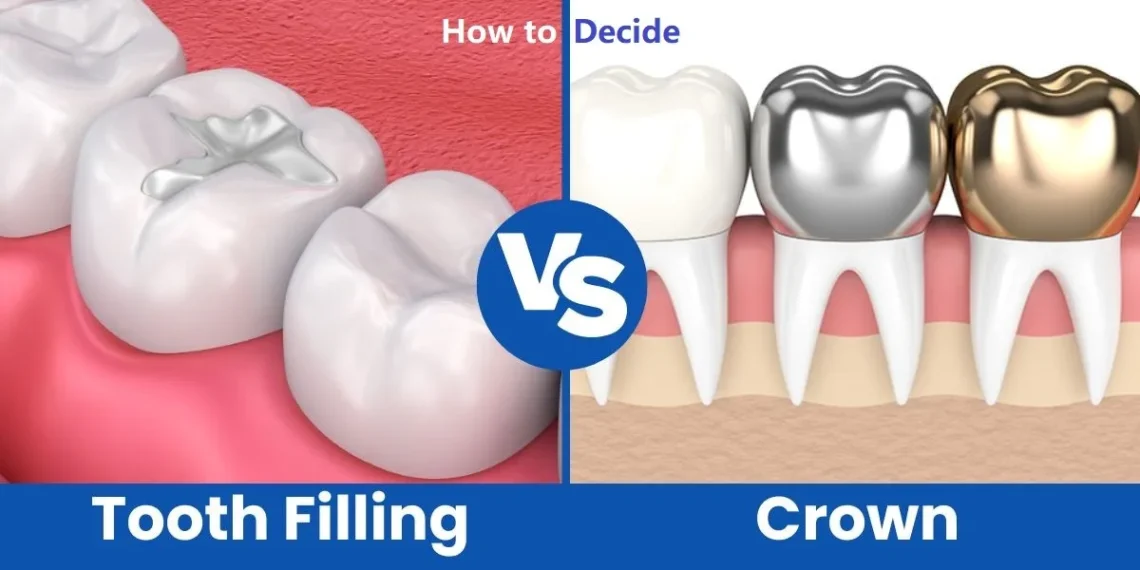
When a tooth is damaged, the treatment choice is not always obvious. Two common restorative options are fillings and crowns, but they are designed for different situations. A filling can repair a tooth with a more limited area of decay or damage, while a crown covers and protects a larger portion of a weakened tooth.
The decision is based on how much healthy tooth structure remains, where the damage is located, how the tooth functions, and whether the tooth can support a filling without becoming vulnerable to further damage.
If you have been told that you need restorative care, understanding the difference between these treatments can help you have a more productive conversation with your dentist.
Think About the Amount of Tooth Structure Remaining
The first question is structural: how much healthy tooth remains after the damaged portion is removed?
If enough strong tooth structure remains to support a filling, a direct restoration may be appropriate. If a large portion of the tooth is missing or weakened, a crown may provide more coverage and protection.
A Filling Repairs a More Limited Defect
A filling is placed directly into the prepared tooth. It can restore areas affected by cavities and, in selected cases, minor damage or wear.
The dentist removes compromised tissue, prepares the area, places the filling material, and shapes it to fit the bite.
A Crown Covers the Tooth
A crown is a restoration that fits over the prepared tooth. It is used when the tooth needs more extensive protection or when a filling would not provide enough structural support.
The dentist evaluates the tooth before deciding whether full coverage is appropriate.
The Size of a Cavity Can Change the Recommendation
A small cavity and a large cavity may both be described as “decay,” but they do not necessarily require the same restoration.
A limited area of decay may be treated with a filling. When decay has removed a substantial amount of tooth structure, a crown may be considered if enough healthy tooth remains to support it.
Location Matters Too
A cavity on a front tooth has different cosmetic considerations from a large defect on a molar. Back teeth also handle significant chewing forces, which can influence restorative planning.
This is why there is no simple rule such as “molar equals crown” or “cavity equals filling.”
Cracks and Fractures Require Careful Evaluation
A cracked tooth can be particularly difficult to evaluate because the visible damage may not show how far the fracture extends.
Some cracks can be managed with a restoration that protects the remaining tooth structure, while other fractures may require a crown or a different treatment.
If you feel pain when biting or notice sensitivity around a previously restored tooth, tell your dentist exactly when the symptom occurs.
A Filling May Not Protect a Severely Weakened Tooth
A filling replaces missing material, but it does not wrap around the tooth. If the remaining tooth walls are thin or compromised, the dentist may consider a restoration that provides more coverage.
The goal is to select a restoration that fits the strength and functional needs of the tooth.
When a Dental Filling Makes Sense
A filling may be appropriate for a tooth with limited decay, a smaller defect, or enough remaining structure to support a direct restoration.
The dentist also considers whether the tooth can be kept clean, whether the filling can be shaped properly, and whether the restoration can withstand normal biting forces.
For patients considering Dental Fillings in Cudahy, WI, the important question is not simply whether a filling is available but whether it is suitable for the condition of the tooth.
When a Crown May Be More Appropriate
A crown may be considered when a tooth has extensive decay, significant structural loss, a large existing restoration, or certain types of fractures.
The crown covers the prepared tooth and can provide support to the remaining structure. However, placing a crown requires more extensive preparation than placing a simple filling.
Crowns Can Also Restore Previously Treated Teeth
Teeth that have undergone root canal treatment may sometimes need additional protection because of the amount of structure lost or the tooth’s functional demands. The specific restoration depends on the tooth and its condition.
Your dentist can determine whether a crown is needed after evaluating the remaining structure and bite.
What Happens During a Filling Appointment?
For a filling, the dentist usually numbs the area when appropriate, removes decay or damaged structure, cleans the preparation, and places the restoration.
The material is shaped and adjusted so the tooth can function with the surrounding teeth. The process is generally more conservative than full-coverage crown preparation.
Composite Is One Common Filling Material
Tooth-colored composite fillings are used in many situations because they can be matched relatively closely to natural tooth color.
Material choice depends on the location of the tooth, size of the restoration, biting forces, and clinical considerations.
What Happens During Crown Treatment?
Crown treatment is typically completed in stages. The tooth is prepared so there is enough room for the restoration, and impressions or digital records are used to create a crown that fits the prepared tooth.
A temporary restoration may be used while the final crown is being made. At a later appointment, the final crown is evaluated for fit, appearance, and bite before being placed.
Crown Fit Is Important
A crown should not interfere with the normal movement and contact of your teeth. The dentist checks the bite and may make adjustments before completing the restoration.
A properly planned crown should function as part of the overall dental system rather than feel like a separate object sitting on the tooth.
What If the Tooth Hurts?
Pain does not automatically tell you whether you need a filling or crown. A toothache can result from decay, a fracture, pulp inflammation, gum problems, or other causes.
If the inner tissue of the tooth is affected, neither a filling nor a crown alone may address the underlying problem. Root canal treatment may be considered in some cases.
That is why diagnosis should come before choosing the restoration.
Why Waiting Can Change the Treatment
A tooth that initially needs a small filling can become more complicated if decay continues. More tooth structure may be lost, leaving less support for a direct restoration.
This does not mean every untreated cavity will inevitably require a crown. The rate of progression varies, but delaying evaluation removes the opportunity to treat the problem while it may still be relatively limited.
Cost Should Not Be the Only Deciding Factor
Patients naturally want to know the price difference between a filling and crown. The cost depends on the material, tooth, complexity, laboratory work, and any additional treatment required.
A lower initial price does not necessarily mean a better choice if the restoration is inappropriate for the tooth’s condition. The goal should be a treatment that addresses the actual problem and supports long-term function.
Ask What the Restoration Is Intended to Accomplish
When your dentist recommends a crown or filling, ask why that option is being chosen. Is the priority removing decay, strengthening a weakened tooth, protecting a crack, restoring function, or improving appearance?
Understanding the purpose of the treatment makes the recommendation easier to evaluate.
What Are Dental Crown Services?
Dental Crown Services Cudahy can include evaluation, preparation, temporary protection, fabrication, placement, and follow-up of a crown. The exact process varies depending on the tooth and the type of crown selected.
Porcelain crowns in Cudahy may be considered when appearance is an important part of the restoration, while other materials may be appropriate depending on the location and functional requirements.
Can a Tooth Need Both a Filling and a Crown?
A tooth may receive a filling as part of the process of rebuilding a severely damaged area before a crown is placed. The filling provides a foundation or replaces missing structure, while the crown provides the external coverage.
The exact sequence depends on the tooth’s condition and the restorative plan.
How to Protect a Restored Tooth
Once a filling or crown is placed, continue brushing, cleaning between teeth, and attending routine dental appointments. Restorations do not make a tooth immune to decay or damage.
Avoid using your teeth to open packages and be cautious with very hard foods. If you grind or clench, discuss it with your dentist because excessive force can affect restorations.
A Decision Should Be Based on the Individual Tooth
Two teeth can have cavities of similar size but require different treatment because their remaining structure, location, bite, and history are different.
That is why a dentist’s examination is essential. A photo or symptom description can suggest possibilities, but it cannot replace a clinical evaluation.
Final Thoughts
The choice between a crown and filling comes down to the condition and strength of the tooth. A filling can be appropriate when enough healthy structure remains to support a direct restoration, while a crown may be better when the tooth needs broader protection.
If you are deciding between Dental Crown Services Cudahy and a filling, ask your dentist what the restoration is designed to accomplish and how much healthy tooth structure remains. Understanding the reason behind the recommendation is just as important as knowing the name of the treatment. A consultation with South Shore Dentistry & Implants can also give patients an opportunity to compare the restoration options relevant to their tooth.
Prompt evaluation can also help prevent a relatively manageable dental problem from becoming more complicated. The sooner the condition is understood, the more clearly you can compare appropriate restorative options.
Frequently Asked Questions
Is a crown always better than a filling?
No. A crown provides more coverage, but it is more extensive. If enough healthy structure remains for a filling, a direct restoration may be the more conservative appropriate choice. for that tooth.
Can a filling become a crown later?
Yes, depending on how the tooth changes. If decay, fracture, or structural weakness develops, a tooth previously restored with a filling may later require additional protection such as a crown.
Are porcelain crowns suitable for back teeth?
Porcelain can be used for some back-tooth restorations, but material selection depends on location, biting forces, appearance goals, remaining structure, and other clinical factors considered by the dentist. in your case.