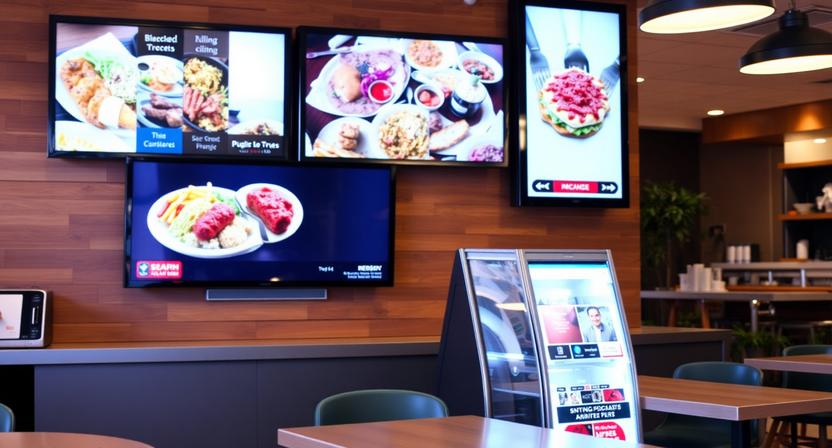
The screen above the counter tells a story before anyone says a word. Restaurant TV menus and digital menu boards have moved beyond being a novelty to becoming an important part of modern food service. They have quietly changed the way restaurants present, price, and promote their offerings. What used to be a laminated sheet or handwritten chalkboard has become a dynamic display that can change with the time of day, weather, and customer demand. Understanding these tools and their differences is now increasingly important for restaurant owners.
Restaurant TV Menus vs. Digital Menu Boards: Clearing Up the Confusion
The two terms are often used interchangeably, as though they mean the same thing, yet they can describe different setups. A restaurant TV menu is typically a television screen repurposed to display menu content inside a restaurant, sometimes using a consumer-grade TV. By contrast, a digital menu board often refers to a commercial-grade display designed for extended daily operation, with higher brightness and greater durability under the demanding conditions of food service.
The difference matters because choosing inappropriate hardware can lead to premature failure. Consumer televisions running for 12 hours a day in a hot fast-food environment may overheat or break down sooner than their commercial counterparts. Understanding this distinction can help restaurant owners make better purchasing decisions and avoid expensive replacements.
Why Screens Have Become the Workhorse of Modern Menus
The shift toward restaurant TV menus accelerated during the pandemic, when concerns about touching shared surfaces led many establishments to replace laminated menus with QR codes. However, some of the habits formed during that period have remained. Consumers have become accustomed to seeing accurate, up-to-date information, whether on their phones or on screens above the counter.
Digital menu boards for restaurants provide benefits that paper menus cannot easily match. A board can be updated immediately when a dish sells out. If ingredient costs rise, prices can be changed without reprinting menus. A new seasonal item can appear across all connected screens at the same time. These features turn the menu into a dynamic communication tool rather than a fixed document.
The Role of Restaurant TV Menus in Creating Atmosphere
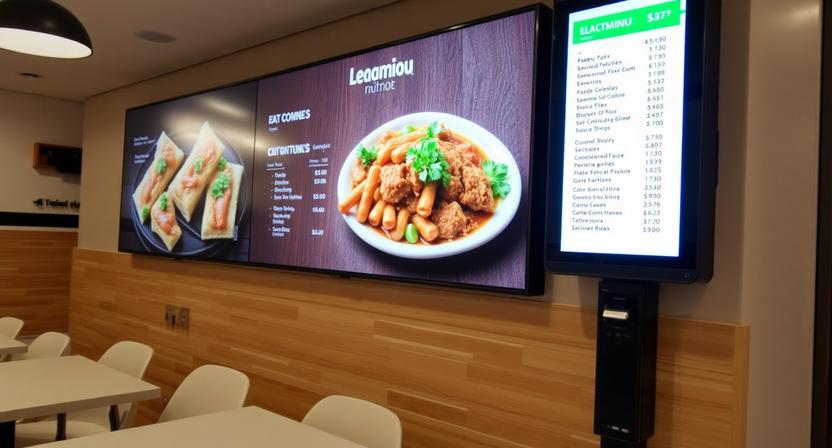
In addition to conveying information, restaurant TV menus can influence the atmosphere of an entire room. A menu board above the counter can appear warm and rustic, sleek and minimal, or playful and colorful, simply through design choices that may cost little to change once the hardware is installed. Screens become part of the decor, strengthening brand identity with every glance.
For quick-service and fast-casual restaurants, the digital board can also serve as a primary sales tool. High-margin items can be strategically positioned, combo meals can rotate, and promotions can be scheduled throughout the day to influence ordering patterns. Morning boards may focus on coffee and pastries, lunch boards on speed and value, and evening boards on more indulgent options. All this can happen without staff intervention.
Menu Performance Killers: Common Design Mistakes
The technology is only as good as the design displayed on it. One of the most common mistakes is overcrowding. The urge to show everything at once creates visual noise that confuses customers instead of guiding them. Good menu design requires restraint, with items grouped logically and enough white space to make information easy to scan.
The second mistake is neglecting regular updates. An electronic menu that includes an unavailable item or yesterday’s special suggests a lack of attention. Customers notice these details, and outdated content can quickly undermine trust.
The third mistake is ignoring loading performance, especially on phone-based menus. A menu that takes ten seconds to load may cause customers to give up before viewing it. Lastly, digital technology should never be an excuse for poor photography. Blurry, dim, or unappealing food images can discourage customers rather than attract them.
Integration: Where Restaurant TV Menus Deliver Real Value
The most advanced restaurant TV menus and digital menu boards are connected through a central content management system. Change a price once, and it can be updated across different channels, including phone menus, counter displays, online ordering, and delivery platforms, where integrations are supported.
Mark an item as sold out, and it can disappear from all connected touchpoints at the same time. This integration eliminates the version-control problems that complicate multichannel operations and helps ensure that the menu a customer sees at home matches the one displayed inside the restaurant.
Some systems also connect menu information with inventory and point-of-sale systems. If stock for a signature dish runs low, the item can be automatically deprioritized. If there is a surplus of a particular ingredient, the board can highlight dishes that use it. This kind of responsive menu management would be difficult to achieve with printed materials.
Useful Tips to Follow Before Investing
Begin with the customer experience. Look at how guests currently discover your menu: online, at the entrance, at the table, or on their phones. Identify where they experience difficulty. Mapping these interactions will help you decide whether you need a better personal menu, a digital menu board, or both.
Next, assess your content readiness. Do you have professional photographs, consistent descriptions, and accurate allergen information? Technology magnifies whatever you put into it, including its weaknesses.
Lastly, consider who will be responsible for maintenance. Someone needs to manage the menu system, update items, schedule promotions, and track performance. Digital menus that no one maintains can quickly become a source of embarrassment. Responsibilities should be assigned before installation, not afterward.
The Road Ahead for Restaurant TV Menus
Restaurant TV menus and digital menu boards will continue moving toward more personalized, responsive, and data-driven experiences. The restaurants that benefit most will be those that stop viewing their menu as a fixed document and begin treating it as a living system, one that responds to customers, adapts to changing conditions, and reflects the personality of the establishment across every screen customers interact with.