A Brand Born Outside the System
Corteiz, usually written as CRTZ and often shortened to “Cortez” in conversation, began in London in 2017 under the direction of a founder who goes by Clint 419. Most fashion labels announce themselves with a campaign, a launch party, or a stockist deal. Corteiz did none of that. It grew out of a tight circle of friends, a handful of graphic tees, and a stubborn belief that a clothing brand could be built on loyalty rather than advertising. The early years felt more like a local rumour than a business plan. People in London heard about it through group chats, through the odd jacket spotted on a bus, and through a growing sense that something was happening just out of sight. That sense of being slightly out of reach turned out to be the brand’s greatest asset, and it was never an accident. Corteiz made a virtue of being hard to find, and in doing so it flipped the usual logic of retail, where the goal is to make buying as easy as possible.
Rules the World and the Power of a Slogan
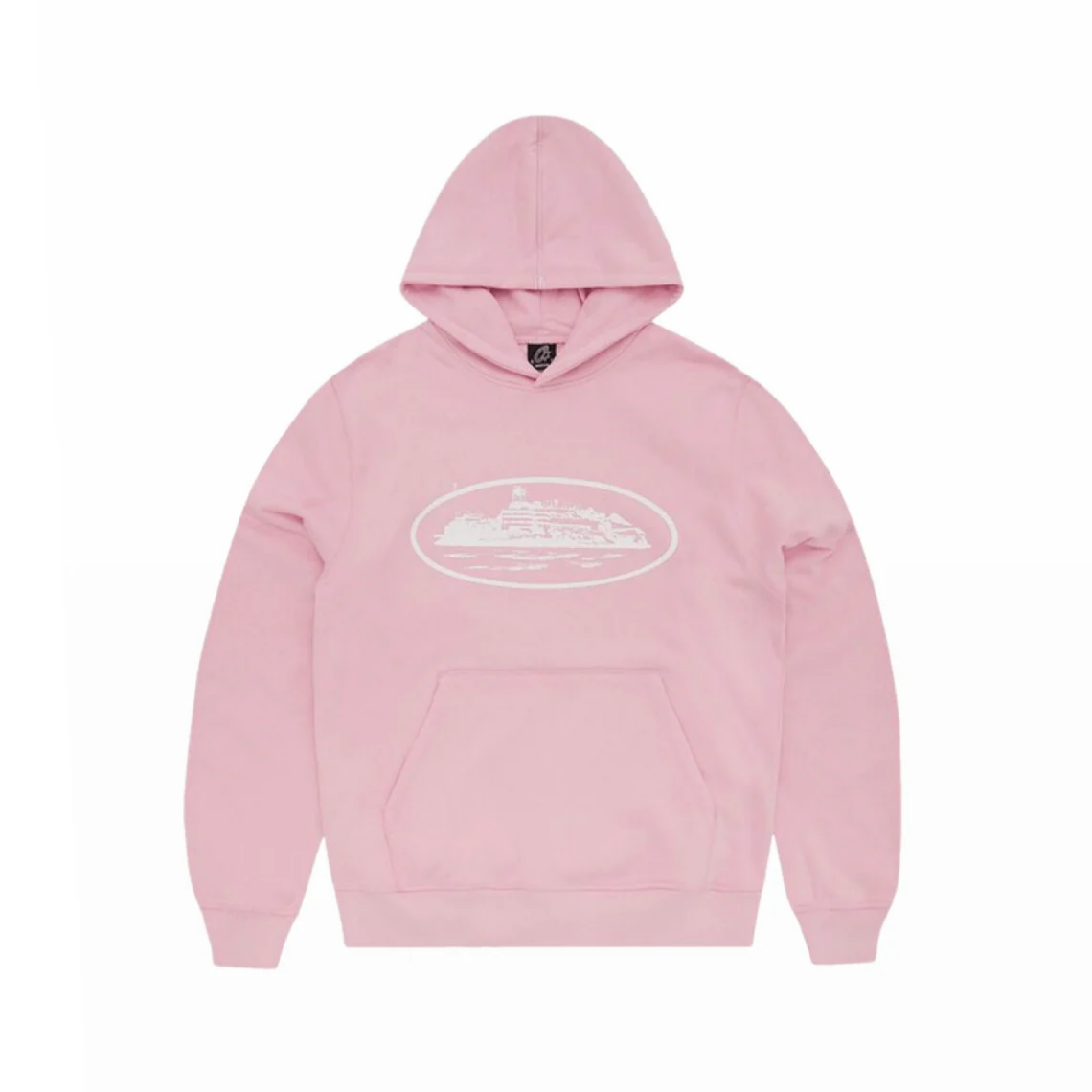
At the heart of Corteiz is a phrase that works as both motto and membership card: Rules the World, abbreviated to RTW. It is printed on clothing, spoken at drops, and repeated online by customers who treat it less like a logo and more like a creed. The slogan carries an attitude of confidence without apology, which resonates with a generation of young Londoners who grew up feeling that the fashion industry was designed for someone else. Alongside it sits the Alcatraz imagery, a nod to the idea of escaping confinement and rewriting the rules of access. Together they give the brand a mythology that goes well beyond cotton and stitching. When someone wears Corteiz, they are not simply wearing a hoodie, they are signalling that they belong to a community that understood the joke before everyone else did. That emotional shorthand is what separates a clothing line from a culture, and Corteiz understood the difference earlier than many of its more polished rivals.
The Art of the Guerrilla Drop
If there is one thing that made Corteiz famous, it is the way it sells. Rather than listing products on a website for anyone to add to a basket, the brand has repeatedly released stock through secret, short-notice events. Followers receive a cryptic message, a location, and a narrow window of time, and then hundreds of people converge on a street corner, a car park, or a park lawn hoping to get their hands on a piece. Some drops reward the first arrivals, others reward whoever completes a challenge, and others simply happen without warning. The format is chaotic by design. It turns a purchase into a story, something you can tell friends about afterwards, which is far more valuable than a delivery confirmation email. Critics point out that the model creates frustration and invites resellers to profit from the hype, and that is a fair criticism. Yet it is hard to deny that the strategy built a bond between brand and customer that conventional marketing budgets struggle to buy. The queue itself becomes content, the crowd becomes the advertisement, and the scarcity becomes the product.
The Cargos, the Hoodies, and the Look
Corteiz Hoodie designs tend to be simple on the surface and loaded with meaning underneath. The cargo trousers became a signature piece, loved for their utility-inspired cut and the way they sit comfortably within the broader British streetwear tradition of tracksuits, puffer jackets, and workwear. Heavy hoodies, tees with bold graphics, and technical outerwear round out a catalogue that favours confident silhouettes over trend-chasing detail. What stands out is the restraint. There is little attempt to reinvent clothing, and the aim is instead to make familiar shapes feel charged with identity. A plain garment with the right emblem and the right story behind it can be worth more to a buyer than a complicated runway piece, and Corteiz has proven this repeatedly. The look is also unmistakably London, reflecting the city’s multicultural street style, its music scenes, and its habit of mixing sportswear with everyday life.
The Nike Moment
A turning point arrived when Nike collaborated with Corteiz on a version of the Air Max 95. For a young independent label to receive that kind of partnership was remarkable, and it signalled that the sportswear giants had noticed where cultural energy was moving. The release was handled in a way that felt true to Corteiz’s roots, with a distribution approach that leaned on community and surprise rather than a standard global launch. Fans debated it fiercely, with some celebrating the validation and others worrying that mainstream attention might dilute the underground appeal. That tension is a familiar one for any brand that grows quickly, and Corteiz has had to navigate it in public. What the collaboration undeniably did was confirm that a brand built on word of mouth could stand shoulder to shoulder with an industry titan without abandoning its identity.
Community Over Customers
It would be easy to describe Corteiz purely as a marketing success story, but that undersells what is actually happening. The brand cultivates a feeling of ownership among its followers. Fans share photographs, trade stories about drops they attended, and defend the label in online arguments as though it belonged to them personally. The founder has also been visible in giving back to local people, using the brand’s platform to support neighbourhood causes and to encourage young creatives who might not otherwise have a route into the industry. Whether every initiative lands perfectly is secondary to the broader point: Corteiz treats its audience as participants rather than targets. That approach is difficult to copy because it cannot be faked. People can sense when a company is borrowing the language of community to move product, and the reaction to Corteiz suggests that, for many, the connection feels real.
The Challenges Ahead
Success brings pressure, and Corteiz faces several. Demand far outstrips supply, which fuels resale markets that charge multiples of the original price and quietly exclude the very fans the brand set out to serve. Counterfeits circulate widely, and keeping the mystique alive while expanding production is a delicate balancing act. There is also the question of longevity, since hype-driven labels can burn brightly and fade just as quickly once the novelty wears off. The brand’s answer so far has been to stay unpredictable, to keep releasing in unexpected ways, and to anchor itself in storytelling rather than seasonal trends. Whether that formula can sustain a long-term business remains to be seen, but it has already outlasted many of its contemporaries.
Why Corteiz Matters
Corteiz matters because it shows that a fashion label can be built from the street up, relying on identity, scarcity, and shared belief instead of conventional advertising. It reminds the industry that culture is not something you can purchase and apply afterwards, it has to be lived, argued over, and earned. For anyone studying modern branding, it offers a case study in how mystery can outperform megaphones. For the people who queue in the cold for a drop, it offers something simpler: the feeling of being part of something that belongs to them. In a market crowded with loud, polished, and forgettable messaging, that quiet, defiant confidence is exactly why Corteiz continues to command attention.