Laser hair removal is a popular option for reducing unwanted hair and achieving smoother skin. However, proper preparation and aftercare are essential for reducing irritation and supporting safe results. Knowing which activities, skincare products, and hair-removal methods to avoid can help make your treatment more comfortable. Consulting a Laser Hair Removal Specialist in Kolkata can help you understand the precautions required for your skin type and treatment area.
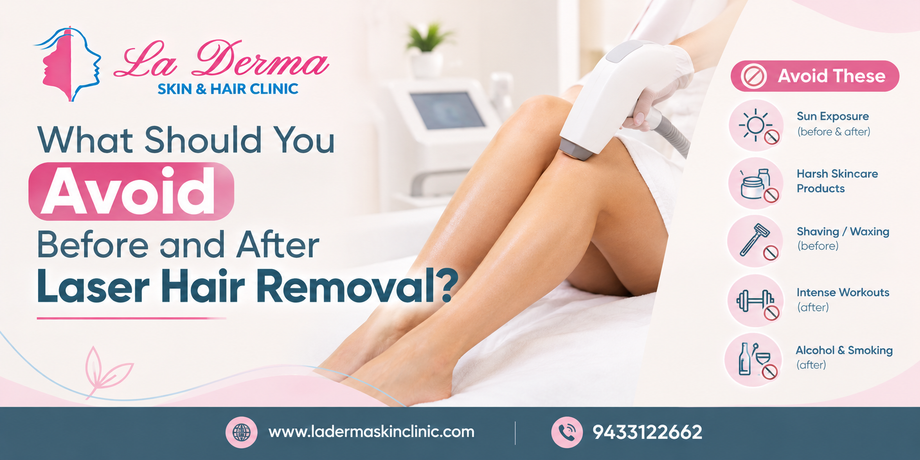
What Should You Avoid Before Laser Hair Removal?
Preparing your skin correctly can help reduce the risk of irritation and treatment-related complications. Follow your dermatologist’s instructions before your appointment.
1. Avoid Sun Exposure and Tanning
Avoid tanning beds, intentional tanning, and excessive sun exposure before your session. Tanned or sunburned skin may have a higher risk of burns and pigmentation changes during laser treatment. Use broad-spectrum sunscreen and protect exposed areas with clothing. Inform your provider if you have recently tanned or developed a sunburn.
2. Do Not Wax, Pluck, or Thread Hair
Waxing, threading, and plucking remove hair from the roots, which can interfere with laser hair removal. The laser needs the hair pigment within the follicle to work effectively. Shaving is generally preferred before treatment because it leaves the follicle intact. Follow your clinic’s instructions about when to shave, usually within 24 hours before the session.
3. Avoid Harsh Skincare Products
Some exfoliating products, retinoids, and strong active ingredients can make your skin more sensitive. Your dermatologist may recommend temporarily pausing certain products before treatment, especially on the area being treated. Do not discontinue prescribed medication without medical advice.
4. Do Not Apply Makeup or Heavy Products
For facial laser hair removal, arrive with clean skin. Avoid applying makeup, perfumes, deodorants, oils, or heavy creams to the treatment area unless your provider says otherwise. These products can interfere with skin preparation or contribute to irritation.
5. Inform Your Dermatologist About Medications
Tell your provider about all medications, skincare treatments, recent procedures, and any history of cold sores or skin sensitivity. Certain medicines can increase photosensitivity, so professional assessment is important before proceeding.
What Should You Avoid After Laser Hair Removal?
Your skin may feel warm or appear slightly red after treatment. These effects are usually temporary, but careful aftercare can help minimise discomfort.
1. Avoid Direct Sunlight
Protect the treated area from excessive sunlight and avoid tanning until your skin has recovered. Apply broad-spectrum sunscreen with SPF 30 or higher to exposed skin and reapply as directed. Sun protection is particularly important for preventing post-treatment pigmentation.
2. Avoid Hot Showers, Saunas, and Intense Exercise
For approximately 24–48 hours, or as advised by your provider, avoid very hot showers, saunas, steam rooms, and strenuous workouts that cause excessive sweating. Heat and friction can worsen temporary redness or sensitivity.
3. Do Not Scrub or Exfoliate Your Skin
Avoid harsh scrubs, exfoliating acids, and retinoids on the treated area until irritation has settled and your dermatologist confirms they can be resumed. Use a gentle cleanser and a fragrance-free moisturiser if recommended.
4. Avoid Waxing and Plucking Between Sessions
Hair may continue to shed gradually after treatment. Do not pull out treated hairs using wax, tweezers, or threading between sessions. Shaving is generally acceptable once the skin has recovered and your provider has confirmed it is suitable.
5. Do Not Ignore Unusual Reactions
Mild redness and swelling around hair follicles can occur temporarily. However, blistering, severe pain, spreading redness, or signs of infection require prompt medical assessment. Avoid applying home remedies or medicated creams without professional advice.
Why Is Professional Guidance Important?
Laser hair removal settings should be selected according to your skin tone, hair colour, treatment area, and medical history. An experienced provider can assess these factors, explain expected results, and recommend appropriate precautions.
Choosing a Top rated Dermatologist in Kolkata can help you receive personalised guidance before and after treatment. At La Derma Skin & Hair Clinic, Dr. Khushbu Tantia can assess your skin concerns and discuss suitable hair-reduction options based on your individual needs.
If you are looking for a Skin and Hair Clinic in Kolkata, prioritise professional assessment, appropriate laser technology, hygienic treatment practices, and clear aftercare instructions rather than relying on promotional claims alone.
Conclusion
Avoiding tanning, waxing, harsh skincare products, excessive heat, and unnecessary skin irritation can help support safer laser hair removal. Always follow the instructions provided by your dermatologist because precautions may vary depending on the device and your skin’s response. With appropriate preparation, professional treatment, and consistent aftercare, you can manage unwanted hair while reducing the risk of avoidable complications.
Frequently Asked Questions
1. Can I shave before laser hair removal?
Yes, shaving is generally recommended because it removes surface hair without pulling the follicle out. Your clinic will advise you on the appropriate timing, often within 24 hours before treatment.
2. How long should I avoid sunlight after laser hair removal?
Protect the treated area from direct sunlight while it recovers and follow your dermatologist’s specific instructions. Use broad-spectrum sunscreen on exposed skin to help reduce the risk of pigmentation changes.
3. Can I exercise after laser hair removal?
It is generally advisable to avoid strenuous exercise and excessive sweating for around 24–48 hours, particularly if your skin feels warm or irritated. Resume your routine when the skin has settled or your provider advises it is safe.
4. Can I use moisturiser after laser hair removal?
A gentle, fragrance-free moisturiser may help soothe the skin if recommended by your provider. Avoid fragranced products, exfoliants, and strong active ingredients until the treated area has recovered.
5. How many laser hair removal sessions are needed?
The number varies according to the treatment area, hair colour, hair thickness, hormonal factors, and individual response. Multiple sessions are usually needed because hair grows in different cycles, and maintenance sessions may be required.