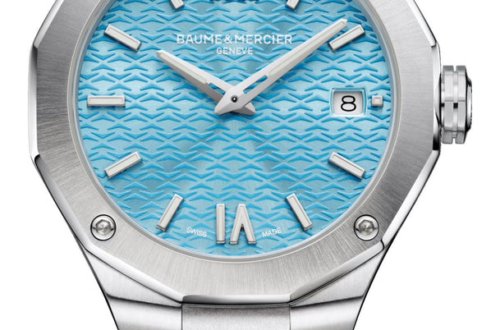
Open the caseback of a Lucien Piccard watch and you will not find a mainspring or a balance wheel. What you find is a small module, a coin battery, and a sealed capsule holding a sliver of quartz. Most of the brand’s current range runs on quartz movements, some built in Japan and some in Switzerland depending on the model and the price. That is a very different machine from the mechanical pieces the name was once known for, so it pays to understand how it works before you buy one or hand it over at a repair counter.
How the Quartz Crystal Sets the Pace
Quartz is basically this mineral thing, you know, that kind of flexes a little when voltage shows up, and then it makes a tiny voltage back again when it gets flexed. So watchmakers kind of lean on that, and they cut out this tiny tuning fork from a crystal, then they seal it inside a metal can; it’s sort of a weird little setup. When the battery turns on, that fork starts moving at 32 768 times each second. Now that number isn’t just random; it is two to the fifteenth power, so the electronics do this simple series of halving steps until you finally land on one pulse, once every second.
Heat, cold, and even gravity nudge it, but like, only a bit. That’s why an inexpensive quartz watch often outlasts a pricier mechanical one. In normal everyday use you might notice drift near fifteen seconds a month, sometimes even less. A mechanical watch can swing that kind of error in a single day, and yeah, it feels way more dramatic.
What Keeps Every Lucien Piccard Watch Ticking?
There are four main pieces that actually do the real work. First, the battery—usually a silver-oxide type—pushes a steady low voltage through the system. The crystal provides the rhythm, like a metronome beat. Then an integrated circuit counts those beats and basically decides when a second is “done.” Finally, the stepping motor takes that electrical pulse and turns it into motion so the hands can do their job.
Battery life depends on the specific model, of course. A simple three-hand watch can run two or three years on one cell. A chronograph uses more power, and you might swap it out sooner. The circuit is the quiet engine too. It runs the stopwatch functions and part of the date behavior, and since nothing inside it is sliding back and forth, it tends to keep going for a long time. When a quartz watch finally gives up for good, it is often the motor or the gear train that fails, not some mysterious haunting thing.
From Electrical Pulse to Moving Hands
Each pulse the circuit sends out lands on a coil of thin copper wire near a little magnetic rotor. That pulse flips the magnetic field, and then the rotor jumps half a turn. That jump is what the tick sounds like, if you’re listening. If you stare at the second hand on a quartz watch, it hops, one time per second, and it does not glide in a smooth sweep.
The rotor moves way faster than the hands can handle, so gears step the motion down. The second hand sits on one wheel, the minute hand on the next, and the hour hand on the last. The gear tooth counts are fixed, so the minute hand always makes twelve full turns each hour, while the hour hand does one. When you pull the crown out, the hands detach from the motor, and then you can set the time. Push it back in, and the whole thing reconnects—pretty straightforward.
Chronographs and Date Windows
Some models include a date window, or they come with a chronograph plus extra sub-dials. Those additions usually mean more gearing and sometimes even a second or third motor. In a quartz chronograph, a separate motor often drives the stopwatch hands, so when you start and stop the chronograph, the main time display keeps running like nothing happened. The pushers on the case are basically electrical switches more than mechanical levers, so they feel lighter than what you get on a mechanical chronograph.
The date wheel advances once every twenty-four hours. It does not care about how many days are in a month, so after a thirty-day month you often need to correct it by hand, unless you have a calendar-caliber designed to deal with that. It’s a small annoyance, but it feels bigger when you rotate between several watches.
Where the Mechanical Pieces Fit In
The brand story goes back to the early twentieth century. Some old catalogs listed manual-wind and automatic watches, and some even came in gold cases too. You can still find vintage examples with those movements, and yes, people sell them. Those setups use a mainspring, a gear train, an escapement, and a balance wheel, so they do need attention from a watchmaker every few years.
Modern production leans toward quartz because it stays affordable and behaves consistently. You trade away the smooth-sweeping second-hand, and you lose that certain mechanical “hand-finished” feel. In return you get a thinner case and fewer repair worries. Neither side is truly “wrong”; it’s more like whether you want a tool you wear every day or a hobby you fiddle with.
Keeping the Movement Healthy
Swap the battery as soon as the watch starts running slow or when the second hand starts doing that two-second jump, because many quartz watches use that as a low-power hint. If you leave a dead battery in too long, it can leak and damage the circuit. Also have a watchmaker check the gasket when the case is opened, especially if the watch is claimed water resistant. Avoid pressing the crown or pushing the pushers underwater unless the case is built specifically for that. And keep it away from strong magnets, because magnets can mess with the motor.
If it still stops even after a fresh battery, the cause is usually a worn motor, dirty gears, or a circuit failure. A lot of repair shops just replace the entire movement for a fixed price, and that is one of the most practical advantages of quartz in real life.
Final Thoughts
Knowing what sits behind the dial makes ownership easier. A crystal sets the rhythm, a circuit counts it, and a small motor turns that count into hands moving around a dial. Whether you are shopping for your first Lucien Piccard watch or just curious about what is ticking on your wrist, these basics help you buy sensibly, spot a tired battery early, and appreciate how much engineering fits into a case only a few millimeters thick.