
Of all the home improvement projects available to homeowners, attic insulation installation consistently delivers among the highest returns on investment. The U.S. Department of Energy estimates that properly insulating and air-sealing an attic can reduce heating and cooling costs by 15 to 25% per year. For a home spending $2,000 annually on energy, that is $300 to $500 in savings every year often with a payback period under three years. This comprehensive attic insulation cost guide covers every type of insulation, typical installation costs in 2026, how to choose the right product, and how to maximize available incentives.
Why Attic Insulation Is the Highest-ROI Home Improvement
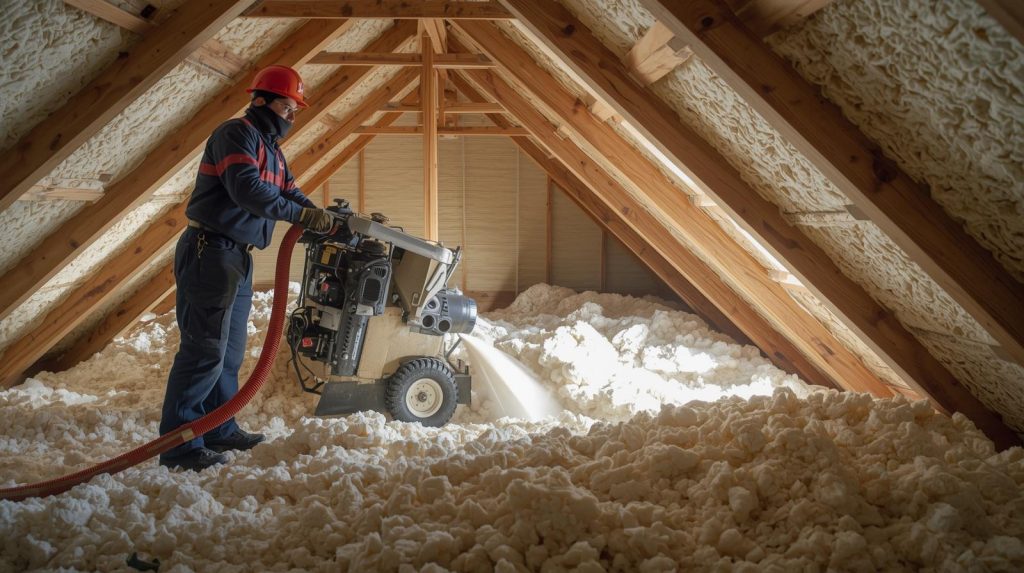
Heat rises — which means your attic is ground zero for energy loss in winter. Without adequate insulation, warm air generated by your heating system literally escapes through your ceiling into the unconditioned attic and out of your home. In summer, a super-heated attic radiates heat downward into your living spaces, forcing your air conditioner to work overtime.
The attic is the most accessible part of a home’s thermal envelope and typically the least expensive to improve. Unlike replacing windows or upgrading HVAC systems, attic insulation installation involves relatively straightforward labor and materials costs. The energy savings are immediate and substantial from day one.
Beyond energy savings, proper attic insulation improves indoor comfort by eliminating cold ceilings and temperature stratification, reduces wear on your HVAC system, helps prevent ice dams in cold climates, and can improve indoor air quality by reducing moisture infiltration. For older homes built before modern energy codes, attic insulation is often the single most impactful improvement available.
Types of Attic Insulation: Pros, Cons & R-Values
Not all insulation is created equal. Understanding your options helps you select the right product for your specific attic, climate, and budget.
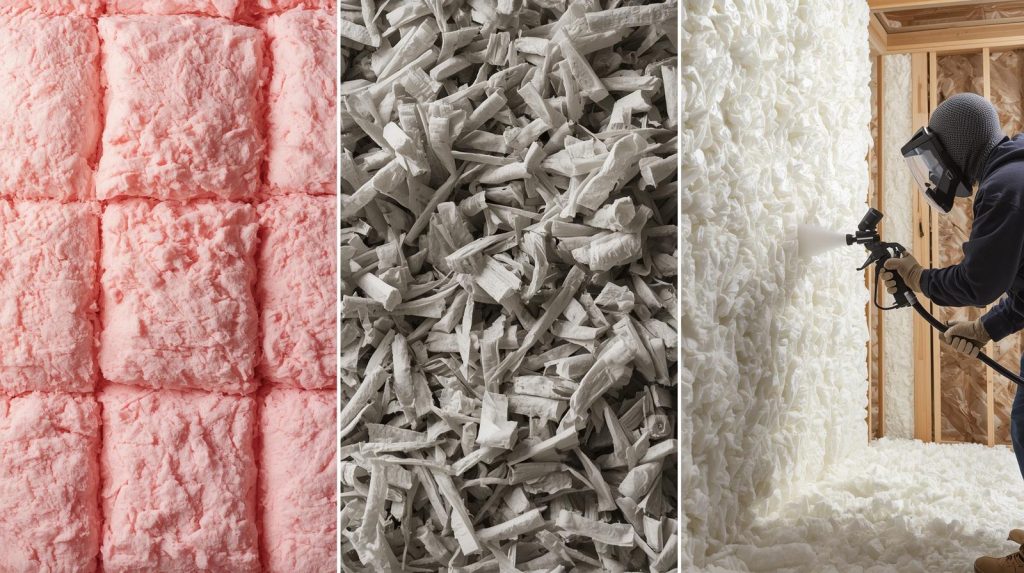
Blown-In Fiberglass: The most common type used in retrofit attic applications. Lightweight glass fibers are blown in using specialized equipment. R-value of approximately R-2.2 to R-2.7 per inch. Excellent for irregular or hard-to-reach spaces. Cost-effective and fire-resistant. Settled thickness should be verified against target R-value.
Blown-In Cellulose: Made from recycled paper treated with fire retardants. R-value of R-3.2 to R-3.8 per inch, slightly better than fiberglass. More resistant to air movement through the insulation layer. Environmentally friendly with high recycled content. Can settle over time.
Spray Foam Insulation: Open-cell (R-3.7/inch) or closed-cell (R-6 to R-7/inch) options provide air sealing and insulation simultaneously. Ideal for cathedral ceilings, roof decks, and areas requiring a vapor barrier. Significantly more expensive than blown-in options but provides the best air sealing.
Fiberglass Batts: Pre-cut blankets of fiberglass that are installed between joists. R-value of R-3.1 to R-4.3 per inch depending on density. Best suited for new construction or attics with standard joist spacing. Less effective in retrofit situations with existing obstructions.
Rigid Foam Board: Extruded polystyrene (XPS) or polyisocyanurate boards offer R-5 to R-8 per inch and are often used to cap existing insulation or insulate attic hatches and knee walls.
Recommended R-Values by Climate Zone
The U.S. Department of Energy divides the country into climate zones with specific attic insulation R-value recommendations. Meeting or exceeding these targets is essential for optimal energy performance.
- Climate Zones 1-2 (Hot: Florida, Gulf Coast, Hawaii): R-30 to R-38 recommended
- Climate Zones 3 (Mixed: Southeast, Southwest): R-38 to R-60 recommended
- Climate Zones 4 (Mixed: Mid-Atlantic, Pacific Northwest): R-38 to R-60 recommended
- Climate Zones 5-6 (Cool: Midwest, Northeast, Mountain): R-49 to R-60 recommended
- Climate Zones 7-8 (Very Cold: Northern Minnesota, Alaska): R-49 to R-60+ recommended
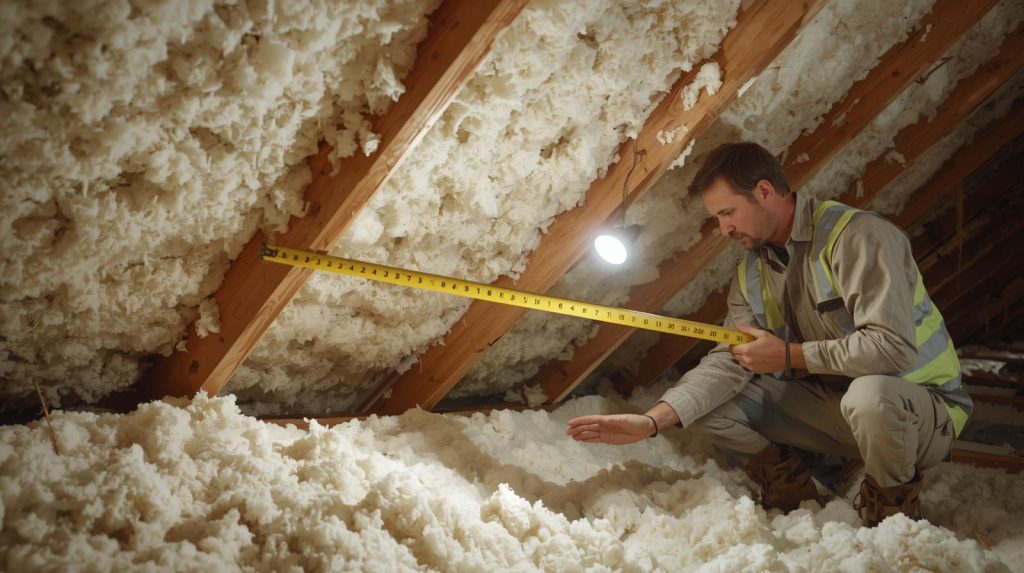
To achieve R-49 with blown-in fiberglass (R-2.5/inch average), you need approximately 19 to 20 inches of insulation depth. If your current attic has 5 inches of old insulation (approximately R-12), you need to add roughly 15 inches of new material to reach R-49. Your insulation contractor can assess your current levels and calculate the exact amount needed.
Attic Insulation Installation Costs in 2026
Attic insulation costs vary based on attic size, current insulation levels, insulation type, accessibility, and regional labor rates. Here is a realistic breakdown of what homeowners can expect to pay in 2026.
Blown-In Fiberglass or Cellulose: The most economical option for most retrofit attics. Typical costs run $1.00 to $2.50 per square foot installed, including materials and labor. For a 1,500 square foot attic, expect to pay $1,500 to $3,750.
Spray Foam (Open-Cell): Costs $1.50 to $3.50 per square foot for open-cell spray foam in attic applications, with higher costs for roof-deck applications.
Spray Foam (Closed-Cell): The premium option at $3.00 to $7.00 per square foot installed. Used selectively for specific areas requiring both air sealing and maximum R-value per inch.
Removal of Old Insulation: If existing insulation is damaged, contaminated, or contains vermiculite or asbestos, removal costs add $1.00 to $2.50 per square foot before new material is installed.
Average total project cost for attic insulation: $1,700 to $6,000 for a typical home, with the most common projects (blown-in in an accessible attic) falling in the $2,000 to $3,500 range.
Available Rebates and Tax Credits for Attic Insulation
Federal, state, and utility incentives significantly reduce the net cost of attic insulation installation, making the already-strong ROI even more compelling.
The federal Energy Efficient Home Improvement Credit (25C) allows homeowners to claim 30% of insulation and air sealing costs as a federal tax credit, up to $1,200 per year. For a $3,000 attic insulation project, that means $900 back at tax time, reducing your net cost to $2,100.
Many state energy offices offer additional rebates ranging from $0.10 to $0.25 per square foot of insulation installed. Utility company programs frequently offer rebates of $100 to $500 per project. Programs like the Weatherization Assistance Program (WAP) provide free insulation upgrades to income-qualifying homeowners.
To find all incentives available in your area, visit the DSIRE database (dsireusa.org), enter your zip code, and filter for insulation and weatherization measures. Always confirm incentive requirements with your installer before work begins, as some programs require pre-approval or the use of specific products.
Choosing the Right Contractor for Attic Insulation Installation
The quality of your attic insulation installation matters as much as the material selected. Proper installation requires careful attention to air sealing before insulating, protection of soffit vents to maintain attic ventilation, insulation of the attic hatch, and ensuring even coverage to the target depth.
Look for contractors who are certified through the Building Performance Institute (BPI) or RESNET. These certifications indicate training in whole-house performance and proper building science practices. Get at least three quotes and ask each contractor to specify the product, R-value, and depth they plan to install.
Be wary of contractors who quote unusually low prices — they may be skipping critical air sealing steps or installing to insufficient depth. Ask to see their depth gauge markings after installation and verify the installed R-value against the project specifications. A good contractor will also assess your attic ventilation and flag any moisture, pest, or structural issues before beginning work.
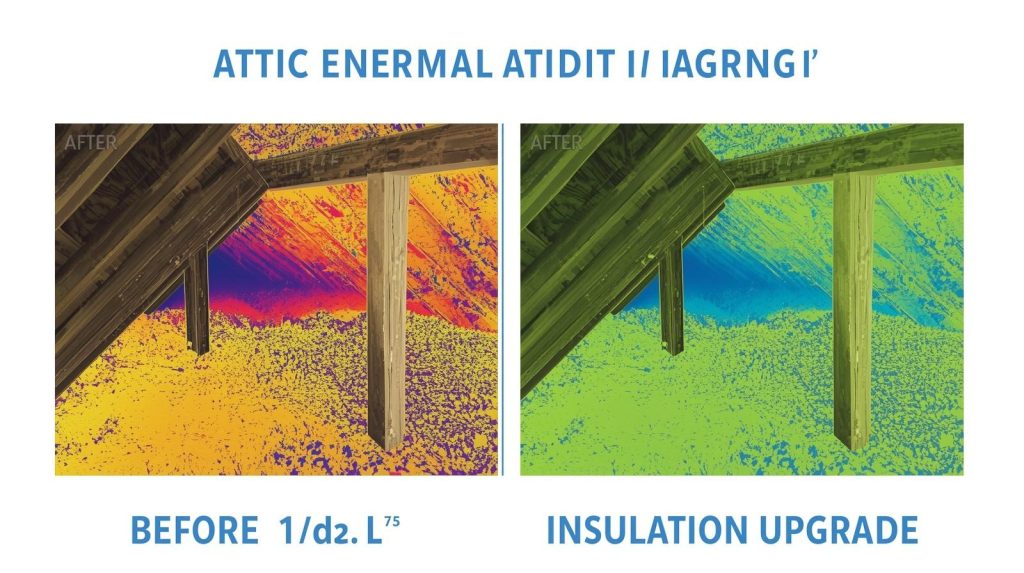
Attic insulation installation is one of the best investments a homeowner can make in 2026. With payback periods often under three years, federal tax credits covering 30% of costs, and annual energy savings of hundreds to over a thousand dollars, the financial case is clear. Combine attic insulation with proper air sealing for maximum impact, and schedule a professional energy audit first to ensure you are targeting the right improvements for your specific home.

