If you have finished Class 12 and dream of flying an aircraft, you may be wondering which course to choose and what steps to take next. Becoming a pilot is an exciting goal, but it takes planning, study, medical fitness, and flight training. Knowing what to expect can help you make a careful choice before you spend time or money.
This guide explains the main pilot-training routes in India, the role of ground classes, how to check a flying school, and what to ask before enrolling. Pilots Pathway is included as a resource to explore while researching your options. Always confirm current rules and requirements with the Directorate General of Civil Aviation (DGCA) and the training organisations you are considering.
What does an aviation course after Class 12 involve?
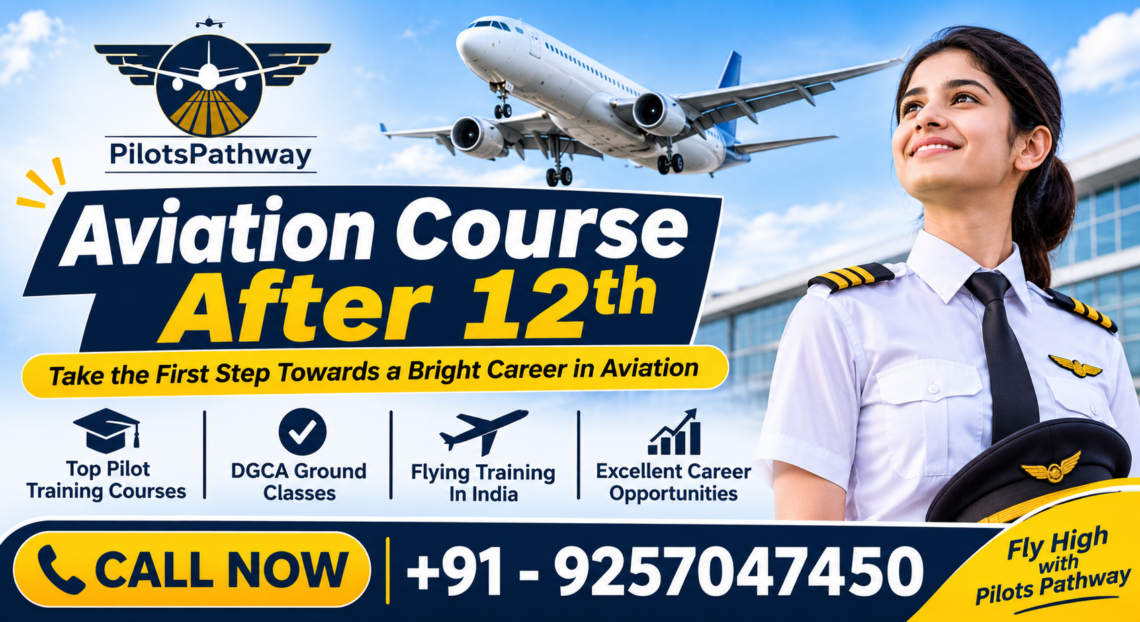
The phrase Aviation course after 12th can mean several different things. Some courses focus on airport operations, cabin crew work, aircraft maintenance, or aviation management. If your goal is to fly an aircraft as a career, you will need a pilot-training pathway that leads to the licence required for your chosen type of flying.
For someone aiming to become an airline pilot in India, the usual goal is a Commercial Pilot Licence (CPL). The process involves meeting the relevant education and medical requirements, passing the required theory examinations, completing flight training, and fulfilling DGCA licensing requirements. The exact steps and rules can change, so check the latest information with DGCA before making decisions.
A course certificate from a private institute is not automatically a pilot licence. Before you enrol, make sure you understand what qualification the course leads to and whether the flight training is with a DGCA-approved Flight Training Organisation (FTO).
Check your education and medical eligibility
Before paying a course fee, check whether you meet the current eligibility requirements for the licence you want. In general, aspiring commercial pilots need to have studied Physics and Mathematics at the required level or meet an accepted equivalent route. If you did not take these subjects in school, ask DGCA or a recognised education provider how you can meet the requirement. Do not rely only on verbal promises from a course adviser.
Medical fitness is another key part of the process. Pilot applicants need to meet the applicable aviation medical standards. Find out what medical assessments are required and when to complete them. It is sensible to understand your medical eligibility early, before committing to large training expenses.
Keep copies of your school documents, identity records, medical paperwork, and any examination results. Clear records can make applications and follow-up easier.
Understand the training stages
Pilot training usually combines classroom learning with practical flying. The classroom portion helps you learn subjects such as aviation regulations, navigation, meteorology, aircraft systems, and flight planning. The practical portion gives you experience in operating an aircraft under the supervision of qualified instructors.
DGCA ground classes can help students prepare for the theory subjects and examinations. When choosing classes, ask who teaches them, what topics are covered, how progress is assessed, and whether the schedule fits your needs. Good teaching should help you understand aviation concepts, not just memorise answers.
Ground classes are only one part of the process. They do not replace the required flight training, and attending them alone does not make you eligible for a pilot licence. Ask how the classroom course connects to your planned flight-training schedule, and confirm separately where and how the flying will take place.
The sequence may differ between students and training providers. For example, some students begin theory preparation before flight training, while others manage the two together. Your plan should account for exam preparation, medical checks, travel, training availability, and your budget.
How to choose a flying school in India
Flying Training In India can be offered through different training organisations, but the quality, location, facilities, aircraft availability, and costs can vary. Take time to compare schools rather than choosing based on a brochure or a quick sales call.
Start by checking whether the organisation is currently approved for the training you plan to undertake. Review its official details and ask which parts of your training it will provide directly. If a school works with another organisation for aircraft or facilities, request a clear explanation of the arrangement.
Ask practical questions, such as:
- What is included in the quoted fee, and what costs extra?
- How many aircraft are available for students?
- What is the typical training schedule, and what factors can cause delays?
- How are instructors assigned to students?
- What support is available for theory exams and paperwork?
- What happens if weather, maintenance, or scheduling affects flying?
- What is the refund or withdrawal policy?
- Can you speak with current or former students?
Do not treat a promised completion date as guaranteed. Weather, aircraft maintenance, instructor availability, examination schedules, and other factors can affect progress. Ask for realistic information, and get important fee details and policies in writing.
What is a commercial pilot course after Class 12?
A Commercial pilot course after 12th is a common search phrase for a pathway toward a CPL. It is not necessarily the name of one standard course offered in the same way by every school. The training plan, fees, facilities, and support can differ, so compare what each provider actually includes.
The CPL pathway can involve several costs: theory preparation, flight training, medical assessments, examinations, travel, accommodation, equipment, and administrative expenses. Ask for a written estimate that separates these items. Find out whether the quoted amount covers the full expected training or only an initial stage. Also ask how additional flying hours or delays may affect the total cost.
Avoid choosing a programme solely because it advertises the lowest price or a very short training period. A careful decision should consider safety, approval status, training quality, transparency, and your ability to complete the full pathway.
What is an airline cadet pilot program?
An Airline cadet pilot program is a selection and training route associated with an airline or its training partners. Program structures vary. Some may guide selected applicants through training toward airline-specific requirements, while others may expect applicants to complete certain steps before applying.
Selection may involve academic checks, aptitude assessments, interviews, medical evaluation, and other stages. The requirements, costs, training partners, and terms differ by programme and can change over time. Read the official programme information carefully and confirm who is responsible for each stage.
Being selected for a cadet programme should not be treated as an automatic promise of a job. Check the written terms for details about completion standards, employment conditions, fees, withdrawals, and what happens if a student does not pass a stage. Compare the route with other training options before deciding.
How to compare the top pilot training options
When researching Top Pilot Training In India, remember that a “top” option depends on your own needs. One student may prioritise location, another may need a particular schedule, and someone else may focus on transparent fees or instructor support. Use verifiable details to compare providers instead of relying only on rankings, online comments, or promotional claims.
A helpful comparison sheet can include approval status, course scope, estimated total cost, available aircraft, instructor information, student support, location, accommodation needs, and written policies. Ask the provider to explain any point that is unclear. If you receive different answers from different staff members, request clarification in writing.
You can also talk to students who are currently training or have completed training. Ask about their experience with scheduling, communication, and unexpected costs. Their perspective can be useful, but verify important facts independently.
Pilots Pathway can be one place to begin your research into pilot-training options and career planning. As with any organisation or service, check the specific support it offers, confirm relevant details directly, and compare its information with official DGCA guidance and the training provider’s written terms.
Planning your budget and timeline
Pilot training requires a significant commitment of time and money. Before starting, make a budget that includes more than the advertised course fee. Add likely expenses for travel, accommodation, meals, medical checks, exam preparation, equipment, and any additional training that may be needed.
Build flexibility into your timeline. Training can take longer than expected, and the reasons may be outside a student’s control. A realistic plan should allow time for study, examinations, medical processes, flight scheduling, and personal responsibilities.
If you need financial support, compare options carefully. Understand interest rates, repayment dates, eligibility conditions, and what happens if your training takes longer than planned. Avoid signing agreements you do not understand. Consider asking a trusted adult or qualified financial adviser to review major commitments.
Skills that help future pilots
Academic knowledge is important, but pilot training also calls for steady habits. Clear communication, careful attention, discipline, teamwork, and the ability to learn from feedback can all support your progress. Strong English skills can be helpful because aviation training and communication often use English, but check the specific requirements of the programme you choose.
You do not need to know everything before you begin. You do need to be ready to study consistently, follow procedures, ask questions, and take safety seriously. If you find a subject difficult, seek help early rather than waiting until an examination is close.
A step-by-step plan after Class 12
- Decide your goal. Confirm whether you want a pilot licence or another aviation career.
- Check education requirements. Confirm the subjects and qualifications required for your intended licence.
- Understand medical eligibility. Find out which assessments apply and when to complete them.
- Compare training routes. Look at an FTO pathway and any suitable airline cadet options.
- Verify approvals and terms. Check official information and get fees, inclusions, and policies in writing.
- Plan your budget. Include extra costs and allow for possible delays.
- Prepare for theory and flying. Choose DGCA ground classes that support your learning, then follow an appropriate flight-training plan.
- Keep checking the rules. Confirm current DGCA requirements throughout your training.
Final thoughts
Choosing an Aviation course after 12th is an important decision, especially if you hope to become a commercial pilot. Learn the difference between general aviation courses, classroom preparation, and the flight training needed for a pilot licence. Check education and medical requirements, compare training providers, and understand the full costs before enrolling.
Whether you are considering Flying Training In India, an Airline cadet pilot program, or a Commercial pilot course after 12th, careful research will help you make a more informed choice. Use Pilots Pathway as one possible research resource, but verify every important claim with DGCA and the relevant training organisation. A clear plan, realistic expectations, and consistent effort can help you take the next step toward an aviation career.