A factory floor that runs smoothly can still hide an expensive problem at the back of the site, where skips fill, haulage costs climb, and valuable material goes to landfill. Effective industrial waste management is therefore as much a financial decision as an environmental one. This guide explains the policy framework Australian operators work within, the main processing stages, and how to build a business case for upgrading. It also shows how different recycling solutions fit together into a working plant.
The Framework Behind the Decisions
Policy for industrial waste management in Australia rests on the waste hierarchy, which ranks avoidance first, resource recovery next (including reuse, recycling, reprocessing, and energy recovery), and disposal last. State regulators such as the NSW Environment Protection Authority and EPA Victoria apply this order, and Victoria’s general environmental duty requires businesses to take reasonably practicable steps to reduce the risks from waste. Hazardous materials such as asbestos are treated differently, since some waste cannot safely be recycled.
At the national level, a Senate inquiry reported that about 58 percent of waste generated in 2014–15 was recycled or recovered for energy. The National Waste Policy has since set an ambition of an 80 percent average resource recovery rate by 2030. For operators of industrial waste management, those goals translate into pressure to separate more material and send less to landfill.
From Mixed Stream to Clean Fractions
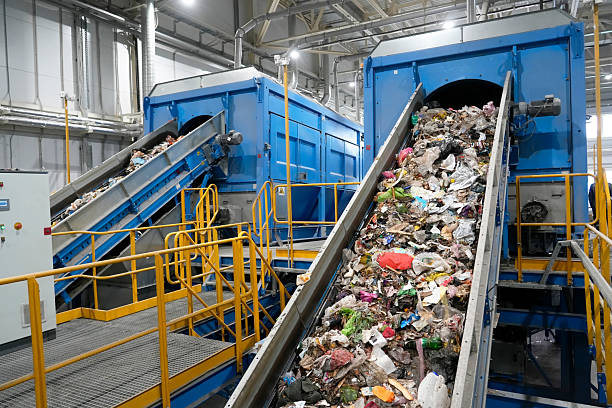
Most plants follow a similar flow, and each stage depends on the one before it. The main stages are:
•Pre-processing and feeding: bag openers release sealed contents, conveyors carry material between stages, and compactors cut volume at the point of collection.
•Size reduction: primary and secondary shredders and hammermills reduce bulky timber, plastics, and metals to manageable pieces.
•Screening and separation: disc, vibrating, and trommel screens sort by size, ballistic separators split flat items from rolling ones, and windshifters remove light fractions with controlled airflow.
•Metal and material recovery: magnets capture ferrous metals, eddy current units capture aluminium, and optical sorters identify plastics, paper, and glass.
•Refining: balers compress recyclables into dense bales and bale wrappers protect them in storage.
Careful stage design is what makes industrial waste recycling commercially workable. Clean, consistent fractions fetch better prices than contaminated loads.
Choosing Equipment That Fits
The right waste management equipment depends on the waste stream, throughput, and available space. Wet organics, mixed construction waste, paper and cardboard, and plastics all behave differently, so no single machine among recycling solutions suits every material. Questions worth asking suppliers include:
1.What input material and contamination level was the system designed for?
2.What throughput is guaranteed, and how is it measured?
3.How much can the layout expand if volumes grow?
4.What is the expected wear on knives, screens, and belts?
5.How much downtime will installation and commissioning cause?
Automation is worth considering in industrial waste management as well. Sensors, control systems, and robotic pickers can adjust to changes in feedstock, reduce manual handling, and make quality more consistent.
Building the Business Case
Start any industrial waste management upgrade by measuring what you pay now: collection, tipping fees, labour, storage, and lost revenue from unrecovered material. Then model what a system would change. Industry sources suggest that shredding mixed commercial waste can reduce volume by around 40 to 60 percent, which lowers truck movements and gate fees, and baled clean cardboard or plastic can sell for more than loose material. Some suppliers claim paybacks of two to three years, but results vary widely, so ask for evidence from similar sites.
Compliance and Safety
Good industrial waste management starts with producers, who remain responsible for classifying waste correctly, even when a contractor collects it. Keep records of volumes, destinations, and any treatment, and check that hazardous items are separated before processing.
Conclusion
Sound planning, clear data, and equipment matched to the material turn a cost centre into a recovery operation. Facilities that understand their streams can improve recycling, cut haulage, and prepare for tighter rules. At OGTEC in Australia, we have designed, manufactured, and integrated tailored waste-processing systems since 2015, with manufacturing in Victoria and design offices in New South Wales. Start with an audit of your own waste streams.