A buddy of mine volunteers every year at a small county rodeo near Liberty. Bleachers, a concession stand, kids on the fence rails, maybe eight hundred people by the time the barrel racing starts. A few years back the committee spent real money on a nice trailer for the bathrooms, mostly for the sponsors and the pageant girls in their sashes. It looked great. Then an older man in a motorized scooter rolled up, looked at the trailer’s steps, and just sat there. Somebody ended up walking him a hundred yards to the one accessible unit, which was parked behind the livestock barn. If you’re comparing portable restroom trailer rental with ADA porta potty rental, that’s the whole question in one picture. They solve different problems. Comfort versus access. This post walks through both, how many you need, what it costs to think about, hookups, placement, rules, and what to ask a provider before you hand over a deposit.
Two Different Tools for Two Different Jobs
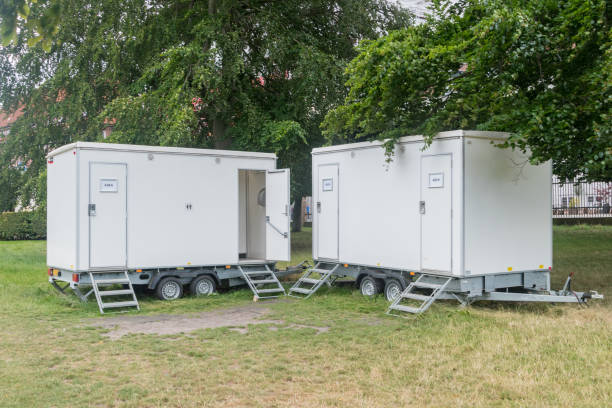
Let’s get a picture in your head, because people use these terms loosely. A restroom trailer is a bathroom on a towable chassis. Real door, flushing toilets, sinks with running water, lighting, and climate control. Buck Waste, a family owned company based in Crosby, TX and serving Houston since 2024, describes its luxury restroom trailers as the upscale choice for weddings and VIP events. The one pictured on its site is a two stall trailer with entry steps. Hold onto that detail, because it’s exactly what tripped up the rodeo.
An accessible portable toilet is built for something else. Buck Waste describes its ADA handicap porta potty as a wheelchair accessible unit with ground level entry and a spacious interior, there to keep your event ADA compliant. Ground level entry is the whole point. Even one step can make a unit unusable for someone in a wheelchair or on a scooter.
So neither one replaces the other. A trailer gives you polish, privacy and air conditioning. An accessible unit gives you a way in. Plenty of smart organizers book both, plus a row of standard units for the bulk of the crowd. A standard unit is the plain plastic one, self contained, with a lockable door, good ventilation and hand sanitizer inside, which works fine for most people and costs far less.
Who Needs What at a Big Outdoor Event
Short answer, it depends on your crowd and your rules. Public events like fairs, rodeos, festivals, concerts and sporting events usually need accessible facilities, and many permits and local rules spell out how many. The Americans with Disabilities Act sets standards for accessible facilities, and ignoring them can bring complaints or fines. I’m not a lawyer, so check your local rules and ask your provider what’s expected for your event type and size.
Think about who actually shows up. Fairs and rodeos draw families, grandparents, folks with strollers and walkers, people using canes and scooters. Don’t treat accessibility as a box to check. Treat it as a real part of the crowd.
Trailers fit a narrower slice. Sponsors, officials, pageant contestants, performers, VIP tents and hospitality areas often expect something nicer than a plastic box, especially in Houston heat. A cool, clean trailer with mirrors and running water makes a difference when it’s ninety-five degrees and somebody’s in boots and a good shirt. For a free community fair with no VIP section, you may not need one at all. Save the money. For a ticketed rodeo with sponsors, it can earn its price.
Counting Units Without Guessing Low
Almost everybody guesses low. Let’s use real numbers.
A common rule of thumb is one portable toilet per hundred people for a four hour event, and a standard unit holds roughly two hundred uses before it needs servicing. Buck Waste has an online calculator built on its own event sizing chart, covering crowds from fifty to ten thousand and event lengths from one to ten hours. For a hundred and fifty guests it suggests three standard restrooms, one hand wash station and one ADA unit. It also always adds at least one accessible unit, and raises capacity by about twenty percent when food or alcohol is served, since restroom use goes up. A rodeo with a concession stand and a beer garden counts for both.
A trailer changes the math because one trailer holds several stalls. Ask the provider how many guests a specific model handles comfortably, and whether any stalls are accessible. Don’t assume. For big events, spread accessible units around instead of leaving one at the far end of the grounds, so nobody crosses the whole fairground to find it. Treat all of this as a planning guide. Gender ratio, layout, event length and local code change the final number. And think about lines. A crowd leaving the arena between events all hits the restrooms at once. Even with enough stalls on paper, one long line makes everybody grumpy.
What It Costs and Where the Extras Hide
Money. Portable restroom trailer rental costs noticeably more than standard units, and the price depends on size, number of stalls, season, rental length and delivery distance. I won’t quote a number I can’t back up, so get a real quote for your dates. For context, standard portable toilets around Houston often run roughly a hundred to three hundred dollars per unit for a weekly service period, and accessible units usually cost a bit more because they’re bigger and take more room on the truck.
The base rate isn’t the whole bill. Trailers get towed, so delivery and pickup are usually charged separately, and distance matters, especially for a rural fairground. Setup and leveling can cost extra. Generator rental, fuel, water hauling and an attendant to keep things clean can all show up as line items. I saw a quote once that looked reasonable until a fuel charge, an attendant and a weekend fee got stacked on, and it nearly doubled. Ask for everything itemized, in writing. If a company gets slippery, you’ve learned something about the invoice.
Ask about price matching. Buck Waste offers a price match against a comparable local quote and gives real pricing over the phone the first time you call, which isn’t something every company does. And ask about bundling. One company handling the trailer, the accessible units, the standard units and the hand wash stations means one phone number and one invoice, which matters when you’re also running a fairground full of vendors.
Hookups, Power and Water for Trailers
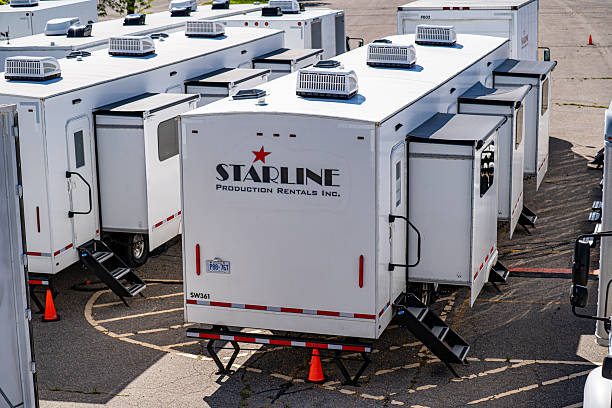
If you go with a trailer, plan the hookups before you sign anything. A trailer isn’t magic. It needs electricity for lights, fans and air conditioning, and water for the sinks and flushing toilets. Some trailers plug into your site’s power and a regular garden hose. Others arrive with a generator and an onboard fresh water tank. Both work. You just need to know which one you’re getting.
Power first. Air conditioning draws a lot, and a regular outlet may not handle it, so ask what the trailer needs and whether your fairground can supply it. If not, you need a generator, and generators are loud, so think about where it sits relative to the grandstand and the crowd. Somebody has to watch the fuel. Keep generators away from tents, hay and animals, and never run one in an enclosed space.
Water works the same way. A spigot nearby makes life easy. Without one, the onboard tank might cover a few hundred uses, but a big crowd drains it faster than you’d think. Ask how many guests a full tank covers and who refills it. If your site has no sewer, ask about waste holding tanks too, since whatever goes into a trailer has to land somewhere, and never dump wastewater on the ground or into a storm drain. Standard units and accessible units are self contained and don’t need any of this, which is exactly why they pair so well with a trailer.
Placement, Ground and Gulf Coast Weather
Placement sounds boring until it goes wrong, and for accessibility it decides whether a unit works at all.
Start with the ground. Everything needs flat, firm, stable footing. Not a slope, and not soggy grass after rain, which Houston gets plenty of. Accessible units need that even more, because wheelchairs, walkers and scooters need a smooth, stable surface. If the only way in is soft dirt, loose gravel, a curb or a cattle guard, you’ve defeated the purpose. Think about the whole route from the parking area or the grandstand, not just the unit. Is the path wide enough? Smooth? Free of cords, hoses and cable covers? Put the accessible unit near the main walkway with room to maneuver at the door, and don’t hide it behind a barn.
Trailers need even more room. Some run twenty feet or longer, plus space for steps or a ramp, plus clearance for the tow vehicle to back in and unhook. Soft soil after rain is a real problem, since a heavy trailer can sink or get stuck. Gravel, pavement or compacted dirt works best. Walk the route the truck will take, and watch for low branches, overhead wires and tight gates. Send photos to the company ahead of time.
Keep everything close enough that people will use it, but not right beside the food. Nobody wants to eat a corn dog thirty feet from a toilet. Keep units away from animals, open flames and cooking gear. If the event runs past dark, add lighting. Weather matters on the Gulf Coast, so pick higher ground and ask what the company does when a storm is coming.
Rules, Paperwork and Questions to Ask Before You Pay
Skipping this part costs more than reading it. Cities and counties often have sanitation requirements for public events, and toilet counts, accessible ones included, can be tied to expected attendance. You may need a special event permit, with your sanitation plan as part of approval. Your rental company probably knows the local routine, but call the city or county yourself. Don’t just assume.
Paperwork matters on the vendor side. Many venues, fair boards and sponsors want a certificate of insurance before any vendor shows up. Buck Waste carries one million dollars in general liability and pollution insurance and can send certificates. It’s also TCEQ registered, number 26592, which is worth asking any waste company for, since only licensed haulers should handle waste. If they can’t give you a number, walk.
Timing matters too. Around Greater Houston, same day delivery is often possible for standard units ordered by noon, though availability depends on the day, and weekend delivery usually needs notice by Thursday. Buck Waste’s office runs Monday through Friday, eight to four thirty, with emergency only service on weekends and after hours. Trailers are scarce compared to standard units, so book weeks ahead, especially in fall fair season and spring festival season.
Then ask blunt questions. Does the trailer have a ramp, wider doors and handrails, or only steps? Don’t assume a big trailer is accessible. Does it bring a generator or need site power? How big are the water and waste tanks? Who services it, and how often? Buck Waste says its own trained technicians handle servicing, never subcontractors. What happens if something breaks mid event? Read reviews, especially the three and four star ones, and trust your gut. A vague quote usually means a vague company.
Conclusion
Planning ahead is most of it. Know your crowd, decide who needs comfort and who needs access, sort out power, water and waste for any trailer, and put everything on solid ground with a clear route to the door. Do that and portable restroom trailer rental becomes one of the nicer parts of your fair or rodeo instead of a gamble. And please don’t treat accessibility as an afterthought. ADA porta potty rental costs far less than watching a guest sit helplessly in front of a set of steps, and it protects your guests, your volunteers and you. Don’t overthink it. Don’t wing it either. A little effort now saves a lot of grief later.
FAQs
How much does portable restroom trailer rental cost?
It depends on trailer size, number of stalls, rental length, season and delivery distance, and it costs more than standard units. Ask for an itemized quote that includes delivery, setup, power and water.
What is ADA porta potty rental?
It’s the rental of a larger, wheelchair accessible portable toilet with ground level entry and a roomy interior, so people using mobility devices can enter and use it comfortably.
Are restroom trailers ADA accessible?
Some models have ramps, wider doors and handrails, but not all do, and some have entry steps. Ask directly before booking, and add a dedicated accessible unit if you’re unsure.
How many accessible units do I need for my event?
It depends on crowd size and local requirements. Buck Waste’s calculator always includes at least one ADA unit, and large events may need several in different locations.
Do restroom trailers need power and water hookups?
Yes. They need electricity for lights and air conditioning, and water for sinks and flushing toilets. Some bring a generator and onboard tank, while others connect to your site.
How far ahead should I book a restroom trailer?
Several weeks is safest, longer for peak wedding, fair and festival seasons. Trailers are limited, so last minute bookings are difficult.
Where should I place an accessible portable toilet?
On flat, firm, level ground near the main walkway, with a smooth, wide route and room to maneuver at the door. Avoid mud, loose gravel, slopes and tight spots.