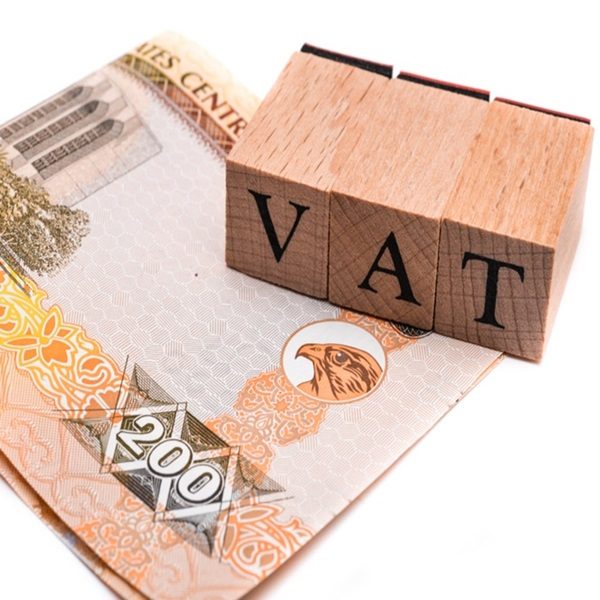
Businesses operating in Sharjah often work with customers, suppliers, branches and service providers across different Emirates. As operations expand, VAT management can become more demanding, particularly when a business also has activities in Dubai or handles digital-asset transactions.
A professional vat consultant Sharjah can help businesses establish consistent processes for registration, transaction classification, documentation, VAT returns and compliance monitoring.
Financial Cube provides VAT, Corporate Tax and accounting services for businesses across the UAE. Its integrated approach helps connect VAT compliance with bookkeeping, financial reporting and broader tax requirements.
Why Is Professional VAT Support Important in Sharjah?
VAT compliance is not limited to submitting a return. Businesses must maintain appropriate records, apply VAT treatment correctly and ensure that their accounting information supports their reported figures.
For UAE-resident businesses, VAT registration is generally mandatory when taxable supplies and imports exceed AED 375,000 over the previous 12 months or are expected to exceed that amount during the next 30 days. Voluntary registration is available above AED 187,500 subject to the applicable conditions.
A professional advisor can help businesses monitor these requirements as their turnover changes.
What Can a VAT Consultant Sharjah Help With?
A business may require support at different stages of its VAT lifecycle.
A professional VAT consultant can assist with:
- VAT registration
- VAT deregistration considerations
- VAT return preparation
- Output VAT reviews
- Input VAT reviews
- Tax invoice checks
- Credit-note reviews
- Transaction classification
- VAT reconciliation
- Record-keeping procedures
- Compliance reviews
- FTA correspondence
The right scope depends on the company’s size, activities, transaction volume and existing accounting controls.
How Does Multi-Emirate Business Activity Affect VAT Management?
A business may have its main operation in Sharjah while maintaining customers, suppliers or branches in Dubai and other Emirates.
This can create practical challenges if different teams use different accounting procedures.
For example, businesses should maintain consistency in:
| Area | Recommended Control |
|---|---|
| Sales invoices | Standardized VAT treatment |
| Purchase records | Consistent input-tax review |
| Branch accounting | Coordinated reporting |
| Credit notes | Documented approval process |
| VAT returns | Reconciliation with accounting |
| Customer records | Accurate tax information |
| Supplier records | Proper invoice verification |
Branches do not generally require separate VAT registration where they form part of the same registered entity; the FTA states that branches are included under the parent company’s VAT registration and covered by a single VAT return.
This makes centralized VAT controls particularly useful for businesses with multiple locations.
When Should Businesses Work With VAT Consultants in Dubai?
Sharjah businesses may also need professional support from vat consultants in dubai when they operate commercially across both Emirates.
This can be useful when a company:
- has customers in multiple Emirates
- maintains Dubai operations
- purchases from Dubai suppliers
- operates several branches
- has complex service arrangements
- manages high transaction volumes
- needs consistent VAT procedures
The objective is not to create separate tax systems for every location. Instead, businesses should develop a coordinated framework that reflects their legal structure and actual activities.
What Makes the Best VAT Consultants Dubai Businesses Can Choose?
Searching for the best vat consultants dubai should involve more than comparing service descriptions.
Businesses should evaluate whether an advisor offers:
UAE VAT knowledge
The consultant should understand current UAE VAT legislation, FTA procedures and relevant administrative requirements.
Accounting expertise
VAT depends heavily on accounting data. A consultant should be able to understand how VAT interacts with ledgers, invoices and financial reports.
Practical communication
Tax advice should be understandable to management and accounting teams.
Compliance monitoring
A strong advisor should help identify upcoming requirements instead of only responding after problems occur.
Technology awareness
Modern businesses may use cloud accounting, e-commerce platforms, payment gateways and digital-asset exchanges. VAT procedures should be capable of working with relevant financial systems.
Broader tax knowledge
Businesses increasingly need VAT and Corporate Tax information to be considered together.
Why Is VAT Reconciliation So Important?
A VAT return should not be treated as an isolated document.
Businesses should compare VAT information against their accounting records before filing.
A practical reconciliation can compare:
Sales Ledger → Purchase Ledger → VAT Accounts → General Ledger → VAT Return
Differences should be investigated and documented.
Common causes can include:
- incorrect VAT coding
- duplicate entries
- missing invoices
- incorrect credit notes
- timing differences
- accounting adjustments
- incorrect treatment of specific transactions
Regular reconciliation can make VAT reporting more reliable and can also improve the quality of the underlying financial records.
How Should Businesses Manage VAT Documentation?
Good documentation is an important part of tax control.
Businesses should establish procedures for collecting and organizing:
- tax invoices
- purchase invoices
- sales invoices
- credit notes
- contracts
- customs documentation
- import records
- export evidence
- payment records
- accounting schedules
The FTA’s current VAT registration service also identifies supporting documentation such as invoices, purchase orders, contracts and other evidence among the documents that may be required for registration applications.
A structured document-management system can therefore support both routine compliance and potential future reviews.
What Should Businesses Know About 2026 VAT Developments?
UAE VAT requirements continue to evolve.
The FTA’s current VAT legislation database lists several 2026 developments, including a new Executive Regulation and decisions concerning input-tax recovery on employee expenses and verification of the validity and integrity of supplies. It also lists a directive covering the method of converting the value of digital currencies into UAE dirham for VAT purposes.
This is especially relevant for businesses with unusual transaction types or digital-asset activities.
Companies should periodically review whether new legislation or administrative guidance affects their existing procedures.
Why Are Crypto Tax Consultants Relevant to UAE Businesses?
Digital assets can introduce additional accounting and tax considerations.
Businesses involved in cryptocurrency may need to maintain records covering:
- purchase and sale transactions
- digital-asset payments
- exchange activity
- wallet transfers
- transaction fees
- conversion values
- business income
- supporting transaction evidence
Crypto tax consultants can assist businesses with organizing these records and assessing the potential tax implications based on the nature of their activities.
Digital-asset VAT treatment also deserves careful attention. The FTA’s 2026 VAT legislation listings include Directive No. 3 of 2026 concerning the method of converting digital currencies into UAE dirham for VAT purposes.
For businesses involved in digital assets, professional review can help ensure that accounting and tax records remain connected.
How Can a VAT Consultant Help With Digital Transactions?
Digital businesses often have large transaction volumes and automated payment systems.
A VAT consultant can help establish controls around:
- Transaction identification
- VAT classification
- Invoice generation
- Accounting integration
- Reconciliation
- Documentation
- Reporting
This can be particularly important when transactions originate from different platforms.
The more complex the transaction flow becomes, the more important it is to have clear procedures for determining how transactions enter the accounting and VAT systems.
Why Should VAT and Corporate Tax Be Managed Together?
VAT and Corporate Tax remain separate taxes. The FTA confirms that Corporate Tax does not replace VAT and that both continue to apply in the UAE.
However, the accounting information used to manage both taxes often overlaps.
For example:
- revenue affects accounting and potentially both tax systems
- expenses affect financial statements and tax analysis
- invoices support VAT and accounting records
- transaction classifications influence reporting
- reconciliations improve the reliability of financial information
A coordinated approach can therefore reduce duplicated work and improve consistency.
A Practical VAT Control Framework for Sharjah Businesses
Businesses can establish a simple five-stage process.
1. Record
Capture transactions accurately and promptly.
2. Classify
Determine the appropriate VAT treatment based on the transaction’s facts.
3. Document
Maintain invoices, contracts and other supporting evidence.
4. Reconcile
Compare accounting records with VAT reports before filing.
5. Review
Conduct periodic compliance checks and update procedures when tax rules change.
This framework can be applied monthly, quarterly or according to the company’s transaction volume and VAT filing requirements.
When Should a Business Consider Professional VAT Support?
Professional assistance can be particularly useful when:
- the business is approaching the VAT registration threshold
- the company has recently registered for VAT
- operations are expanding into another Emirate
- VAT returns contain unexplained differences
- accounting systems have recently changed
- transaction volumes have increased
- the company handles digital assets
- management wants an independent compliance review
The FTA currently provides VAT registration through the EmaraTax platform, with completed applications generally processed within 20 business days.
Businesses should therefore avoid leaving registration or compliance preparation until the last moment.
How Financial Cube Supports UAE Businesses
Financial Cube provides professional VAT and accounting services for businesses across Sharjah, Dubai, Abu Dhabi and Al Ain.
Its services include:
- VAT consultancy
- Corporate Tax consulting
- Tax Agent services
- Accounting and bookkeeping
- Audit and assurance
- VAT refund support
- Digital-asset tax advisory
- Tax compliance assistance
This integrated approach allows businesses to connect VAT processes with accounting and wider tax management.
Financial Cube focuses on practical solutions, organized records and professional guidance tailored to the client’s business activities.
Frequently Asked Questions
What does a VAT consultant in Sharjah do?
A VAT consultant can assist with registration, VAT returns, transaction reviews, tax invoices, input and output VAT, reconciliations, documentation and ongoing compliance.
Can Sharjah businesses work with VAT consultants in Dubai?
Yes. Businesses can engage professional VAT advisors based on their needs and operating structure. The important consideration is the advisor’s UAE VAT expertise and ability to support the business effectively.
What is the mandatory VAT registration threshold in the UAE?
For UAE-resident businesses, the mandatory threshold is AED 375,000 of taxable supplies and imports over the previous 12 months or expected during the next 30 days.
Why are crypto tax consultants useful?
They can help businesses organize digital-asset transaction records and evaluate the accounting and tax implications associated with cryptocurrency activities.
How can I identify the best VAT consultants in Dubai?
Look for UAE VAT expertise, accounting knowledge, clear communication, strong documentation procedures, practical compliance support and the ability to keep up with regulatory developments.
Conclusion
Effective VAT management requires more than preparing periodic returns. Businesses need reliable accounting records, accurate transaction classification, proper documentation and regular reconciliation.
For companies operating in Sharjah and across multiple Emirates, a professional vat consultant Sharjah can help create a consistent framework for managing these responsibilities.
Businesses can also benefit from experienced vat consultants in dubai, while companies involved in digital assets may require specialist crypto tax consultants.
Financial Cube brings VAT, accounting and broader tax expertise together to help UAE businesses develop organized and sustainable compliance processes.
Financial Cube Contact Information
Financial Cube for Accounting
Tax Agency No.: 30004659
Tax Agent No.: 20036018
Email: m.ayyad@fcaest.com
Phone: 0502703095 | 03-7685294 | 02-6420480 | 04-3243236
Al Ain Head Office:
Office No. 15, 1st Floor, Al Mashreq Supermarket Building, Al Jimi, Al Ain, UAE
Abu Dhabi Office:
Office No. 1627, Cubes Business Center, 16th Floor, Al Khazna Tower, Najda Street, Abu Dhabi, UAE
Dubai Office:
Level 41, Servcorp Emirates Tower, Sheikh Zayed Road, Dubai, UAE
Sharjah Office:
C/o Cassol – Creative Assessment Solutions, Buheira Building-102, 1st Floor, Al Reem Plaza Tower, Corniche Street, Sharjah, UAE