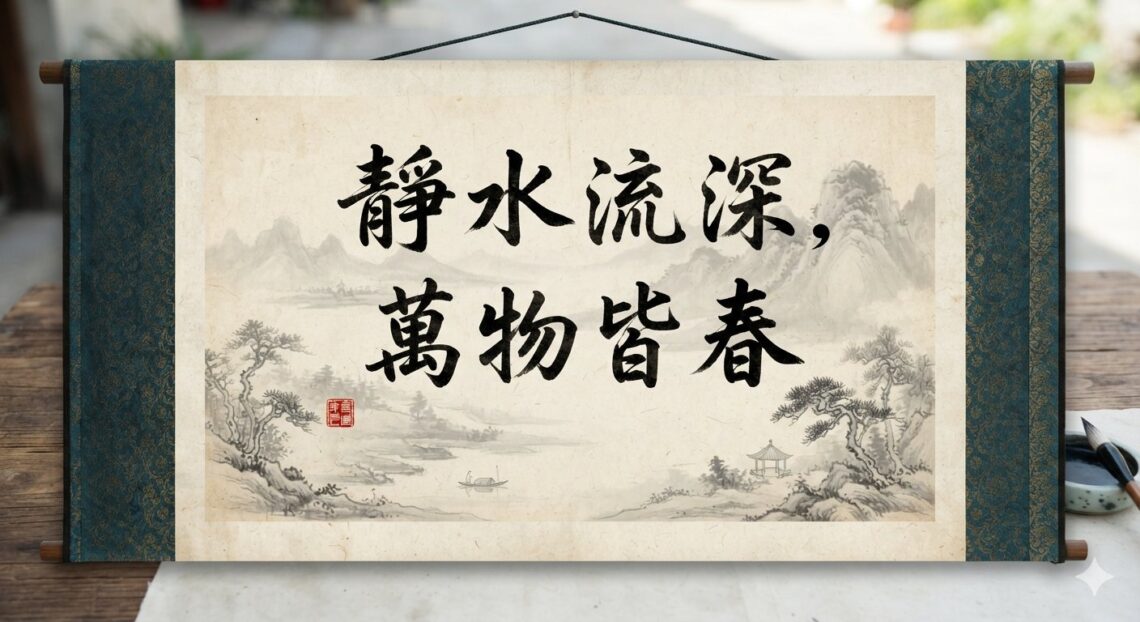
Learn Chinese characters with 100+ popular beginner hanzi, pinyin, meanings, and common Chinese greetings. Includes tables, study tips, and a 4-week plan.
The best way to learn Chinese characters as a beginner is to start with about 100 high-frequency characters, grouped by theme: greetings, numbers, family, nature, and everyday verbs. Learn each one with its pinyin, meaning, and a short example word, then review daily. This guide lists 105 characters and the common Chinese greetings they build.
Why Start With 100 Characters?
Chinese has thousands of characters, but you don’t need them all to begin. A small core appears constantly in signs, menus, messages, and textbooks, so every character you learn pays off quickly.
Around 100 characters is enough to read simple phrases, spot patterns, and build confidence. It also gives you the building blocks for the most common Chinese greetings, which is where most learners want to start.
How Chinese Characters Work (In 60 Seconds)
Three ideas make the system far less intimidating.
- Strokes: Every character is built from a small set of strokes written in a set order. The general rule is left to right, top to bottom, and horizontal before vertical.
- Radicals: Many characters share a component that hints at meaning. The person radical (亻) appears in 你, 他, and 们. The speech radical (讠) appears in 请, 谢, 说, and 谁. The mouth radical (口) appears in 吃, 喝, and 吗.
- Pinyin: This is the Roman-letter system that shows pronunciation, including the four tones plus the neutral tone. Learn it alongside characters, not after.
Most characters combine a meaning part with a sound part. For example, 妈 (mā, mom) pairs the female radical 女 with 马 (mǎ), which hints at the sound.
Simplified vs. traditional: The characters below are simplified, the standard in mainland China and Singapore. Taiwan and Hong Kong commonly use traditional forms, and some characters look different (for example, 们 is 們 and 请 is 請). Pick the set that matches your goals.
105 Popular Chinese Characters for Beginners
The list is grouped by theme because related characters are easier to remember together.
1. Greetings and Everyday Basics (21 characters)
| Character | Pinyin | Meaning |
|---|---|---|
| 你 | nǐ | you |
| 好 | hǎo | good |
| 您 | nín | you (polite) |
| 我 | wǒ | I, me |
| 他 | tā | he, him |
| 她 | tā | she, her |
| 们 | men | plural marker |
| 是 | shì | to be |
| 不 | bù | no, not |
| 有 | yǒu | to have |
| 没 | méi | not have |
| 谢 | xiè | to thank |
| 请 | qǐng | please, to invite |
| 对 | duì | correct, towards |
| 吗 | ma | question particle |
| 的 | de | possessive particle |
| 再 | zài | again |
| 见 | jiàn | to see, to meet |
| 早 | zǎo | early, morning |
| 晚 | wǎn | evening, late |
| 安 | ān | peaceful, safe |
Example words: 你们好 (nǐmen hǎo, hello everyone), 没有 (méiyǒu, don’t have), 我的 (wǒ de, my).
2. Numbers, Dates, and Time (22 characters)
| Character | Pinyin | Meaning |
|---|---|---|
| 一 | yī | one |
| 二 | èr | two |
| 三 | sān | three |
| 四 | sì | four |
| 五 | wǔ | five |
| 六 | liù | six |
| 七 | qī | seven |
| 八 | bā | eight |
| 九 | jiǔ | nine |
| 十 | shí | ten |
| 零 | líng | zero |
| 百 | bǎi | hundred |
| 千 | qiān | thousand |
| 年 | nián | year |
| 月 | yuè | month, moon |
| 日 | rì | day, sun |
| 天 | tiān | day, sky |
| 今 | jīn | today, present |
| 明 | míng | bright, tomorrow |
| 时 | shí | time, hour |
| 分 | fēn | minute, to divide |
| 点 | diǎn | o’clock, dot |
Example words: 今天 (jīntiān, today), 明天 (míngtiān, tomorrow), 十点 (shí diǎn, 10 o’clock), 三月五日 (sān yuè wǔ rì, March 5).
3. People and Family (16 characters)
| Character | Pinyin | Meaning |
|---|---|---|
| 人 | rén | person |
| 大 | dà | big |
| 小 | xiǎo | small |
| 女 | nǚ | female |
| 男 | nán | male |
| 子 | zǐ | child, son |
| 母 | mǔ | mother |
| 父 | fù | father |
| 妈 | mā | mom |
| 爸 | bà | dad |
| 哥 | gē | older brother |
| 姐 | jiě | older sister |
| 弟 | dì | younger brother |
| 妹 | mèi | younger sister |
| 友 | yǒu | friend |
| 家 | jiā | home, family |
Example words: 妈妈 (māma, mom), 家人 (jiārén, family members), 好友 (hǎoyǒu, close friend).
4. Nature and Basic Radicals (17 characters)
| Character | Pinyin | Meaning |
|---|---|---|
| 水 | shuǐ | water |
| 火 | huǒ | fire |
| 木 | mù | wood, tree |
| 山 | shān | mountain |
| 土 | tǔ | earth, soil |
| 金 | jīn | gold, metal |
| 口 | kǒu | mouth |
| 手 | shǒu | hand |
| 目 | mù | eye |
| 心 | xīn | heart |
| 雨 | yǔ | rain |
| 风 | fēng | wind |
| 花 | huā | flower |
| 田 | tián | field |
| 门 | mén | door |
| 马 | mǎ | horse |
| 鱼 | yú | fish |
Example words: 大雨 (dàyǔ, heavy rain), 火山 (huǒshān, volcano), 木门 (mùmén, wooden door).
5. Common Verbs, Question Words, and Language (29 characters)
| Character | Pinyin | Meaning |
|---|---|---|
| 来 | lái | to come |
| 去 | qù | to go |
| 吃 | chī | to eat |
| 喝 | hē | to drink |
| 看 | kàn | to look, to watch |
| 说 | shuō | to speak |
| 听 | tīng | to listen |
| 读 | dú | to read |
| 写 | xiě | to write |
| 学 | xué | to study |
| 爱 | ài | to love |
| 想 | xiǎng | to think, to want |
| 要 | yào | to want, to need |
| 会 | huì | can, to know how to |
| 能 | néng | to be able to |
| 做 | zuò | to do, to make |
| 买 | mǎi | to buy |
| 住 | zhù | to live, to stay |
| 走 | zǒu | to walk |
| 在 | zài | at, in, to be located |
| 这 | zhè | this |
| 那 | nà | that |
| 什 | shén | what (in 什么) |
| 么 | me | suffix in 什么 |
| 谁 | shéi | who |
| 中 | zhōng | middle, China |
| 国 | guó | country |
| 文 | wén | writing, language |
| 语 | yǔ | language, speech |
Example words: 中国 (Zhōngguó, China), 中文 (Zhōngwén, the Chinese language), 喝水 (hē shuǐ, drink water), 什么 (shénme, what), 学中文 (xué Zhōngwén, study Chinese).
Common Chinese Greetings You Can Build
Common Chinese Greetings. Once you know a handful of the characters above, you can read and say the most useful greetings.
| Chinese | Pinyin | Meaning | When to use it |
|---|---|---|---|
| 你好 | nǐ hǎo | Hello | Any situation |
| 您好 | nín hǎo | Hello (polite) | Elders, customers, formal settings |
| 早上好 | zǎoshang hǎo | Good morning | Morning |
| 晚上好 | wǎnshang hǎo | Good evening | Evening |
| 晚安 | wǎn’ān | Good night | Before sleep |
| 谢谢 | xièxie | Thank you | Everyday thanks |
| 不客气 | bú kèqi | You’re welcome | Replying to thanks |
| 对不起 | duìbuqǐ | Sorry | Apologies |
| 没关系 | méi guānxi | It’s okay | Replying to an apology |
| 请问 | qǐngwèn | Excuse me, may I ask | Starting a question |
| 再见 | zàijiàn | Goodbye | Leaving |
| 明天见 | míngtiān jiàn | See you tomorrow | Casual farewell |
One detail worth knowing: 不 is normally bù, but it changes to bú before a fourth-tone syllable, as in 不客气 (bú kèqi) and 不是 (bú shì).
How to Learn Chinese Characters Effectively
- Learn pinyin and tones first. Even a week of pronunciation practice makes every character easier to remember.
- Study in themed groups. Related characters reinforce each other, as in the tables above.
- Notice radicals. Ask what each part contributes. 好 is 女 plus 子, a woman with a child. 明 is 日 plus 月, sun and moon together.
- Learn characters inside words. 谢 sticks better as 谢谢 than as a lone symbol.
- Write each one a few times by hand. Following stroke order builds muscle memory, even if you mostly type later.
- Use spaced repetition. Flashcard apps resurface characters just before you forget them.
- Read something simple every day. Even short signs, captions, or messages turn recognition into real reading.
A Simple 4-Week Plan
About four new characters a day is a realistic pace for most adults. Adjust it to your schedule.
| Week | Focus | Goal |
|---|---|---|
| 1 | Greetings and basics | Read and say all the greetings above |
| 2 | Numbers, dates, time | Write today’s date and tell the time |
| 3 | People, family, nature | Introduce your family in simple phrases |
| 4 | Verbs and language words | Build five short sentences, then review everything |
Common Beginner Mistakes to Avoid
- Memorizing characters without pinyin or tones. You’ll recognize them but be unable to say them.
- Mixing up look-alikes. 日 (rì) and 目 (mù) differ by one stroke. 再 and 在 both sound like zài but mean different things.
- Skipping stroke order. Wrong order leads to messy, hard-to-read handwriting.
- Trying to learn too many at once. A few characters reviewed daily beat a big list crammed once.
- Never using them. Text a friend, label objects at home, or read simple captions.
Frequently Asked Questions
How many Chinese characters should a beginner learn first?
Start with roughly 100 high-frequency characters, then expand toward the beginner levels of the official HSK exam. HSK word lists have been revised over time, so check the current list from the official test organization.
How long does it take to learn 100 Chinese characters?
At about four new characters a day with regular review, many learners manage it in four to five weeks. Your pace will vary with study time and prior experience.
Should I learn simplified or traditional characters?
Choose by purpose. Simplified is standard in mainland China and Singapore. Traditional is common in Taiwan and Hong Kong. Many characters are identical in both.
Do I need to learn pinyin before characters?
It isn’t mandatory, but it helps a great deal. Pinyin shows you how to pronounce each character and lets you type Chinese on a phone or computer.
What is the easiest way to remember Chinese characters?
Combine radicals, short memory stories, words in context, and spaced repetition. Handwriting each character a few times also helps.
Do I need to write characters by hand?
Not necessarily, since most daily use is typing. Still, writing the first few hundred characters by hand improves recognition and memory.
How do you say hello in Chinese?
Say 你好 (nǐ hǎo). Use 您好 (nín hǎo) for a more polite or formal greeting.
What is the difference between 你 and 您?
Both mean “you.” 您 is the respectful form, used for elders, teachers, and customers. 你 is standard among peers and in casual settings.
Can I read Chinese after learning 100 characters?
You can read simple signs, greetings, numbers, and short phrases. Books and news articles need a much larger vocabulary, but 100 characters is a solid start.
Conclusion
Learning Chinese characters doesn’t have to feel overwhelming. Start with these 105 popular characters, study them in themed groups, pair each with pinyin, and use them in real words and greetings. Within a month, you can read and say the most common Chinese greetings with confidence. Keep reviewing, keep reading small pieces of real Chinese, and add new characters at a steady pace.