Is IB Math AA HL Hard?
Is IB Math AA HL hard, or does it simply require a different way of thinking about mathematics? If you are preparing for the International Baccalaureate Diploma Programme, this is a common question, especially if you enjoy mathematics but find unfamiliar problems difficult.
IB Mathematics: Analysis and Approaches Higher Level (AA HL) is a demanding course that focuses on algebra, functions, calculus, mathematical reasoning and problem-solving. It goes beyond memorising formulas. Students must understand why a method works and how to apply it to questions they may not have seen before.
The good news is that you do not need to be a mathematical genius to succeed. Strong foundations, regular practice and a clear study plan can make the course much more manageable. An experienced ib math tutor can also help you identify knowledge gaps and build confidence with difficult topics.
The key is to understand what makes the course challenging and prepare for those challenges early.
Why Do Students Find IB Math AA HL Challenging?
IB Math AA HL is difficult for several reasons. The challenge is not only the number of topics but also the depth of understanding needed to solve problems independently.
1. It focuses on understanding, not memorisation
Knowing a formula is useful, but you must also recognise when to apply it.
For example, a question about a function may require you to use algebra, understand its graph and explain what the result means. You may need to connect several mathematical ideas instead of following one familiar procedure.
2. Topics build on one another
Mathematics is cumulative. Weak algebra skills can create problems when you begin functions, logarithms or calculus.
Suppose you understand the basic idea of differentiation but frequently make mistakes when rearranging equations. You may know the correct calculus method and still reach the wrong answer.
This is why reviewing earlier concepts is an important part of preparation.
3. Higher Level requires greater depth
The IB recommends approximately 240 teaching hours for Higher Level subjects, compared with 150 hours for Standard Level. HL courses cover greater depth and breadth.
Students therefore need to balance learning new concepts with revision, timed practice and their other Diploma Programme responsibilities.
4. Unfamiliar questions can be intimidating
Some questions combine concepts in unexpected ways. You might know each method separately but struggle to decide which one to use first.
The solution is to practise different question styles, explain your reasoning and review mistakes rather than repeatedly solving only familiar examples.
What Prerequisites Do You Need for IB Math AA HL?
You do not need to know the entire IB syllabus before starting the course. However, you should have a solid understanding of the mathematical concepts you studied before entering the Diploma Programme.
Here are the most important skills to revise.
1. Algebra and equations
Algebra is one of the most important foundations for IB Math AA HL. You should feel comfortable with:
- Expanding and factorising expressions.
- Solving linear and quadratic equations.
- Working with inequalities and simultaneous equations.
- Using indices, surds and logarithms.
- Rearranging complicated formulas.
Practical tip: If you regularly struggle to simplify expressions, spend extra time on algebra before moving to advanced calculus.
2. Functions and graphs
You should understand function notation, domain and range, and how to interpret graphs.
For example, you may need to understand how changing an equation affects the shape or position of its graph. These skills become particularly useful when studying transformations, composite functions and calculus.
3. Trigonometry
Revise angles, radians, trigonometric ratios, identities and graphs of sine, cosine and tangent.
A weak understanding of trigonometry can make later problems involving equations, functions and calculus more difficult.
4. Exponents and logarithms
Exponential and logarithmic functions appear in many mathematical problems. Make sure you understand their properties, how to solve equations involving them and how to connect their algebraic forms with graphs.
Remember that these are recommended preparation skills, not a universal formal entry requirement. Check your school’s guidance and the syllabus applicable to your examination session.
Which IB Math AA HL Topics Are the Most Challenging?
The difficulty of each topic depends on your strengths. However, several areas often require additional practice because they involve abstract thinking or multiple steps.
1. Calculus
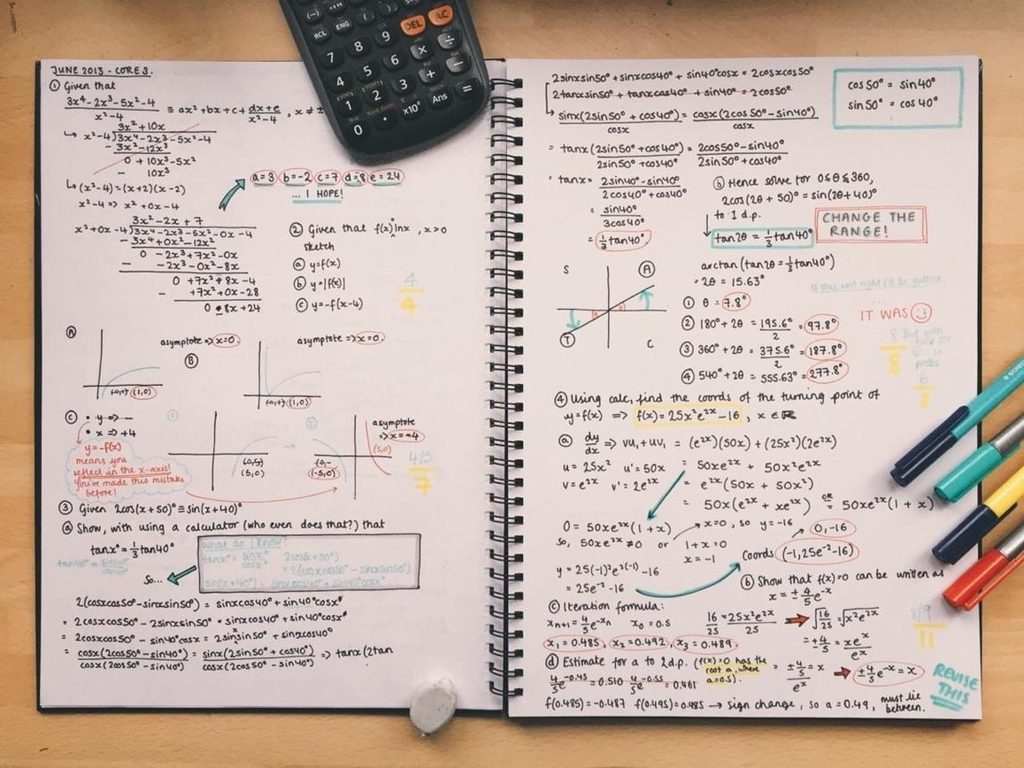
Differentiation and integration require you to understand both procedures and their meaning. You may need to find a derivative, interpret a gradient or solve an optimisation problem.
How to prepare: Learn the basic rules first, then practise applications and mixed questions.
2. Functions and advanced algebra
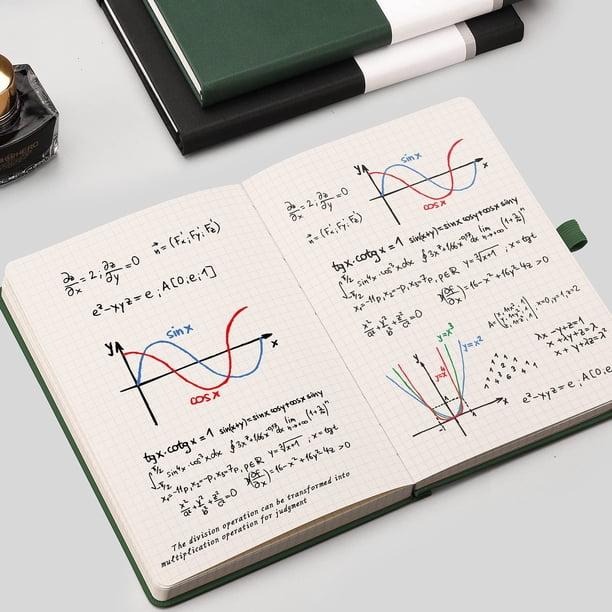
Questions can involve several connected concepts, such as logarithms, transformations, inverse functions and equations.
How to prepare: Practise explaining each step and identifying how different functions relate to one another.
3. Geometry and trigonometry
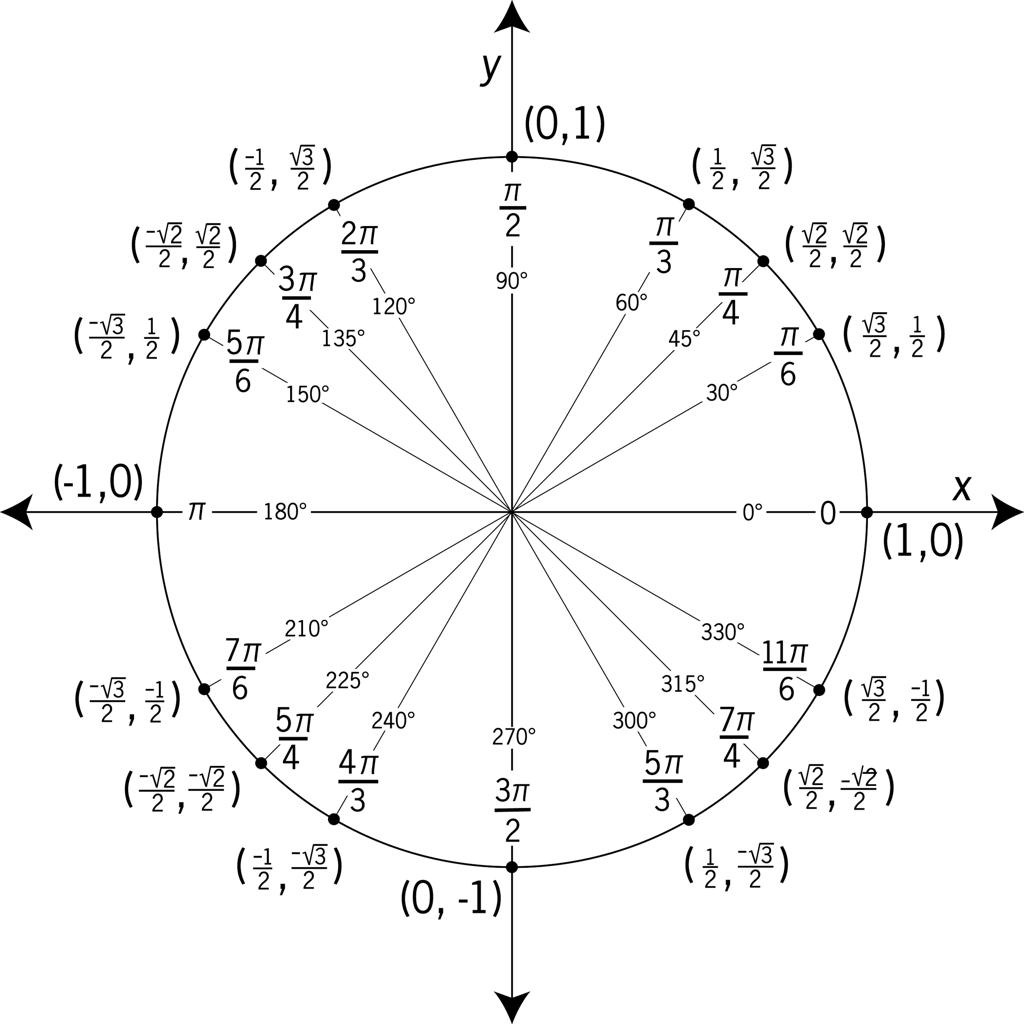
Students may need to combine identities, equations, angles and geometric relationships to solve unfamiliar questions.
How to prepare: Memorise essential relationships, understand when to apply them and practise questions with diagrams.
4. Vectors and three-dimensional geometry
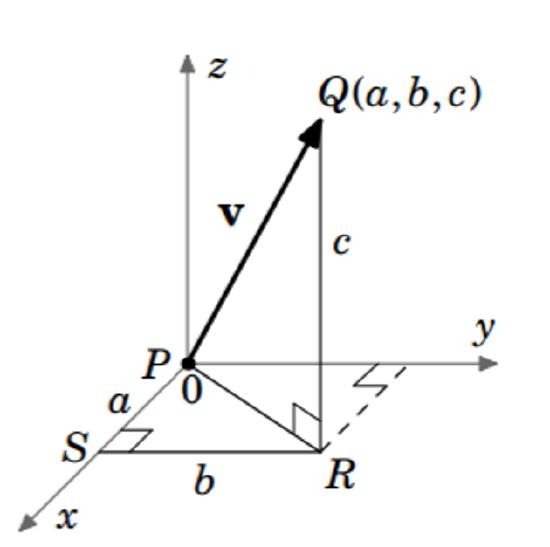
Visualising directions, lines, planes and relationships in three dimensions can be difficult at first.
How to prepare: Draw diagrams, label vectors clearly and practise breaking longer problems into smaller steps.
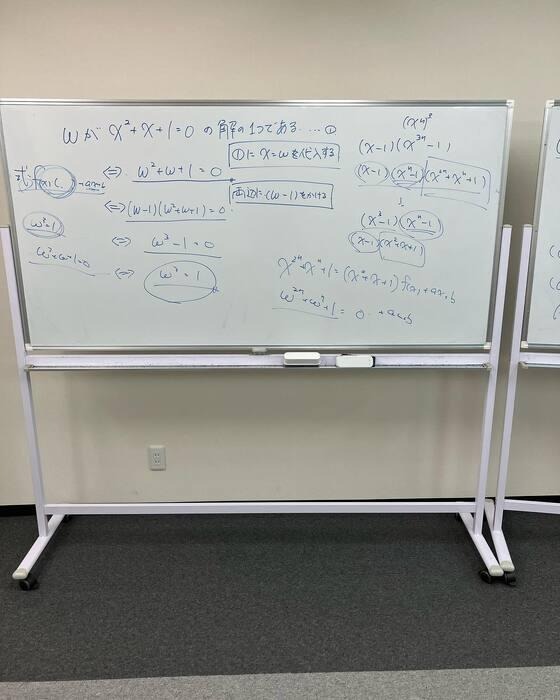
5. Mathematical reasoning and extended problems
Higher-level questions can require several methods in one solution. Getting the correct numerical answer is not always enough; your reasoning must also be clear.
How to prepare: Write complete solutions, justify important steps and practise unfamiliar questions under timed conditions.
These topics reflect the main areas of the course, including number and algebra, functions, geometry and trigonometry, statistics and probability, and calculus.
How Is IB Math AA HL Assessed?
Understanding the assessment structure helps you plan your preparation.
For the current IB Math AA course, students typically prepare for three external examination papers and a mathematical exploration, which forms the Internal Assessment (IA). The exact requirements should always be checked against the official guide for your examination session.
| Assessment | Main focus | Preparation strategy |
| Paper 1 | Problem-solving without a calculator | Strengthen algebra and written methods |
| Paper 2 | Problem-solving with a calculator | Practise calculator skills and interpretation |
| Paper 3 (HL) | Extended, connected problem-solving | Develop reasoning and multi-step solutions |
| Mathematical exploration (IA) | Independent mathematical investigation | Choose a suitable question and explain your methods clearly |
The IB’s curriculum and assessment requirements are subject to updates. A revised Mathematics: Analysis and Approaches course is scheduled for first teaching in August 2027, with first assessment in May 2029. Students should use the subject guide that matches their examination session.
One important lesson is that you should not prepare for every paper in the same way. Timed algebra practice, calculator-based questions and extended problem-solving each require different skills.
How to Prepare for IB Math AA HL Effectively
You do not need to study for five hours every day to make progress. What matters most is having a consistent routine and knowing what to improve.
Step 1: Check your current level
Start by solving questions from different areas of mathematics. Identify whether your main difficulties are algebra, functions, calculus or understanding question wording.
Create three categories:
- Strong: You can solve questions independently.
- Needs practice: You understand the method but make occasional mistakes.
- Needs revision: You cannot yet explain or apply the concept.
Start with the third category and gradually work through the others.
Step 2: Build a realistic weekly timetable
A practical starting plan might look like this:
| Day | Study task |
| Monday | Revise algebra and functions |
| Tuesday | Practise calculus questions |
| Wednesday | Review trigonometry and geometry |
| Thursday | Work on statistics or probability |
| Friday | Solve mixed-topic questions |
| Saturday | Complete timed exam practice |
| Sunday | Review mistakes and revise weak areas |
Adjust this plan around your school schedule, other IB subjects and upcoming assessments.
Step 3: Practise actively
Reading worked solutions can help you understand a method, but it does not prove that you can apply it independently.
Use this simple process:
- Attempt the question without checking the solution.
- Identify where you become stuck.
- Review the relevant concept.
- Solve the question again without help.
- Try a similar question to check your understanding.
Keep a mistake notebook. Record the question type, the mistake you made and how you can avoid repeating it.
Step 4: Learn to use your calculator properly
Calculator skills matter, particularly for numerical calculations, graphing and checking results where technology is permitted.
Practise using your approved graphic display calculator. However, do not depend on it to replace mathematical understanding. You should know what a result represents and whether it makes sense.
Step 5: Practise past papers strategically
Past papers are useful for understanding question styles, managing time and identifying weak topics.
Begin with topic-based questions. Once you become more confident, move to complete timed papers.
After each practice session, ask yourself:
- Did I understand what the question required?
- Did I choose the correct method?
- Were my calculations accurate?
- Did I explain my reasoning clearly?
- Did I spend too much time on one question?
This review process is often more valuable than simply counting how many questions you completed.
When Should You Consider an IB Math Tutor?
Self-study can work well when you understand the concepts and can identify your mistakes. However, additional support may help if you repeatedly struggle with the same topics, cannot understand worked solutions or find it difficult to apply familiar methods to new questions.
An experienced ib math tutor can help you:
- Identify gaps in your mathematical foundations.
- Understand difficult concepts through step-by-step explanations.
- Practise questions that match your HL level.
- Review mistakes and improve problem-solving techniques.
- Develop a preparation plan around your exam date and target grade.
For example, imagine you can differentiate basic functions but struggle with optimisation questions. Instead of revising the entire calculus unit again, targeted lessons can help you understand how to translate a word problem into a mathematical model and apply differentiation correctly.
How can ib online tuition help?
With ib online tuition, students can receive individual support without travelling to a physical tutoring centre. Live lessons, shared digital whiteboards and recorded sessions can make it easier to revisit difficult concepts.
SEV7N offers IB Math AA tutoring for HL and SL students, including individual lessons, exam practice and feedback. Students can explore a free demo class to discuss their current difficulties and learning goals.
The best approach is to choose support that matches your specific syllabus, examination session and areas of difficulty.
Frequently Asked Questions
1. Is IB Math AA HL harder than Math AA SL?
Generally, yes. Higher Level covers greater depth and breadth and requires students to handle more demanding mathematical reasoning. However, the level of difficulty depends on your preparation, existing skills and learning style.
2. Can I take IB Math AA HL if I am not naturally good at maths?
Yes, provided you are prepared to work consistently and strengthen your foundations. You should be comfortable with algebra, equations, functions and trigonometry, and willing to practise challenging problems regularly.
3. How many hours should I study IB Math AA HL each week?
There is no single ideal number for every student. Start with regular study sessions during the week, review your progress and increase practice time when a topic or exam approaches. Your needs will depend on your current understanding and school workload.
4. What is the best way to prepare for IB Math AA HL Paper 3?
Practise extended questions that combine multiple concepts. Learn to identify useful relationships, organise your working and explain each step. Review complete solutions to understand how one part of a question connects to the next.
5. When should I get an IB math tutor?
Consider additional tutoring when independent study is not resolving repeated difficulties, your foundations are weak or you need structured exam preparation. Early support can give you more time to practise and build confidence before assessments.
Conclusion: Can You Succeed in IB Math AA HL?
IB Math AA HL is challenging, but it becomes more manageable when you understand the prerequisites, practise difficult topics consistently and learn from your mistakes. Strong algebra, a clear understanding of functions and regular calculus practice provide a useful foundation.
If you are struggling with unfamiliar questions, start by identifying your weakest topics and working through them systematically. Use past papers to track your progress and practise explaining your reasoning, not just finding answers.
An experienced ib math tutor can also provide targeted guidance when you need extra support. If you want a more structured approach, explore SEV7N’s IB Math AA tutoring and consider a free demo class to discuss your learning needs.