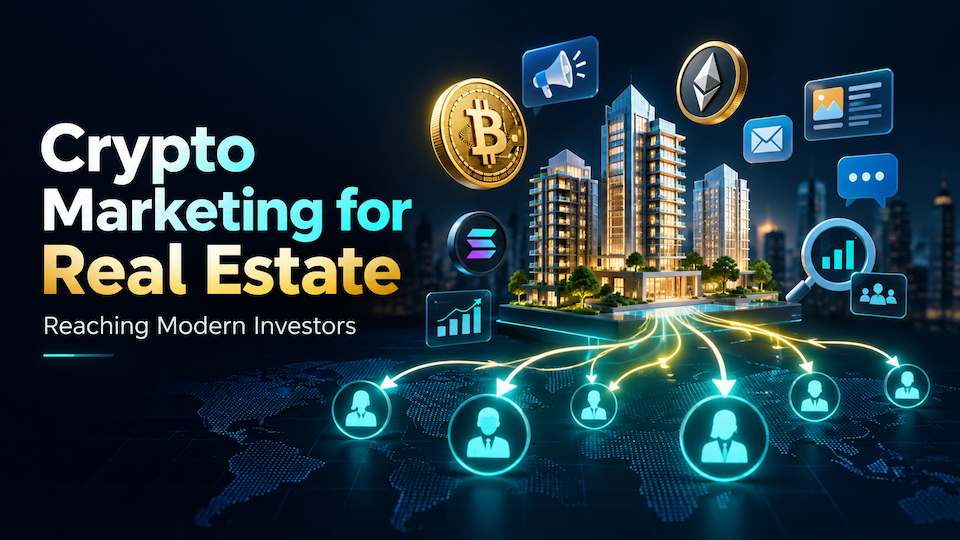
Buying property has traditionally involved lengthy paperwork, substantial capital, and multiple intermediaries. Investors often depend on property agents, established financial institutions, and local networks to discover opportunities. However, blockchain technology is introducing another way for real estate businesses to present investment opportunities to interested audiences. Crypto marketing for real estate connects property investment projects with people researching digital assets, fractional ownership, and blockchain-based financial products. Instead of relying entirely on property advertisements, businesses can use educational content, online communities, and targeted campaigns to explain their offerings.
This shift is gaining attention as real estate tokenization develops. Deloitte predicted that tokenized real estate could reach $4 trillion globally by 2035, compared with less than $300 billion in 2024. This is a forecast covering several forms of real estate exposure, not a measure of currently tradable property tokens.
For property developers and investment platforms, the opportunity extends beyond technology. It involves communicating investment structures clearly and reaching suitable investors through credible digital channels.
The Changing Landscape of Real Estate Investment
Traditional real estate marketing relies heavily on property listings, physical exhibitions, broker relationships, and location-specific advertising. These methods remain valuable, particularly when reaching homebuyers seeking properties in familiar neighborhoods. However, they may be less effective for businesses introducing blockchain-based investment models to geographically dispersed audiences.
Digital investors often begin their research differently. They compare opportunities online, read financial information, examine ownership structures, and investigate platforms before contacting a representative.
That makes educational marketing increasingly important.
A potential investor researching fractional property ownership may not understand how blockchain tokens relate to legal ownership. Without clear explanations, an otherwise interesting opportunity can appear unnecessarily complicated.
Blockchain real estate marketing addresses this information gap by connecting technical concepts with familiar property investment questions.
Instead of focusing exclusively on attractive buildings and projected returns, campaigns explain ownership rights, income distribution, transaction procedures, and potential investment risks.
The result is a more informed conversation between property businesses and prospective investors.
What Crypto Marketing Means for Real Estate Projects
Crypto marketing involves promoting blockchain-related products through digital channels that reach relevant communities, potential customers, and investors.
For real estate businesses, this can include marketing tokenized property offerings, blockchain-based investment platforms, and digital ownership management services.
Unlike conventional property advertising, these campaigns often require additional education.
Imagine seeing an advertisement offering fractional exposure to a commercial property. Your first questions might concern legal ownership, rental income, investor protection, and the ability to sell your interest.
A successful campaign answers these questions before asking you to participate.
Connecting Blockchain Technology With Property Investment
Effective campaigns combine familiar property information with accessible blockchain explanations.
For example, a project might publish property valuation details alongside information about token issuance and transfer restrictions.
Educational articles can explain how investment structures work, while product demonstrations show prospective users how to navigate a platform.
The objective isn’t to make property investment sound futuristic. It’s to explain whether blockchain technology provides meaningful benefits within a specific investment arrangement.
How Real Estate Tokenization Creates New Investment Opportunities
Real estate tokenization involves representing certain economic or ownership interests in property through blockchain-based tokens.
Depending on the structure, these tokens may represent interests in a property-owning company, investment fund, debt instrument, or another legal arrangement.
Token ownership does not automatically provide direct title to physical property.
One frequently discussed advantage is fractional participation. Instead of purchasing an entire building, eligible investors may acquire smaller interests through a properly structured offering.
Research from RWA.xyz showed approximately $226.6 million in distributed tokenized real estate value in October 2026, alongside approximately $1.34 billion in represented value.
These categories measure different forms of tokenization and should not be added together indiscriminately.
This developing market creates demand for real estate tokenization marketing that explains products accurately rather than exaggerating their benefits.
Clear communication becomes particularly important when potential investors are unfamiliar with digital wallets, blockchain transactions, and securities restrictions.
Crypto Marketing Strategies That Help Real Estate Projects Attract Investors
A successful property investment campaign needs more than impressive technology. It requires the right audience, credible information, and consistent communication.
Educational Content and Search Visibility
Search engines help prospective investors discover property-related opportunities while researching unfamiliar concepts.
Articles addressing fractional ownership, tokenized property risks, rental income distribution, and legal structures can attract relevant visitors.
Businesses seeking broader campaign support can explore Blockchain App Factory’s digital marketing solutions for blockchain businesses to understand how content, search visibility, and community engagement can work together.
Educational content should prioritize accuracy over promotional language.
Community Building and Social Media Engagement
Social platforms allow real estate projects to explain their offerings and interact with interested audiences.
LinkedIn can support professional discussions, while Telegram, Discord, and X may help blockchain-oriented communities exchange information.
Regular updates about property management, project milestones, and investment documentation can encourage informed participation.
However, community engagement should never replace formal disclosures or professional investment advice.
Building Investor Trust Through Transparent Communication
Real estate investments involve substantial financial decisions. Blockchain technology does not eliminate the underlying risks associated with property values, rental demand, construction delays, or market liquidity.
That’s why trust-based crypto marketing matters.
Projects should explain who owns the underlying property, what legal rights token holders receive, and how relevant assets are managed.
Independent valuations, audited financial information, and clear documentation can support investor evaluation.
Marketing materials should also describe transaction charges, redemption conditions, potential losses, and restrictions affecting resale.
The U.S. Securities and Exchange Commission explained in January 2026 that tokenized securities can use different structures and provide different rights to holders.
This distinction matters because an investor buying a token may not receive the same protections or rights as someone purchasing property directly.
Traditional Real Estate Marketing vs. Crypto Marketing
Both approaches can attract prospective investors, but their communication methods and audience expectations often differ.
| Marketing factor | Traditional real estate marketing | Crypto real estate marketing |
|---|---|---|
| Target audience | Homebuyers and property investors | Eligible digital asset and property investors |
| Primary channels | Property portals, brokers, exhibitions | SEO, communities, digital campaigns |
| Core messaging | Location, amenities, property value | Investment structure, token rights, property fundamentals |
| Educational focus | Property specifications and financing | Tokenization, ownership rights, and risks |
| Investor communication | Agents, calls, property visits | Digital content, webinars, platform support |
| Performance metrics | Inquiries, visits, property sales | Qualified leads, completed verification, investments |
These approaches aren’t mutually exclusive.
A real estate business can combine property tours and broker relationships with educational blockchain campaigns, provided every message accurately represents the investment being offered.
How Data-Driven Campaigns Improve Investor Outreach
Digital campaigns allow property businesses to evaluate how audiences discover investment opportunities.
Website analytics can reveal which educational articles attract relevant visitors. Webinar registrations can indicate interest in particular investment structures, while inquiry forms help identify prospects requesting further information.
However, large visitor numbers don’t automatically represent successful investor acquisition.
More meaningful metrics include qualified inquiries, documentation requests, completed identity verification, and eligible investor participation.
Data-driven real estate marketing also helps businesses improve unclear messaging.
If visitors repeatedly abandon a page explaining ownership rights, the project may need simpler descriptions or better supporting documents.
Campaign measurement should respect privacy requirements and avoid discriminatory or unlawfully restricted financial advertising practices.
Challenges of Marketing Tokenized Real Estate
Marketing blockchain-based property investments introduces several challenges that conventional property advertisements may not face.
Regulatory requirements vary across jurisdictions, particularly when tokens qualify as securities or other regulated financial products.
Projects must consider who can receive promotional material, which investor qualifications apply, and whether marketing statements comply with local rules.
Technical misunderstandings create another obstacle.
Some potential investors assume tokenization automatically provides liquidity or guaranteed returns. Neither assumption is correct.
A tokenized property interest can remain difficult to sell, especially when secondary markets are limited.
Effective marketing addresses these limitations instead of using unrealistic promises to generate attention.
The Future of Crypto Marketing in Property Investment
As tokenization technology develops, real estate marketing may increasingly combine property expertise with digital asset education.
Virtual property presentations, blockchain transaction records, verified investment documentation, and personalized educational campaigns could become more common.
However, technology alone cannot create investor confidence.
The strongest campaigns will likely emphasize understandable ownership structures, credible property fundamentals, and transparent communication.
For real estate businesses, success will depend on connecting useful digital tools with the practical concerns investors already have.
Conclusion
Crypto marketing is changing real estate investor outreach by introducing educational campaigns, blockchain communities, and digital investment communication.
These approaches may help property businesses reach suitable audiences beyond traditional marketing channels.
However, long-term credibility depends on accurate documentation, realistic expectations, and clear explanations of investment rights and risks.
Real estate projects that combine effective communication with responsible investment practices will be better positioned to build meaningful investor relationships.
Frequently Asked Questions
1. How Does Crypto Marketing Benefit Real Estate Projects?
Crypto marketing helps real estate businesses explain blockchain-based investment offerings, reach relevant digital audiences, and educate potential investors. It supports awareness and lead generation but does not guarantee investment participation.
2. What Is Real Estate Tokenization?
Real estate tokenization represents specified property-related rights or economic interests through blockchain tokens. The precise rights depend on the offering’s legal structure, which may involve equity, debt, funds, or other arrangements.
3. Can Crypto Marketing Attract International Property Investors?
Yes. Digital campaigns can reach audiences across different countries. However, investment eligibility, securities advertising restrictions, and cross-border financial regulations determine where specific offerings may legally be promoted.
4. Which Marketing Channels Work Best for Tokenized Properties?
Educational blogs, search marketing, professional networking platforms, webinars, and relevant blockchain communities can support investor outreach. Channel selection should reflect the project’s target audience and applicable advertising requirements.
5. Is Crypto Marketing Suitable for Traditional Real Estate Companies?
Yes, especially when companies introduce tokenization, blockchain-based property services, or digital investment products. Traditional property businesses should adopt these marketing approaches only when the technology and investment claims are relevant to their offerings.