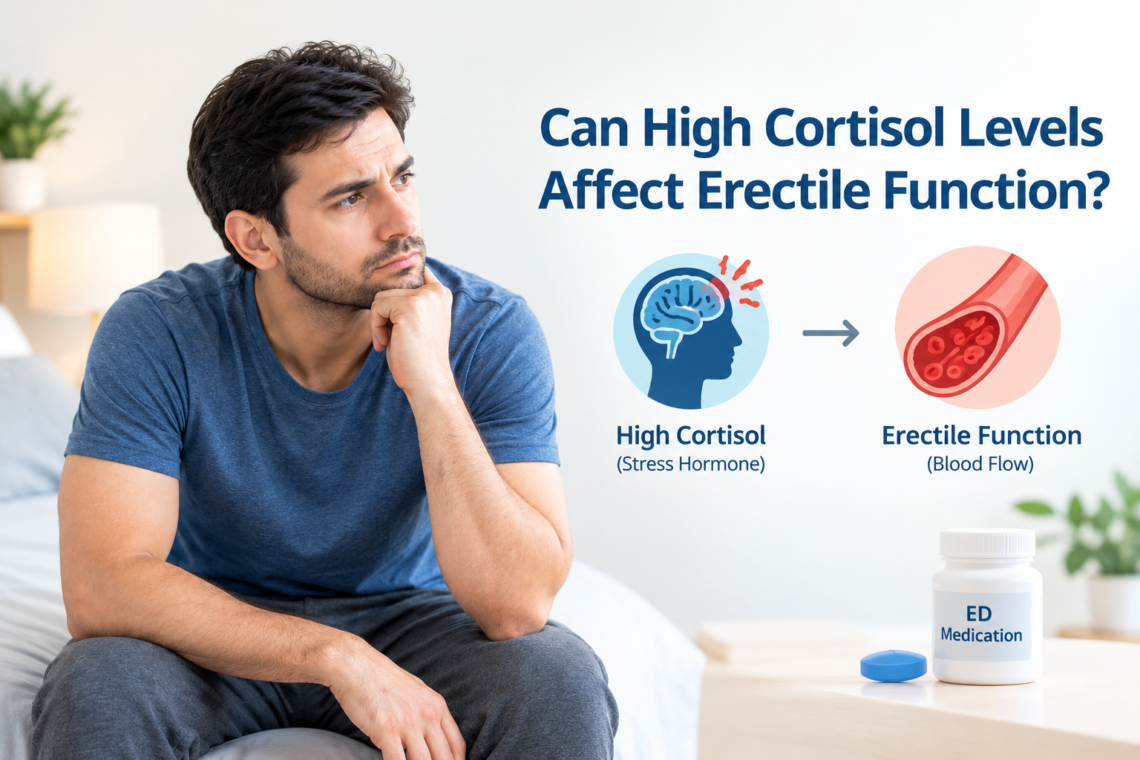
Cortisol is commonly known as the body’s stress hormone, but its role extends far beyond helping us respond to pressure. It supports blood pressure regulation, metabolism, inflammation control, and the body’s natural sleep-wake cycle. However, prolonged stress and certain hormonal disorders may affect several processes involved in male sexual health.
For some men, erectile dysfunction (ED) develops alongside work pressure, poor sleep, persistent anxiety, or changes in energy and sexual desire. Although cortisol may contribute to these problems, it is important to understand that high cortisol is not the only explanation for erection difficulties.
1. Understanding the Relationship Between Cortisol and Erections
Cortisol is produced by the adrenal glands as part of the body’s response to stress. During a stressful situation, it helps the body direct resources toward immediate demands.
An erection, however, requires coordination between the brain, nerves, blood vessels, and erectile tissues. Sexual arousal triggers signals that relax certain blood vessels, allowing blood to flow into the penis.
When stress becomes persistent, changes in nervous system activity, sleep, mood, and hormonal regulation may interfere with this process. Research suggests that cortisol may influence the normal sexual response, although the direct relationship between cortisol levels and ED remains an area of ongoing investigation.
Therefore, a stressful week does not necessarily mean that cortisol is dangerously high, nor does erectile dysfunction automatically indicate a hormonal problem.
2. Can Chronic Stress Affect Testosterone?
Testosterone plays an important role in sexual desire and male reproductive health. Some research suggests that prolonged stress may influence the hormonal pathways involved in testosterone production.
When stress persists, the body’s stress-response system may interact with the reproductive hormone system. Depending on the circumstances, this interaction may contribute to changes in testosterone regulation, energy, mood, and sexual interest.
Men experiencing chronic stress may notice reduced libido, difficulty concentrating, fatigue, or less interest in intimacy. However, these symptoms are not specific to high cortisol and may also occur with depression, sleep disorders, thyroid problems, or other medical conditions.
If low testosterone is suspected, a healthcare professional can determine whether testing is appropriate. Testosterone treatment should only be considered when supported by clinical evaluation and confirmed results.
3. Sleep Problems Can Make the Situation More Complicated
Poor sleep and stress often reinforce one another. A demanding work schedule, late-night screen use, irregular sleeping hours, or persistent worrying can reduce sleep quality.
Insufficient or disrupted sleep may affect mood, energy, metabolic health, and normal hormonal regulation. It can also make sexual performance more difficult by increasing fatigue and reducing interest in intimacy.
Sleep apnea is another possible contributor. This condition repeatedly interrupts breathing during sleep and is associated with several health problems, including an increased risk of erectile dysfunction.
Maintaining regular sleeping hours, reducing late-night stimulants, and addressing persistent sleep problems may support sexual well-being. Men who snore loudly or experience excessive daytime sleepiness should discuss possible sleep apnea with a healthcare professional.
4. Other Health Conditions Can Affect Cortisol and Erectile Function
Erectile dysfunction rarely has just one possible cause. Blood vessel problems, diabetes, high blood pressure, obesity, depression, medication effects, and hormonal disorders may all contribute.
In some cases, unusually high cortisol results from a medical condition such as Cushing syndrome, in which the body experiences prolonged exposure to excess cortisol. Possible signs include easy bruising, muscle weakness, changes in body fat distribution, and wide purple stretch marks.
Persistent erectile difficulties combined with unusual physical changes deserve medical assessment. A clinician can determine whether cortisol testing or other investigations are necessary. Routine cortisol testing is not recommended for every man with ED because most cases do not result from a cortisol disorder.
5. Which Medicines Can Help With Erectile Dysfunction?
Treatment depends on the cause of the problem. If stress, sleep difficulties, or an underlying medical condition contributes to ED, addressing that factor may be an important part of care.
When medication is appropriate, doctors may prescribe phosphodiesterase type 5 (PDE5) inhibitors. These medicines improve the blood-flow response involved in erections but do not directly lower cortisol.
Common examples include:
- Sildenafil Citrate: Used to help men achieve and maintain an erection when sexually stimulated.
- Tadalafil: Another ED treatment that can provide a longer period of responsiveness to sexual stimulation.
- Other prescription ED treatments: A clinician may consider alternatives depending on medical history, response, and individual needs.
These medicines do not automatically resolve low sexual desire, relationship difficulties, or the underlying effects of chronic stress. They also do not treat the cause of abnormally high cortisol.
Sildenafil and tadalafil must not be combined with nitrate medicines used for chest pain because this can cause a dangerous drop in blood pressure. Men should seek medical advice before using ED medicines, especially if they have cardiovascular conditions or take other prescription drugs.
Do not use testosterone or cortisol-lowering medicines without a confirmed diagnosis and appropriate medical supervision.
6. Everyday Ways to Support Stress Management and Sexual Health
Lifestyle changes can support general health and may help reduce some factors associated with erectile dysfunction.
Consider these practical steps:
- Exercise regularly: Walking, cycling, swimming, or other suitable physical activity can support cardiovascular health and stress management.
- Build a consistent sleep routine: Aim for sufficient, restorative sleep and address persistent sleep disturbances.
- Manage daily pressure: Relaxation exercises, mindfulness, counselling, or cognitive behavioural therapy may help when stress or anxiety affects sexual performance.
- Eat a balanced diet: Choose vegetables, fruits, whole grains, healthy fats, and appropriate protein sources.
- Limit alcohol and avoid smoking: Both can negatively affect erectile function, particularly when use is excessive or prolonged.
These habits are supportive measures, not guaranteed treatments. Persistent ED may require medical care even when lifestyle habits are healthy.
7. When Should You Consult a Doctor?
Occasional erection difficulties can occur after poor sleep, alcohol consumption, or a stressful day. However, recurring problems should be evaluated rather than attributed to cortisol alone.
A healthcare professional may review symptoms, medications, mental well-being, blood pressure, and cardiovascular risk factors. Depending on the findings, blood glucose, cholesterol, testosterone, or other tests may be appropriate.
Seek urgent medical attention if erection difficulties occur with chest pain, severe shortness of breath, or new neurological symptoms.