Planning a holiday in India can feel challenging when you have limited time and so many places to choose from. You may want to see famous monuments, taste local food, visit traditional markets and understand the country’s history without spending your entire holiday travelling between destinations.
The Golden Triangle is a practical option for this kind of trip. It connects Delhi, Agra and Jaipur, three cities that offer different views of India’s architecture, culture and history. The route is particularly suitable for international visitors who want to experience North India during their first visit.
A carefully prepared Golden Triangle Tour Itinerary helps travellers organise sightseeing, hotel stays and transport in a sensible order. Instead of trying to cover everything in a few rushed days, visitors can select the attractions that interest them most and leave some time for unexpected experiences.
Heritage Route Travels provides private and customized India tour planning for international travellers. With a suitable travel schedule and clear arrangements, the Golden Triangle can be a comfortable introduction to the country.
Why Plan Your Golden Triangle Trip in Advance?
Delhi, Agra and Jaipur are connected by established road and rail routes, but travel between them still requires time. Traffic conditions, monument opening hours, hotel check-in times and seasonal weather can influence your daily plans.
Planning in advance helps you avoid unnecessary backtracking and makes it easier to decide how many nights to spend in each city.
For example, arriving in Delhi late at night and scheduling a full sightseeing day immediately afterwards may leave you tired. Similarly, travelling to Agra and visiting every major attraction before continuing to Jaipur can make the day feel rushed.
A practical plan considers your arrival time, energy levels and interests. It should also leave room for meals, rest and local exploration.
How Many Days Do You Need for the Golden Triangle?
The ideal duration depends on your travel style and available holiday time.
- Three to four days: Suitable for travellers who mainly want to visit the major landmarks and accept a faster pace.
- Five days: A reasonable option for covering the highlights of all three cities with limited extra time.
- Six to seven days: Better for travellers who prefer a more relaxed schedule and additional cultural experiences.
- Eight days or more: Useful if you want to include extra destinations, longer stays or activities beyond the main monuments.
For many international visitors, six or seven days provide a good balance between sightseeing and relaxation. If your international flights involve long connections or overnight travel, consider adding extra time.
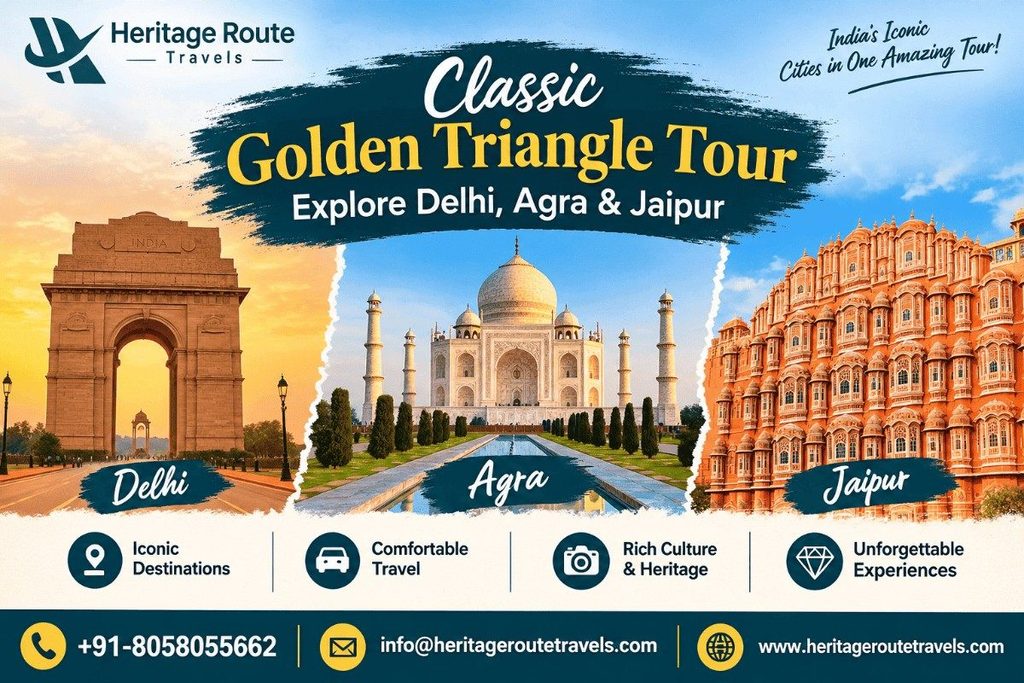
A Practical Seven-Day Golden Triangle Tour Itinerary
The following itinerary is designed for travellers who want to experience the main attractions without changing hotels every night. The exact order can be adjusted to suit flight timings and individual preferences.
Day 1: Arrive in Delhi and Settle In
Start your holiday with an arrival in Delhi. After completing airport formalities, transfer to your hotel and allow yourself time to rest.
If you arrive early and feel comfortable, you can take a short walk around a suitable local area or enjoy dinner at a nearby restaurant. Connaught Place is one option for visitors interested in dining and shopping in central Delhi.
Avoid scheduling too many activities on arrival day. International flights can be tiring, and a relaxed start often makes the following sightseeing day more enjoyable.
Day 2: Explore Delhi’s Historic Attractions
Spend the second day exploring selected landmarks in Delhi. You can begin with Qutub Minar or Humayun’s Tomb, followed by a visit to India Gate and other central areas, depending on opening hours and traffic.
If you are interested in traditional markets and local food, set aside time for Old Delhi. Its narrow lanes, historic buildings and busy commercial streets provide a different experience from the wider roads of New Delhi.
Rather than visiting every attraction, choose a few that match your interests. Travellers who enjoy architecture may prefer historic monuments, while those interested in food and daily life may want more time in local neighbourhoods.
Day 3: Travel from Delhi to Agra
Leave Delhi for Agra by private car or train. Road travel offers flexibility, while rail services may suit travellers who prefer a scheduled connection. Compare departure times and total journey time before deciding.
After arriving in Agra, check into your hotel and visit Agra Fort if time permits. The fort contains historic palaces, courtyards and architectural features associated with the Mughal period.
Keep the evening relatively relaxed. You will want to be ready for an early start the following morning if you plan to visit the Taj Mahal around sunrise.
Day 4: Visit the Taj Mahal and Continue to Jaipur
The Taj Mahal is the main attraction for many visitors to Agra. An early visit can offer pleasant light and a chance to explore before the busiest periods, although crowds vary by season.
Allow sufficient time to appreciate the marble architecture, decorative details and surrounding gardens. Check the monument’s current opening schedule and ticket requirements before your visit. The Taj Mahal is generally closed to visitors on Fridays.
After breakfast, begin the drive towards Jaipur. Depending on your interests and the available time, you may consider a stop at Fatehpur Sikri. This historic complex is associated with Mughal emperor Akbar and offers another perspective on the region’s architectural heritage.
However, adding a sightseeing stop increases the day’s length. Discuss the timing with your driver or tour planner rather than assuming every attraction will fit comfortably.
Day 5: Discover Jaipur’s Royal Heritage
Dedicate this day to Jaipur’s major historical attractions. Start with Amber Fort, where visitors can explore grand courtyards, palace rooms and decorated architectural features.
Continue to City Palace to learn about Jaipur’s royal history. Jantar Mantar, located nearby, is an important historic observatory with large instruments created for astronomical observations.
You can also view Hawa Mahal from the old city area. Its distinctive exterior is one of Jaipur’s most recognisable architectural features.
If time permits, finish the day with a visit to a local market. Jaipur is known for textiles, jewellery, block-printed fabrics and traditional handicrafts. Check product quality and compare prices before making purchases.
Day 6: Enjoy Jaipur Beyond the Main Monuments
An extra day in Jaipur gives you more choices than simply visiting another fort or palace. It allows you to explore the city at a slower pace.
Consider a guided heritage walk, a local cooking activity or a visit to a traditional craft workshop. These activities can provide a better understanding of regional customs and the skills behind Rajasthan’s handmade products.
Food lovers may want to try dal baati churma, a well-known Rajasthani dish. Visitors who prefer vegetarian meals will also find many options in Jaipur.
Alternatively, spend the morning visiting a place you missed earlier and keep the afternoon free. This is especially useful for families, older travellers and anyone who prefers not to follow a packed schedule.
Day 7: Return to Delhi or Extend Your Holiday
On the final day, travel back to Delhi if you have an international flight or onward connection. Allow a generous buffer between your arrival in Delhi and your flight departure because road conditions can change.
If your holiday continues, Jaipur can also be a starting point for exploring more of Rajasthan. Depending on your interests and available days, you might consider Jodhpur, Udaipur, Jaisalmer or Pushkar.
Discuss the extra destinations before finalising hotel bookings. Adding more cities is worthwhile only when you have enough time to enjoy them.
Should You Choose a Private Car or Train?
Transport is an important part of planning your trip. Both road and rail travel have advantages, and the right choice depends on your budget, schedule and comfort requirements.
Private car: A private vehicle offers door-to-door transport, luggage convenience and flexibility for suitable sightseeing stops. It can be especially useful for families, small groups and travellers who prefer a personalised schedule.
Train: Rail travel can be a good option for those who prefer established departure times and want to experience India’s railway network. Tickets should be booked in advance where possible, and travellers should consider transfers between stations and hotels.
A combination of both: Some visitors use trains for longer connections and a private vehicle for local sightseeing. This can work well when the schedule is planned carefully.
When booking a private vehicle, confirm the vehicle category, air-conditioning, luggage capacity, driver arrangements, included kilometres and any additional charges.
What Is the Best Time for This Tour?
October to March is generally a popular period for sightseeing in Delhi, Agra and Jaipur because temperatures are often more comfortable than during the summer months.
December and January may bring fog and cold mornings, particularly in northern India. This can affect visibility and transport schedules, so it is sensible to keep some flexibility.
April to June is usually hot, with particularly high daytime temperatures before the monsoon. If you travel during this period, plan outdoor visits early and take regular breaks.
The monsoon season brings rain and humidity, which may influence road travel and outdoor activities. Check the forecast close to your departure date.
How to Prepare for Your Golden Triangle Holiday
A few practical decisions can improve the experience considerably.
Book important arrangements early. Confirm hotels, transport and monument tickets where advance booking is available, particularly during busy travel periods.
Choose hotels carefully. Consider location, cleanliness, recent guest feedback, breakfast arrangements and access to your planned attractions.
Pack for walking. Comfortable footwear is useful for forts, historic complexes and busy market areas. Carry a hat, sunscreen and water when appropriate.
Understand local customs. Some religious places have dress requirements or photography restrictions. Follow posted instructions and respect local practices.
Keep travel documents accessible. Check passport validity, visa requirements, insurance arrangements and flight details before leaving home.
Avoid an overloaded schedule. A few meaningful visits can be more enjoyable than rushing through a long list of attractions.
How Heritage Route Travels Can Help
Arranging a multi-city holiday from another country can involve several decisions. Travellers need to coordinate airport transfers, hotels, transport between cities and sightseeing schedules while also understanding local travel conditions.
Heritage Route Travels helps international visitors plan private India tours according to their preferred destinations, travel dates and interests. A customized plan can focus on major historical landmarks, cultural activities, comfortable road travel or a combination of these options.
Before booking, ask for a detailed itinerary and written confirmation of the services included. This makes it easier to compare packages and understand the arrangements.
The right travel plan should suit your holiday rather than force you to follow a fixed schedule.
Final Thoughts
A well-planned Golden Triangle holiday offers much more than a checklist of famous monuments. Delhi introduces visitors to India’s historic and modern capital, Agra presents remarkable Mughal architecture, and Jaipur offers a closer look at Rajasthan’s royal past and living traditions.
The best Golden Triangle Tour Itinerary depends on how much time you have and what you want to experience. A shorter trip can cover the main highlights, while a six- or seven-day plan allows more time for local markets, regional food and cultural activities.
With careful preparation and suitable transport, the three cities can form a rewarding first visit to India. Heritage Route Travels can help you plan the details and choose arrangements that fit your travel preferences.