Selecting the right flexible metal hose requires more than matching a hose diameter to a pipe connection. Industrial systems often operate under changing temperatures, pressure fluctuations, vibration, and mechanical movement. A hose that performs well in one environment may develop leaks, fatigue cracks, or connection failures in another if its design does not match the operating conditions.
Flexible metal hoses are commonly used in manufacturing plants, chemical processing facilities, power generation systems, refineries, and commercial equipment. They provide a practical way to connect components that move, expand, vibrate, or cannot be aligned perfectly with rigid piping. However, their performance depends on several factors, including material compatibility, pressure ratings, temperature limits, and installation geometry.
Understanding these factors before selecting a hose can help engineers, maintenance teams, and purchasing professionals avoid premature failures and unnecessary downtime. The goal is to choose a hose assembly that handles the application safely while delivering reliable service throughout its expected operating life.
Understanding Flexible Metal Hoses and Their Applications
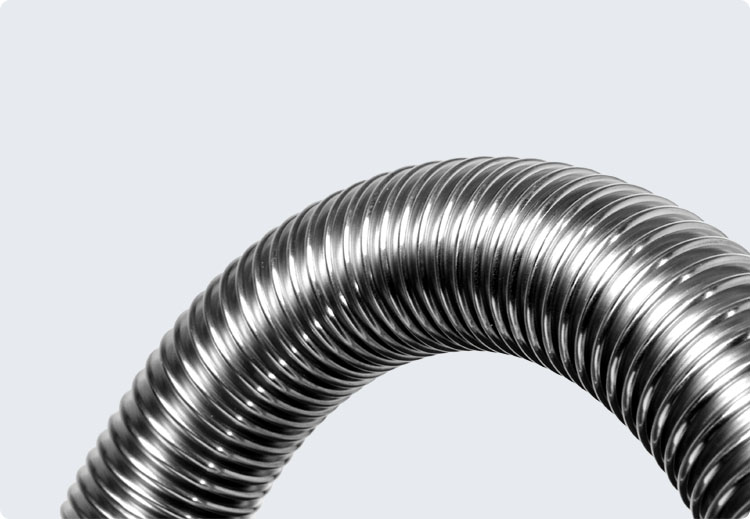
A flexible metal hose is a bendable conduit typically manufactured from corrugated metal tubing. The corrugations allow the hose to accommodate movement and limited bending while maintaining a continuous flow path. Many assemblies also include an external metal braid that helps resist pressure-induced forces and protects the inner tube.
The inner tube, braid, fittings, and overall assembly must work together. Choosing a suitable tube material but overlooking the fittings or pressure rating can compromise the entire connection.
Common applications include:
- Industrial machinery: Absorbing vibration between pumps, compressors, engines, and stationary piping.
- Steam systems: Transferring steam when the hose assembly is specifically rated for the temperature and pressure involved.
- Chemical processing: Conveying compatible liquids and gases in systems where corrosion resistance is essential.
- Power generation: Connecting equipment exposed to thermal expansion and changing operating conditions.
- Exhaust systems: Accommodating movement and thermal growth in suitable high-temperature exhaust applications.
- Gas distribution: Connecting equipment where the complete assembly meets the applicable gas service requirements.
Each application presents different demands. A hose designed to absorb vibration in a manufacturing plant may not be appropriate for transferring an aggressive chemical or handling high-pressure steam.
Step-by-Step Guide to Selecting the Right Flexible Metal Hose
Step 1: Identify the Fluid or Gas Being Conveyed
Start by identifying exactly what will pass through the hose. The conveyed medium determines which materials are suitable and whether additional compatibility considerations apply.
Stainless steel is widely used because it offers a useful combination of corrosion resistance, strength, and temperature capability. However, not every stainless steel grade performs equally well in every chemical environment.
For example, a hose carrying clean compressed air may require different material considerations from one conveying an acidic solution. Chemical concentration, fluid temperature, contamination, and cleaning procedures can all influence material selection.
When evaluating compatibility, consider the inner tube, fittings, welds, and any other wetted components. Consult manufacturer compatibility data for the actual operating conditions rather than relying on a general statement that a material is corrosion resistant.
Step 2: Determine Operating and Design Pressure
Pressure is one of the most important selection criteria. Establish the normal operating pressure, maximum expected pressure, pressure fluctuations, and any transient spikes that may occur during startup or shutdown.
The hose assembly must have an appropriate pressure rating at its actual operating temperature. A rating published at room temperature may not apply unchanged at elevated temperatures.
Also, distinguish between working pressure, proof pressure, and burst pressure. These terms describe different limits and are not interchangeable. Burst pressure, in particular, should never be treated as an acceptable operating target.
For example, a pump connection that experiences frequent pressure pulses needs a hose selected for both its pressure conditions and expected fatigue duty. A hose that handles steady pressure may perform poorly when exposed to repeated pressure cycling.
Step 3: Evaluate Temperature Requirements
Flexible metal hoses are often selected for environments where rubber or polymer hoses may not provide sufficient temperature resistance. Nevertheless, metal construction does not mean unlimited heat tolerance.
Determine the minimum and maximum fluid temperatures, ambient temperatures, and any rapid temperature changes. Account for the effects of temperature on the tube material, braid, fittings, welds, and pressure capacity.
Consider a steam line that heats rapidly during startup. Repeated heating and cooling can cause expansion and contraction throughout the connected piping system. The hose must accommodate the intended movement without exceeding its design limits.
For high-temperature applications, verify the manufacturer’s temperature derating information and any limitations associated with the complete assembly.
Step 4: Choose the Appropriate Material
Material selection should reflect corrosion resistance, mechanical strength, temperature, and cost over the hose’s expected service life.
Stainless steel: Commonly used for general industrial service, water, many gases, and numerous chemical applications, subject to compatibility and rating requirements.
Specialty alloys: May be necessary for aggressive chemicals, chloride-rich environments, or unusually demanding temperature conditions. The correct alloy depends on the specific exposure.
Other metal constructions: Certain applications may use alternative metals when conductivity, compatibility, or specialized operating conditions justify them.
Avoid choosing material based solely on purchase price. A lower-cost hose that corrodes prematurely can create higher replacement, labor, and downtime costs.
Step 5: Select the Correct Diameter and Length
The hose’s internal diameter affects flow capacity, velocity, and pressure loss. A diameter that is too small can restrict flow and increase losses, while an unnecessarily large hose may increase cost and complicate installation.
Length matters just as much. The assembly needs sufficient usable length to accommodate movement without being stretched, compressed, twisted, or forced into an excessively tight bend.
Measure the actual distance between connection points, accounting for the intended routing and movement. Follow the manufacturer’s minimum bend radius and installation instructions.
For example, a hose connecting a vibrating compressor to fixed piping needs enough length and a suitable configuration to isolate vibration. A short, tightly bent assembly may transfer vibration rather than absorb it effectively.
Step 6: Select the Correct Braid and End Connections
The external braid helps reinforce the hose assembly against pressure-related forces and influences its overall performance. Some applications require a single braid, while others may require additional reinforcement. The correct arrangement depends on the manufacturer’s design and the required operating conditions.
End connections must match the equipment, piping standard, and installation requirements. Common options include threaded fittings, flanges, and welded ends.
Verify connection size, thread type, flange standard, material, and pressure rating. A physically compatible connection is not necessarily a safe or technically suitable one.
Common Mistakes When Selecting Flexible Metal Hoses
Even experienced maintenance teams can overlook factors that affect service life and safety.
- Selecting by diameter alone: A matching diameter does not guarantee pressure, temperature, or chemical compatibility.
- Ignoring movement requirements: The hose may fail early if it is stretched, compressed, twisted, or bent too tightly.
- Overlooking pressure spikes: Transient loads can exceed the conditions assumed during initial selection.
- Assuming braid prevents every failure: Braid reinforces the assembly but does not eliminate inner-tube fatigue, corrosion, or improper installation.
- Using an assembly outside its temperature rating: Elevated temperatures can reduce allowable pressure and affect component performance.
- Mixing incompatible materials: Corrosion can occur at fittings, welds, or other exposed components even when the inner tube appears suitable.
- Neglecting inspection: Damage can progress unnoticed when hoses are installed in inaccessible locations or maintenance schedules are inconsistent.
One particularly important mistake is treating a flexible metal hose as a substitute for proper piping alignment. It should accommodate the movement and flexibility specified for its design, not compensate for uncontrolled mechanical loads or poor support arrangements.
Practical Tips for Better Performance and Longer Service Life
A disciplined selection and maintenance process helps reduce unplanned downtime.
Document the operating conditions. Record the fluid, pressure range, temperature range, movement, vibration, connection details, and environmental exposure before requesting a quotation or technical recommendation.
Review the complete assembly rating. Confirm that the tube, braid, fittings, and manufacturing method are suitable for the intended service. Ask the manufacturer for application-specific guidance when conditions are unusual.
Follow installation instructions. Avoid twisting the hose during tightening, exceeding the minimum bend radius, or allowing external loads to act on the fittings. Use appropriate supports and routing practices.
Inspect for early warning signs. Look for corrosion, damaged braid wires, crushed corrugations, leakage, abnormal deformation, and evidence of rubbing against nearby equipment. Investigate unusual vibration or temperature changes promptly.
Establish replacement criteria. Service life depends on operating conditions, movement cycles, materials, and installation quality. Replace assemblies based on manufacturer guidance, inspection findings, and applicable safety requirements rather than waiting for a leak.
Consider the total cost of ownership. Compare expected service life, inspection requirements, replacement labor, and the consequences of failure. A suitable higher-quality assembly can be more economical over time than frequent replacements.
For critical systems, document the selected hose specification and keep replacement assemblies consistent with the approved design. Any change in operating conditions should trigger a review to confirm that the existing assembly remains suitable.
Conclusion
Selecting the right flexible metal hose starts with understanding the application rather than choosing a product by size or price alone. Fluid compatibility, pressure, temperature, movement, material, diameter, braid construction, and end connections all influence performance.
By evaluating these factors systematically, following manufacturer installation requirements, and inspecting assemblies regularly, industrial teams can reduce premature failures and improve equipment reliability. The best choice is a hose assembly designed for the actual operating conditions, with appropriate safety margins and clearly defined maintenance requirements.